FDA Requires New Vision Loss Warning on All GLP-1 Drugs
The U.S. Food and Drug Administration is requiring manufacturers of all GLP-1 receptor agonist medications to add a warning about a potential increased risk of non-arteritic anterior ischemic optic neuropathy (NAION), a rare condition that can cause painless vision loss in one eye and can be permanent. The agency's review included a meta-analysis of 126 clinical trials and a retrospective cohort study. Its findings showed a higher incidence of NAION among patients taking GLP-1 drugs than among those receiving comparator treatments, though the absolute numbers remain small. Health care providers are advised to watch for sudden vision changes and to refer suspected cases to an ophthalmologist.
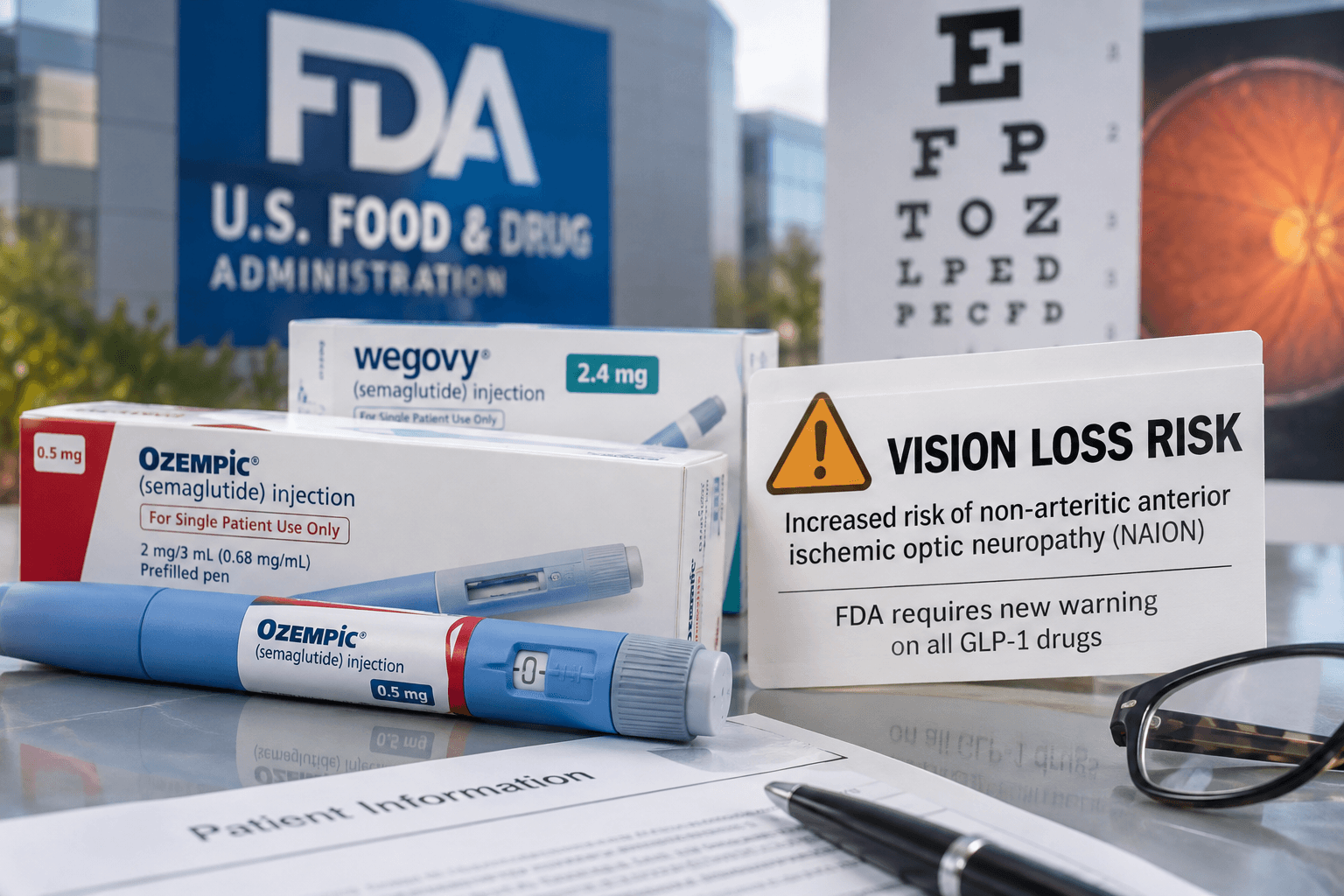
- The FDA is requiring all GLP-1 receptor agonist manufacturers to add a NAION warning to their labeling.
- NAION is a rare condition that can cause sudden, painless vision loss in one eye, which may be permanent.
- A pooled analysis of 126 trials found 6.4 NAION events per 100,000 person-years with GLP-1 RAs versus 3.8 with comparators.
- A Sentinel cohort study found no significant increase in risk compared with SGLT-2 inhibitors but a higher risk compared with DPP-4 inhibitors.
- Cases have been reported for all currently marketed GLP-1 RA products.
- Known NAION risk factors include smoking, diabetes, high blood pressure, sleep apnea, anemia, and kidney disease.
- Providers should instruct patients to report sudden vision changes and refer suspected cases to an ophthalmologist.
- Discontinuation should be considered for patients who develop NAION, unless benefits clearly outweigh the risk.
The FDA is requiring manufacturers of all GLP-1 receptor agonist medications to add a warning about a potential increased risk of non-arteritic anterior ischemic optic neuropathy (NAION), a rare condition that can cause sudden, permanent vision loss in one eye. The agency calls this a potential increased risk, not proof that the drugs cause NAION in every patient.
The U.S. Food and Drug Administration is requiring manufacturers of every GLP-1 receptor agonist (RA) medication to update their prescribing information with a warning about a potential increased risk of non-arteritic anterior ischemic optic neuropathy, or NAION. The condition is rare, but it can cause sudden, painless loss of vision in one eye, and that loss can be permanent. The agency said cases have been reported across all currently marketed GLP-1 products.
What Are the Symptoms of NAION?
NAION occurs when blood flow to the front part of the optic nerve, known as the optic disc, is reduced. The underlying cause is not completely understood. Beyond painless vision loss, which patients often notice upon waking, symptoms can include blurred or missing areas of the visual field, color distortion, and reduced central visual acuity. Known risk factors include smoking, diabetes, high blood pressure, sleep apnea, anemia, and kidney disease. The FDA also noted that patients who have already had NAION in one eye face an increased risk that it will occur in the other eye.
The agency's action follows a growing number of studies suggesting a possible link between GLP-1 drugs and the condition. Among them was a July 2024 article in JAMA Ophthalmology by Hathaway and colleagues, which examined NAION risk in patients prescribed semaglutide (sold as Ozempic). The FDA said that article prompted its own review. Although the agency identified several limitations in that study, it concluded that a broader assessment was warranted. Europe's drug regulator issued a warning about the same risk 17 months ago.
The FDA's evaluation drew on several sources of data. Because individual clinical trials recorded few or no NAION cases, the agency pooled results from 126 randomized, controlled trials of GLP-1 RAs, which included 134,253 patients. Of these, 78,217 received a GLP-1 RA and 56,036 received a comparator, either a placebo or a non-GLP-1 glucose-lowering medication. The analysis identified 15 probable NAION events: 10 in patients taking GLP-1 RAs, five in patients receiving placebo, and none in patients taking other glucose-lowering drugs. The overall incidence was 6.4 events per 100,000 person-years among GLP-1 RA users, compared with 3.8 events per 100,000 person-years among comparator-treated patients.
The agency also ran a retrospective cohort study using its Sentinel Real-World Evidence Data Enterprise Commercial Network. The study followed adults with type 2 diabetes who began a GLP-1 RA, a sodium glucose co-transporter-2 (SGLT-2) inhibitor, or a dipeptidyl peptidase-4 (DPP-4) inhibitor between 2019 and 2024. Compared with SGLT-2 inhibitors, GLP-1 RAs were not associated with a statistically significant increase in NAION risk (hazard ratio 1.19, 95% confidence interval 0.91 to 1.54). Compared with DPP-4 inhibitors, however, the study did observe an increased risk (hazard ratio 1.43, 95% confidence interval 1.02 to 2.01)."
The FDA said that published observational studies with rigorous methods reported a similar pattern, finding higher NAION risk among patients with type 2 diabetes who started GLP-1 RAs compared with those who started DPP-4 or SGLT-2 inhibitors. Those findings, the agency said, were generally consistent with its clinical trial analysis and Sentinel study. Animal data, by contrast, did not identify a mechanism explaining how GLP-1 RA use could raise NAION risk.
Do GLP-1 Drugs Cause Vision Loss?
The numbers should be read in context. The FDA noted that the incidence of NAION in the general population is 2.3 to 10.2 cases per 100,000 persons per year among adults older than 50. The agency's own conclusion is that there is a potential increased risk of rare NAION events in patients taking GLP-1 RAs, not that the drugs cause the condition in every patient or that the risk is large in absolute terms.
What Should Clinicians Do If NAION Is Suspected?
For clinicians, the FDA's guidance is specific. Providers should instruct patients to report immediately any sudden onset of painless decreased vision, visual field deficits, or other visual disturbances in one eye. If NAION is suspected, the patient should be promptly referred to an ophthalmologist. The agency advises considering discontinuation of the GLP-1 RA in patients who develop NAION, unless the benefits of treatment clearly outweigh the risk. Patients and clinicians can report suspected adverse reactions to the FDA's MedWatch reporting program.
FAQ
- What symptoms does NAION cause?
- NAION causes sudden, painless vision loss in one eye, which patients often notice upon waking. Symptoms can also include blurred or missing areas of the visual field, color distortion, and reduced central visual acuity.
- What should patients do if they notice sudden vision changes?
- Patients should report any sudden onset of painless decreased vision, visual field deficits, or other visual disturbances in one eye immediately to their provider.
- Does the FDA say GLP-1 drugs cause NAION?
- No. The FDA describes a potential increased risk of rare NAION events in patients taking GLP-1 receptor agonists, not that the drugs cause the condition in every patient.
Read next

GLP-1 Drugs Do Not Change Injection Needs for Diabetic Macular Edema, Study Finds
GLP-1 receptor agonists did not significantly change how often patients with diabetic macular edema needed anti-VEGF injections, according to a large retrospective cohort study presented at the American Academy of Ophthalmology meeting in New Orleans. Over 24 months of follow-up, treatment frequency showed no sustained or progressive change after patients started a GLP-1 drug, compared with matched patients who did not. Visual acuity and retinal thickness also held steady. Researchers said the results are reassuring amid ongoing uncertainty about the drugs' eye safety, though they cautioned that more research is needed.
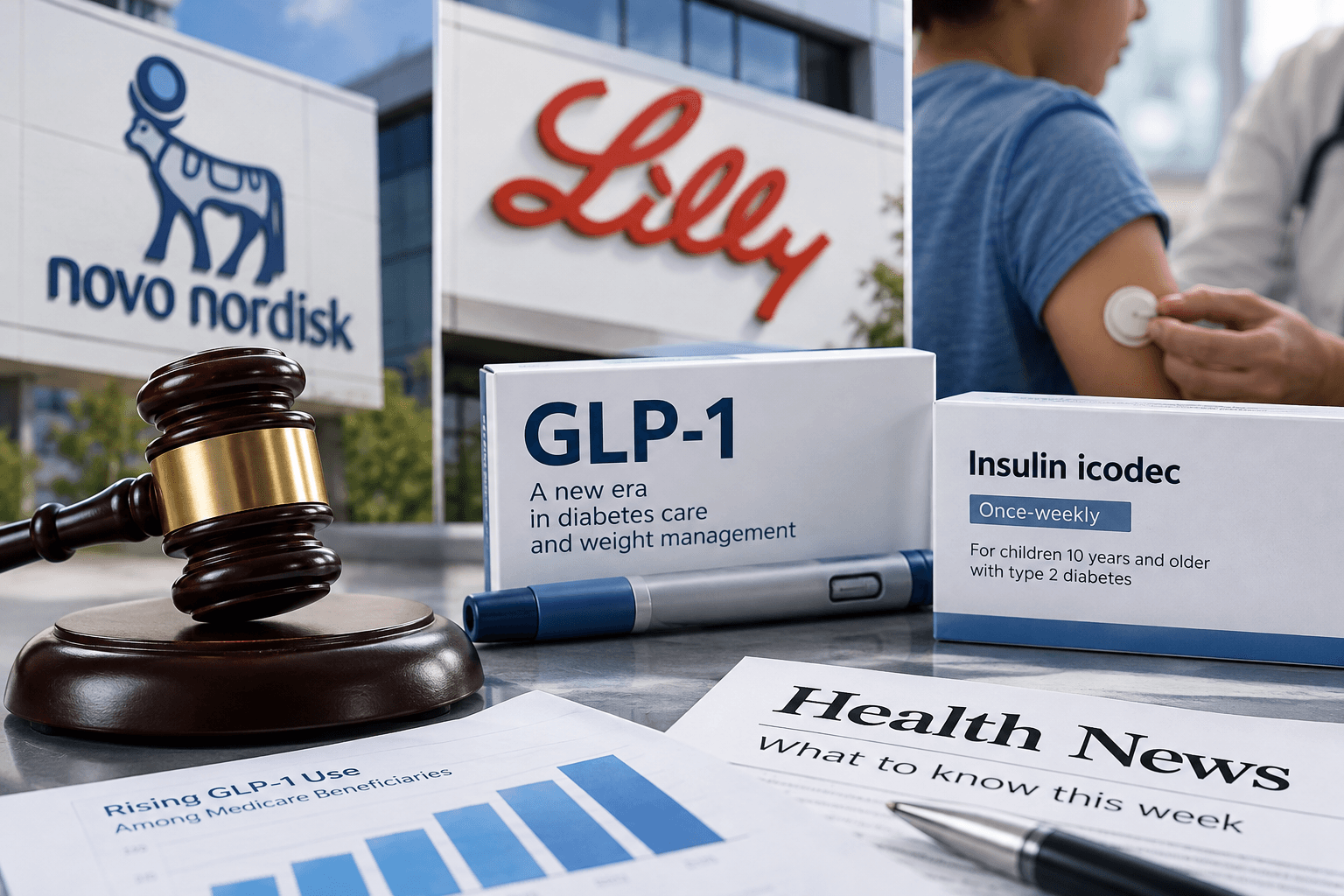
A Court Ruling on GLP-1 Ads, a Weekly Insulin for Kids, and Other Health Stories to Know
A U.S. judge rejected Novo Nordisk's request to temporarily block Eli Lilly from running ads claiming its weight-loss and diabetes drugs are more powerful. The same week, the FDA expanded approval for a once-weekly insulin for children ages 10 and older with type 2 diabetes. Studies also showed endocrinologists prescribing newer diabetes drugs more often and GLP-1 use among Medicare beneficiaries rising sharply. Here is a friendly rundown of what changed, what it means, and what to keep in mind.
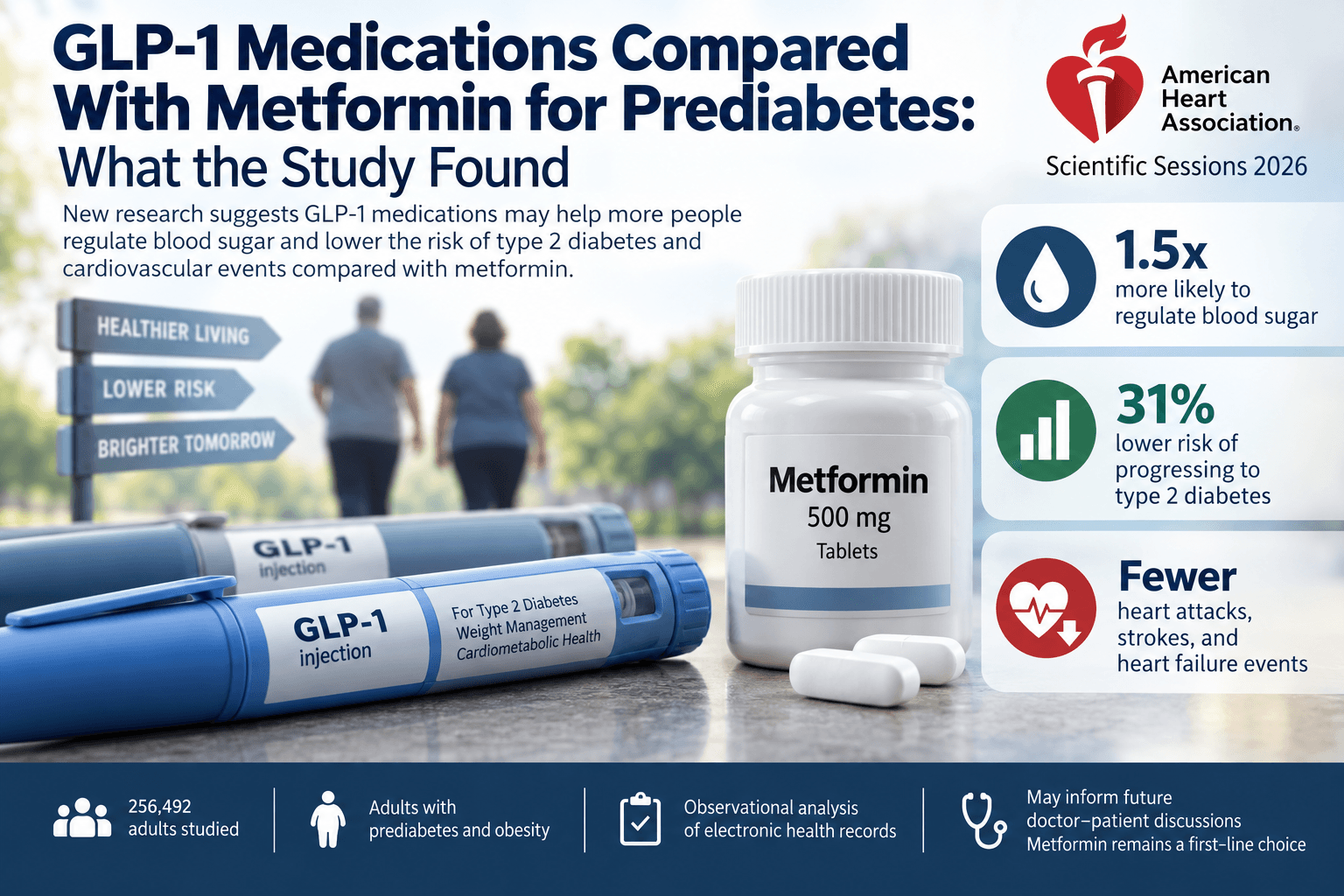
GLP-1 Medications Compared With Metformin for Prediabetes: What the Study Found
A study presented at the American Heart Association Scientific Sessions 2026 found that adults with prediabetes and obesity who took a GLP-1 medication were about 1.5 times more likely than those on metformin to regulate their blood sugar. They also had a 31% lower risk of progressing to type 2 diabetes. The observational analysis reviewed electronic health records from 256,492 adults and reported fewer heart attacks, strokes, and heart failure events among GLP-1 users. Researchers say the results could shape conversations between doctors and patients about treatment options, though metformin remains a first-line choice.

GLP-1 Drug Linked to Dangerous Lithium Spike, While MS Study Finds Fewer Relapses
A case report describes a 50-year-old woman with bipolar disorder whose lithium levels rose to toxic range after she started tirzepatide (Zepbound), a GLP-1 weight loss drug. Her symptoms eased after her lithium dose was lowered. Separately, a large U.S. real-world study presented at MSToronto2026 found that multiple sclerosis patients taking GLP-1 receptor agonists had fewer relapses, optic neuritis episodes and demyelinating events than patients who did not take them. Researchers say the findings are early and call for more investigation into both the interaction risk and the potential benefits.

Nearly 1 in 6 Pediatric GLP-1 Patients Diagnosed With Nutritional Deficiency Within a Year
Nearly one in six children and adolescents who started a GLP-1 receptor agonist were diagnosed with a nutritional deficiency or deficiency-related complication within one year, according to a retrospective analysis of insurance claims published in Childhood Obesity. Vitamin D deficiency was the most common diagnosis. The study also found that nutrition counseling was infrequent and often began months after treatment started. The authors cautioned that the findings do not show counseling causes deficiencies and that a study designed to test causation is needed. The analysis covered 2,031 patients aged 10 to 17 years, drawn from claims data from 2017 to 2022.