Former Eli Lilly Rep Says She Was Fired After Objecting to Mounjaro Marketing
A former Eli Lilly sales representative has filed a federal lawsuit in Texas alleging she was fired after complaining that the company promoted its Mounjaro diabetes drug for weight loss before the Food and Drug Administration had approved that use. Jennifer Mansion, who was hired as a senior territory manager in Dallas four years ago, says she saw other Lilly reps pitch the drug as a treatment for obesity. She also alleges a physician touted Mounjaro as a weight loss option at a luncheon sponsored by the drugmaker. The case raises questions about off-label marketing, which federal rules prohibit drugmakers from doing for unapproved uses.
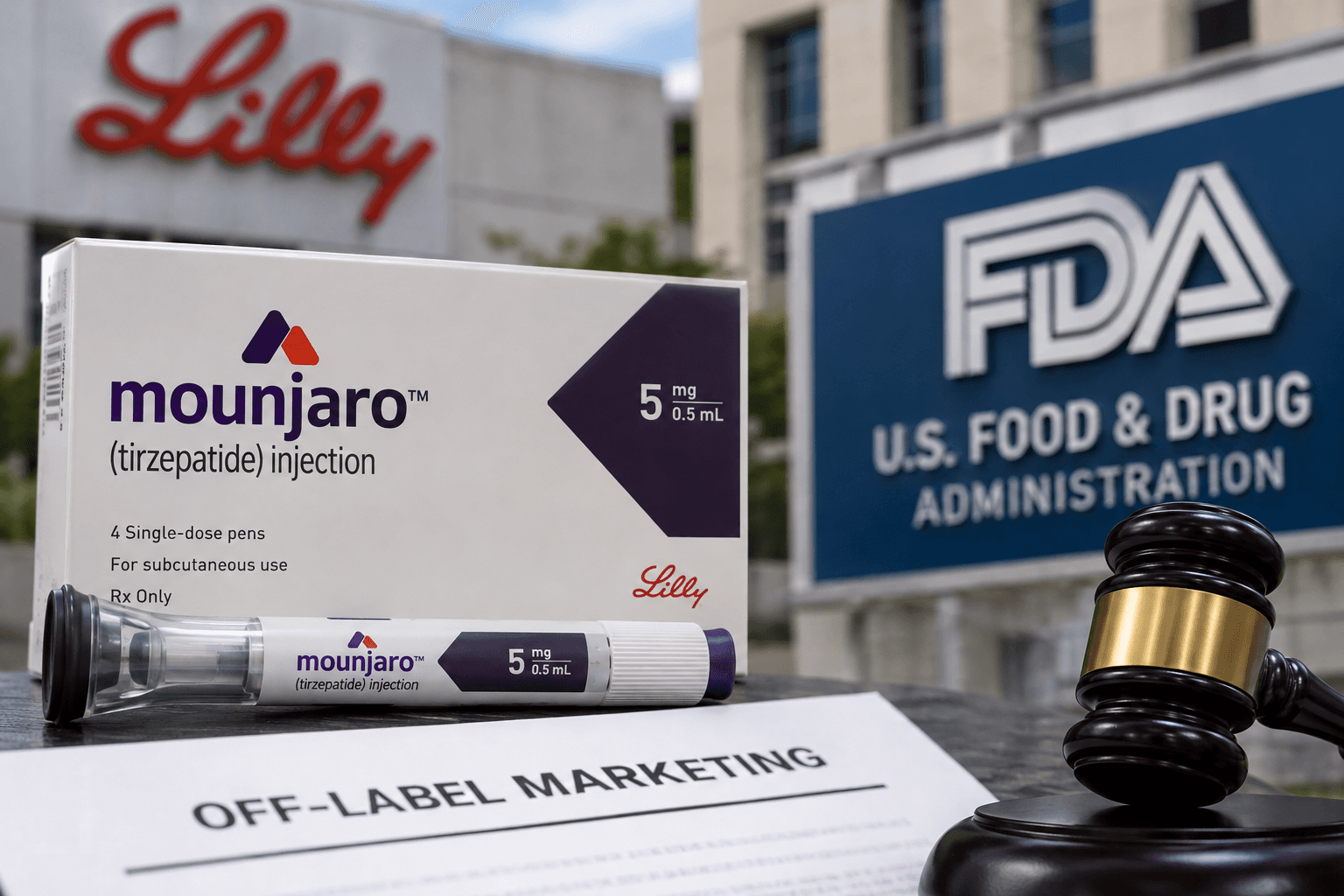
- Former Eli Lilly sales rep Jennifer Mansion filed a federal lawsuit in Texas.
- She alleges she was fired after complaining about promotion of Mounjaro for weight loss.
- Mansion says other Lilly reps pitched the diabetes drug as an obesity treatment.
- She also claims a physician touted Mounjaro for weight loss at a company-sponsored luncheon.
- The FDA has not approved Mounjaro for weight loss, and off-label promotion is prohibited for drugmakers.
- The allegations have not been proven in court.
A former Eli Lilly sales representative, Jennifer Mansion, has sued the drugmaker in federal court in Texas. She alleges she was fired after complaining that Lilly marketed its Mounjaro (tirzepatide) diabetes drug for weight loss before regulators approved that use. The allegations have not been tested in court.
A former Eli Lilly sales representative has sued the drugmaker, alleging she was fired for complaining that the company was marketing its Mounjaro (tirzepatide) diabetes drug for weight loss before regulators approved it for that purpose.
What is Jennifer Mansion suing Eli Lilly over?
Jennifer Mansion filed the suit in federal court in Texas. She was hired as a senior territory manager in Dallas four years ago. According to the complaint, she observed other Lilly sales reps promoting the drug as a solution for obesity.
Mansion also contends that a physician described Mounjaro as a weight loss option during a luncheon sponsored by the company. The suit does not stop at the sales floor. It points to an event where a doctor, not a rep, made the pitch.
What is off-label marketing?
The allegations center on off-label marketing. The term refers to promoting a medicine for a use the Food and Drug Administration has not approved. Doctors may prescribe a drug for an unapproved use. Drugmakers, however, are not permitted to market their products for that purpose.
Have the allegations been proven in court?
The filing is a claim from one former employee, and the allegations have not been tested in court. The complaint centers on what Mansion says she saw and was told inside the company. Her lawsuit adds to the scrutiny of how drugmakers promote treatments that have become popular beyond their approved uses.
FAQ
- What does the lawsuit allege?
- It alleges Jennifer Mansion was fired for complaining that Eli Lilly was marketing Mounjaro for weight loss before regulators approved it for that purpose.
- What is off-label marketing?
- It refers to promoting a medicine for a use the Food and Drug Administration has not approved. Doctors may prescribe a drug for an unapproved use, but drugmakers are not permitted to market their products for that purpose.
- Have the allegations been tested in court?
- No. The allegations have not been tested in court.
Read next

Novo Nordisk Sues Eli Lilly Over 'Deceptive' GLP-1 Drug Ads
Novo Nordisk has sued Eli Lilly, alleging the company's ad campaign for its obesity and diabetes drugs is 'deceptive' and uses 'outdated clinical trials' to make them appear more effective. The lawsuit, filed in federal court in New Jersey, claims Lilly is comparing high doses of its drugs to lower doses of Novo's similar medications.
Eli Lilly's Obesity Drug Granted Compassionate Use to One Person
In a rare move, Eli Lilly and the FDA have allowed one person to receive the company's obesity candidate, retatrutide, through the FDA's compassionate use program. This development comes as the pharmaceutical industry sees a resurgence in mergers and acquisitions, with Lilly also showing interest in a hair loss drug.

A Court Ruling on GLP-1 Ads, a Weekly Insulin for Kids, and Other Health Stories to Know
A U.S. judge rejected Novo Nordisk's request to temporarily block Eli Lilly from running ads claiming its weight-loss and diabetes drugs are more powerful. The same week, the FDA expanded approval for a once-weekly insulin for children ages 10 and older with type 2 diabetes. Studies also showed endocrinologists prescribing newer diabetes drugs more often and GLP-1 use among Medicare beneficiaries rising sharply. Here is a friendly rundown of what changed, what it means, and what to keep in mind.

Eli Lilly Grants Access to Experimental Obesity Drug to 79-Year-Old Patient
Eli Lilly has given a 79-year-old patient access to its experimental obesity drug, retatrutide, through the FDA's compassionate use program. The move has raised eyebrows, with sources suggesting the patient may be well-connected. Retatrutide has shown promising results, with weight loss comparable to bariatric surgery.

Eli Lilly's Obesity Drug Shows Promise, But Heart Benefits Remain Unclear
Eli Lilly's new obesity drug, retatrutide, has been shown to be highly effective in weight loss, with participants losing 22.6% of their weight after 80 weeks. However, the drug's impact on cardiovascular risk remains unclear due to a lack of statistically significant results in a recent Phase 3 study.