#FDA

FDA Adds Vision Loss Warning to GLP-1 Drugs, Leaving Doctors and Patients With Hard Choices

FDA Adds Vision Loss Warning to GLP-1 Drugs, Leaving Doctors and Patients With Hard Choices

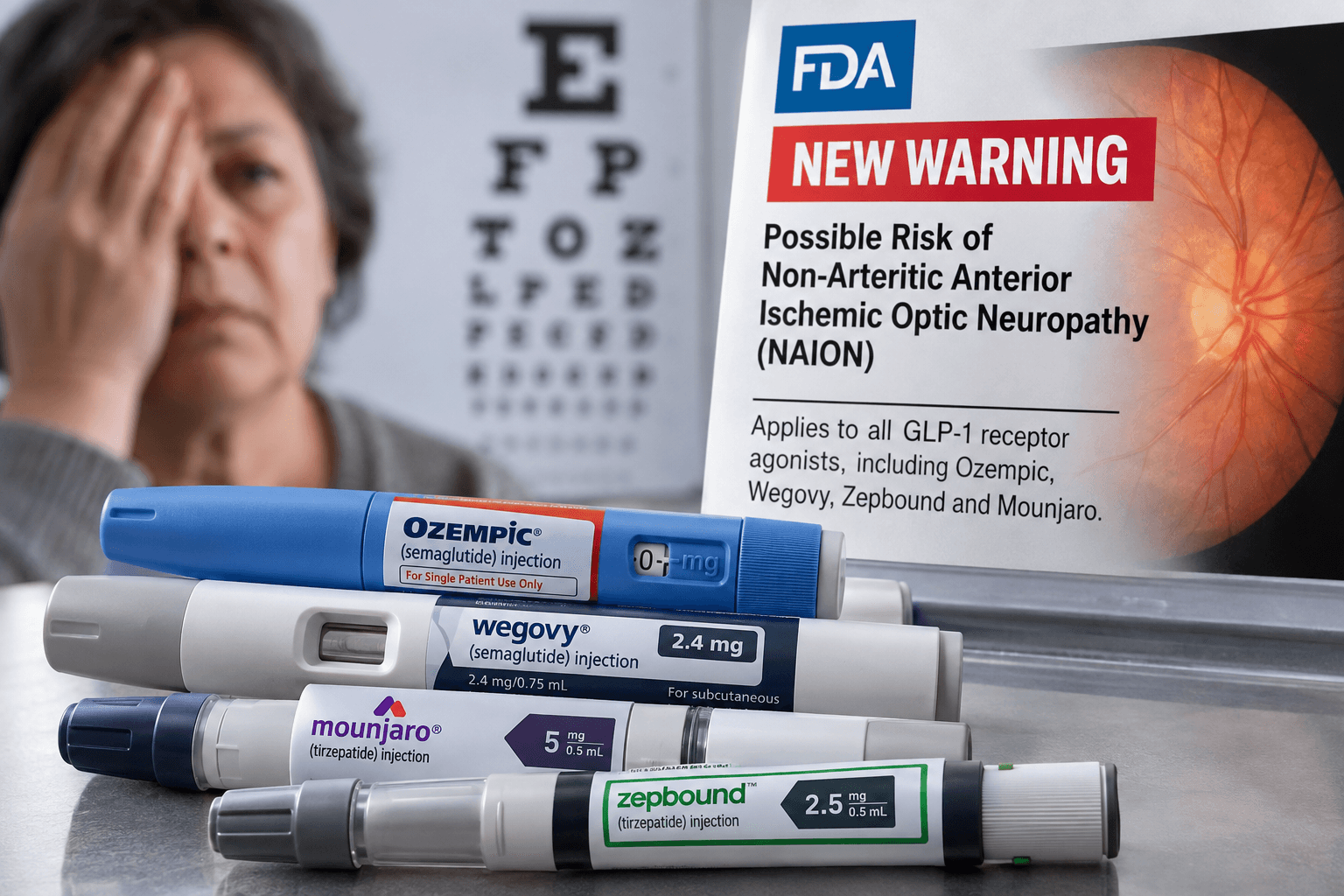
The FDA will require new warnings across the entire GLP-1 drug class about a possible increased risk of NAION, a rare condition that damages the optic nerve and can cause permanent vision loss. The class includes Ozempic, Wegovy, Zepbound and Mounjaro. Because the drugs are widely used, the warning forces a difficult question: when a patient develops NAION, should treatment stop? Regulators in Europe and the U.S. have answered differently. An ophthalmologist who has asked patients about GLP-1 use for two years says the FDA should now study what happens after a diagnosis, and that patients cannot wait years for answers.

GLP-1 Side Effects Draw Scrutiny as Measles and Ebola Cases Climb

GLP-1 Side Effects Draw Scrutiny as Measles and Ebola Cases Climb

The Washington Post is examining the rare but serious side effects linked to GLP-1 receptor agonists, including ischemic optic neuropathy, gallstones and pancreatitis. The health news roundup also covers a new HIPAA rule requiring providers to answer health data requests within 15 days, an NIH leadership appointment, and an FDA nominee the White House is reportedly weighing dropping. Measles cases continue to rise in the U.S., and Ebola is hitting children hard in the Congo, according to UNICEF.

Draft HHS Peptide Policy Puts Pharmacists Between Access and Caution

Draft HHS Peptide Policy Puts Pharmacists Between Access and Caution

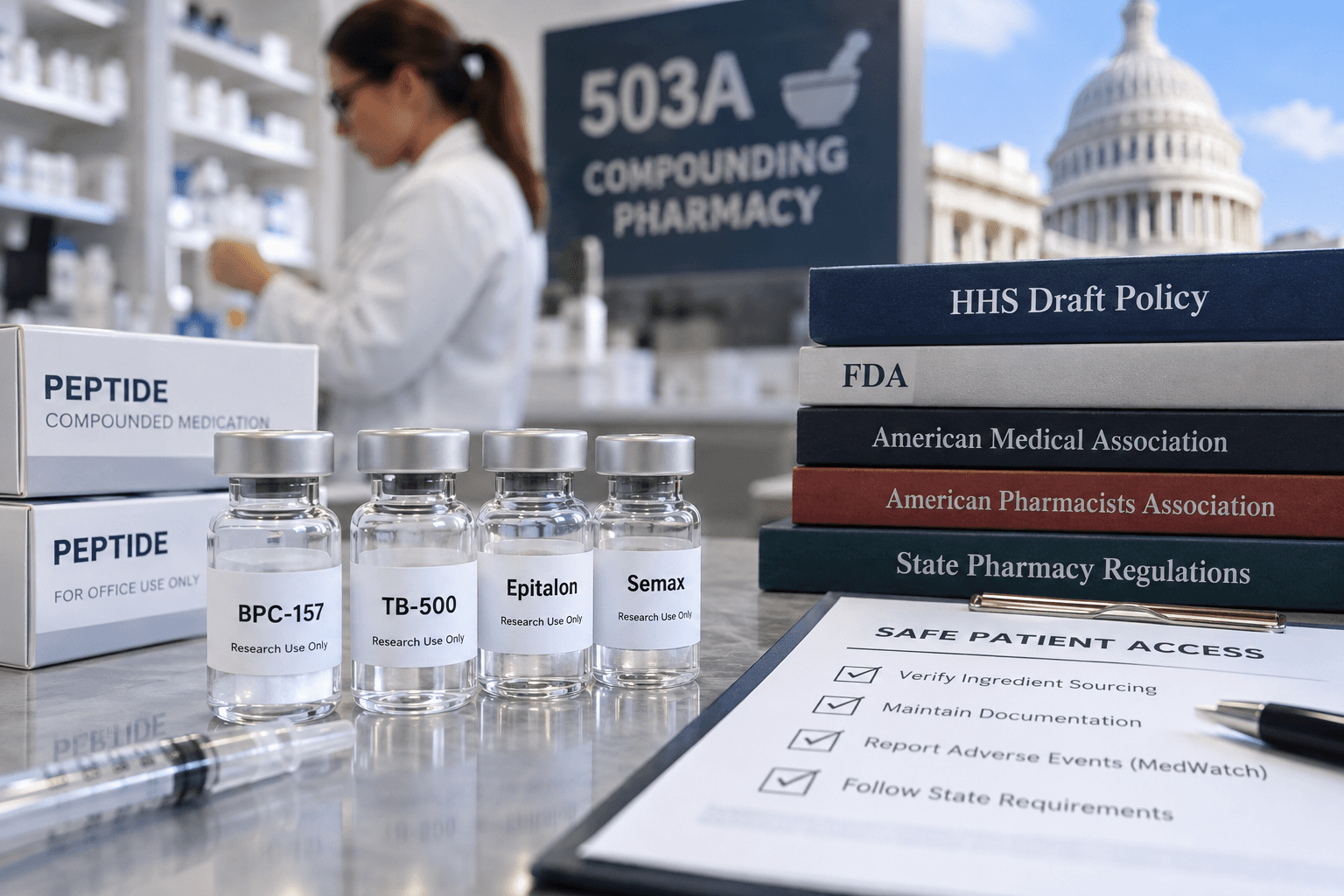
As the comment period closes on a Department of Health and Human Services draft policy, pharmacy leaders are being urged to wait for the final version from the FDA before changing operations. The draft would let state-licensed 503A pharmacies compound six unapproved peptides, including BPC-157 and TB-500, without federal enforcement action. Supporters say the shift could bring patients into regulated channels and away from gray-market sellers. FDA reviewers, the American Medical Association, and the American Pharmacists Association have raised safety and evidence concerns. Pharmacists weighing entry into peptide compounding should verify ingredient sourcing, documentation, adverse event reporting, and state rules while the policy remains in draft form.