Draft HHS Peptide Policy Puts Pharmacists Between Access and Caution
As the comment period closes on a Department of Health and Human Services draft policy, pharmacy leaders are being urged to wait for the final version from the FDA before changing operations. The draft would let state-licensed 503A pharmacies compound six unapproved peptides, including BPC-157 and TB-500, without federal enforcement action. Supporters say the shift could bring patients into regulated channels and away from gray-market sellers. FDA reviewers, the American Medical Association, and the American Pharmacists Association have raised safety and evidence concerns. Pharmacists weighing entry into peptide compounding should verify ingredient sourcing, documentation, adverse event reporting, and state rules while the policy remains in draft form.
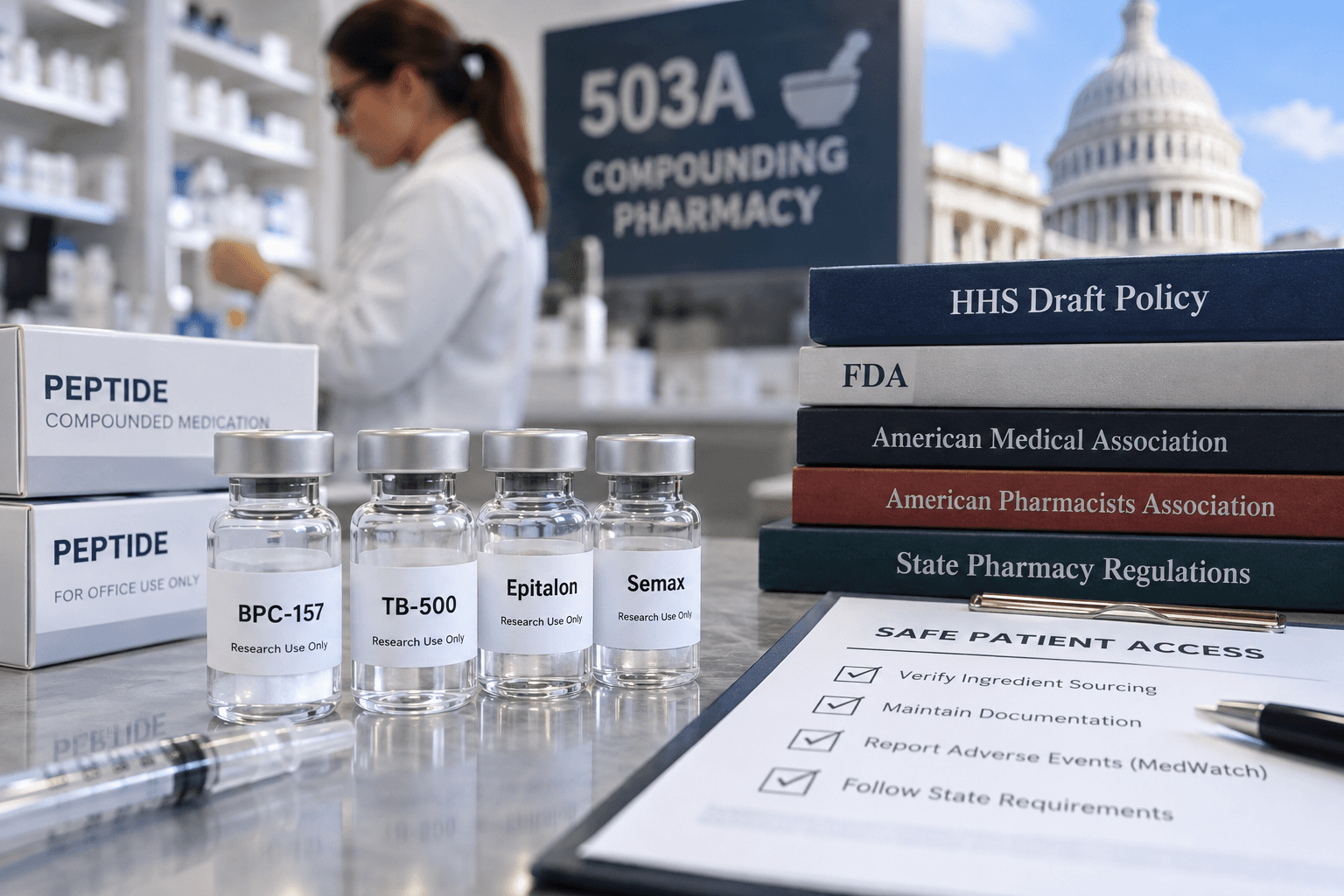
- HHS’s draft policy would let 503A pharmacies compound six unapproved peptides without federal enforcement action.
- The covered peptides are BPC-157, TB-500, KPV, Semax, MOTS-c, and Epitalon.
- Supporters say the policy could move patients from gray-market sellers into regulated channels.
- FDA reviewers previously found none of the nominated peptides met criteria for the official bulk drug list.
- The AMA and APhA have raised safety and evidence concerns about the draft.
- Because the policy is still in draft form, pharmacy leaders are urged to wait for the final FDA version.
- Compounders must verify ingredient sourcing, certificates of analysis, and oral absorption documentation.
- State boards of pharmacy will set local enforcement standards, so state and federal rules both apply.
The comment period is closing on a Department of Health and Human Services (HHS) draft policy that would allow 503A pharmacies to compound six unapproved peptides without federal enforcement action. Experts are urging pharmacy leaders to wait for the final version of the policy from the FDA before making operational commitments.
Can pharmacies compound peptides under the HHS draft policy?
The interim framework covers BPC-157, TB-500, KPV, Semax, MOTS-c, and Epitalon. Under the proposal, state-licensed 503A pharmacies could compound these peptides under designated quality standards and route limitations. HHS has framed the draft around creating a regulated environment that reestablishes the traditional care triad among the patient, prescriber, and pharmacist. Industry proponents and telehealth platforms view the shift as a way to expand legitimate patient access while steering consumers away from unverified online sellers.
The pressure on pharmacies is already real. Matt Martin, PharmD, BCSCP, vice president of clinical services at PCCA, said pharmacists and prescribers have faced a steady stream of inquiries from patients trying to obtain these compounds outside conventional health care channels. Many of the products are sold through social media and online venues under research-use-only labels. “I think it’s important to note that the policy is a draft policy and it has an open comment period that’s about to end,” Martin told Drug Topics. “Anytime you have an opportunity for comments on a policy, [that] means that policy could have some changes that are made to it. It’s not guaranteed.”
Scientific and professional objections
Why are FDA scientists and medical groups objecting to peptide compounding?
Substantial opposition has come from scientific staff at the FDA, who warn that bypassing formal approval processes carries public health risks. Agency reviewers previously concluded that none of the nominated peptides met statutory criteria for inclusion on the official bulk drug list. Their reasons included limited human clinical trial data and uncertainties about product characterization.
Major professional societies have raised similar concerns. The American Medical Association formally adopted policy urging federal health authorities to rescind directives that ease compounding restrictions on unapproved synthetic peptides. AMA leaders warned that compounding these substances without sufficient proof of safety and efficacy exposes patients to serious, preventable harm.
The American Pharmacists Association submitted its own formal comments, stressing that patient safety and rigorous science must guide federal reviews. Brigid Groves, PharmD, MS, APhA’s vice president of professional affairs, said existing evidence remains insufficient for clinicians to confidently counsel patients on long-term safety, drug interactions, and therapeutic outcomes.
What pharmacies should verify before compounding
Because the policy remains in draft form, Martin advises pharmacy leaders to exercise caution and monitor regulatory developments before committing to full-scale changes. Public feedback could alter specific provisions, so current requirements may shift before the FDA issues final rulemaking.
What should pharmacies verify before compounding peptides?
Pharmacies considering peptide compounding must confirm that bulk active ingredients come strictly from registered facilities that follow current good manufacturing practices and provide thorough certificates of analysis. Compounders must also keep documentation showing adequate absorption for oral formulations, follow mandatory adverse event reporting through federal MedWatch channels, and apply required product labeling. State boards of pharmacy will ultimately set local enforcement standards, so pharmacy managers will need to review both state and federal rules before dispensing.
“What you think is the requirement today may not be the requirement when this policy changes,” Martin concluded. “Maybe it doesn’t change at all; we don’t know.”
FAQ
- What would the HHS draft peptide policy allow?
- The draft would allow state-licensed 503A pharmacies to compound six unapproved peptides: BPC-157, TB-500, KPV, Semax, MOTS-c and Epitalon, under designated quality standards and route limitations, without federal enforcement action.
- Is the HHS peptide policy final?
- No. It is a draft with an open comment period, and public feedback could change its provisions before the FDA issues final rulemaking.
- Did FDA reviewers find the nominated peptides eligible for the bulk drug list?
- No. Agency reviewers previously concluded that none of the nominated peptides met statutory criteria for inclusion on the official bulk drug list, citing limited human clinical trial data and uncertainties about product characterization.
Read next
Pharmacists Must Guide Peptide Patients as FDA Weighs Compounding Rules
Pharmacists face growing patient questions about peptides, even as an FDA advisory panel recommended six unapproved peptides for inclusion on the Section 503A bulks list. Matt Martin, PharmD, BCSCP, vice president of clinical services at PCCA, told attendees at NCPA 2026 that advisory votes do not authorize compounding. Until the FDA completes formal rulemaking or places these substances on an interim Category 1 list, compounding them remains technically unlawful. Martin said pharmacists must also warn patients about the quality risks of “research use only” products sold online.
HHS Moves Ahead With Plan to Let Pharmacies Compound Popular Peptides
The Trump administration has sent an "interim access policy" for peptides to the White House for review, a step that would let specialty pharmacies compound certain widely used peptides. The peptides, including BPC-157, have gained popularity among followers of Health Secretary Robert F. Kennedy Jr. and wellness influencers, but they have not gone through the FDA's standard approval process, and most of the available data comes from animal studies. An FDA advisory panel recommended lifting restrictions on six of seven peptides in July, a recommendation that ran counter to the conclusions of the agency's own scientists. The policy's exact terms have not been published, and formal rulemaking could take years.

Users Report Harm From Unapproved Peptides as Federal Panel Moves to Loosen Limits
Users of unapproved peptides such as BPC-157 are reporting fatigue, migraines, and other side effects, even as an FDA advisory panel with industry-linked members has voted to ease restrictions on six experimental peptides. The vote went against FDA scientists who found too little evidence that the drugs work. The FDA has not issued a final decision, and clinical data on the drugs remain thin. Health Secretary Robert F. Kennedy Jr. has pushed to lower barriers to peptide use, and many companies could soon drop required warnings that their products are for research only.
RFK Jr. Eases Access to Unproven Peptides Over FDA Staff Objections
The Trump administration on Wednesday moved to loosen access to unproven peptide drugs favored by Health Secretary Robert F. Kennedy Jr. The new policy, posted by the Department of Health and Human Services, directs the FDA not to act against specialty pharmacies that sell six wellness peptides, including BPC-157 and TB-500. Six people familiar with the decision said FDA scientific staffers had little input and opposed the changes. Critics warn the move could undermine the agency's long-standing effort to keep unproven products off the U.S. market, while supporters call it a step toward patient choice.
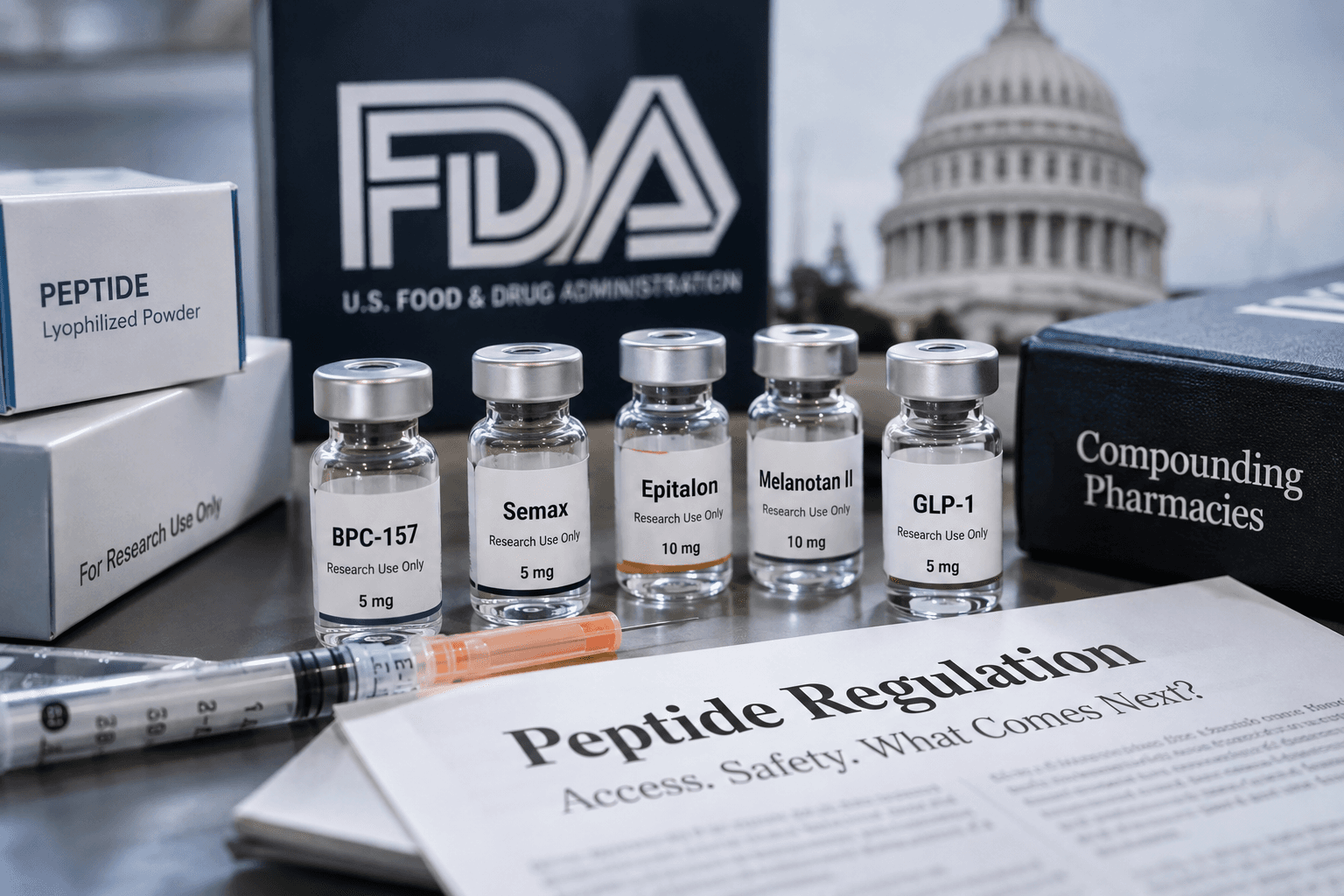
Gray-Market Peptides Are Everywhere. Here's What You Should Know.
Injectable peptides have moved from quiet laboratory research into wellness clinics, influencer videos, and biohacker forums. Many are sold through gray-market supply chains with little human safety data. Health Secretary Kennedy has pushed to restore access to peptides the FDA had restricted, and an FDA committee he reshaped has recommended letting six of them back into legal production through compounding pharmacies. Critics, including FDA scientists, warn that the products are often untested and inconsistently made. This guide walks through what peptides are, why the products are so popular, the risks researchers have flagged, and how the regulatory fight developed.