Pharmacists Must Guide Peptide Patients as FDA Weighs Compounding Rules
Pharmacists face growing patient questions about peptides, even as an FDA advisory panel recommended six unapproved peptides for inclusion on the Section 503A bulks list. Matt Martin, PharmD, BCSCP, vice president of clinical services at PCCA, told attendees at NCPA 2026 that advisory votes do not authorize compounding. Until the FDA completes formal rulemaking or places these substances on an interim Category 1 list, compounding them remains technically unlawful. Martin said pharmacists must also warn patients about the quality risks of “research use only” products sold online.
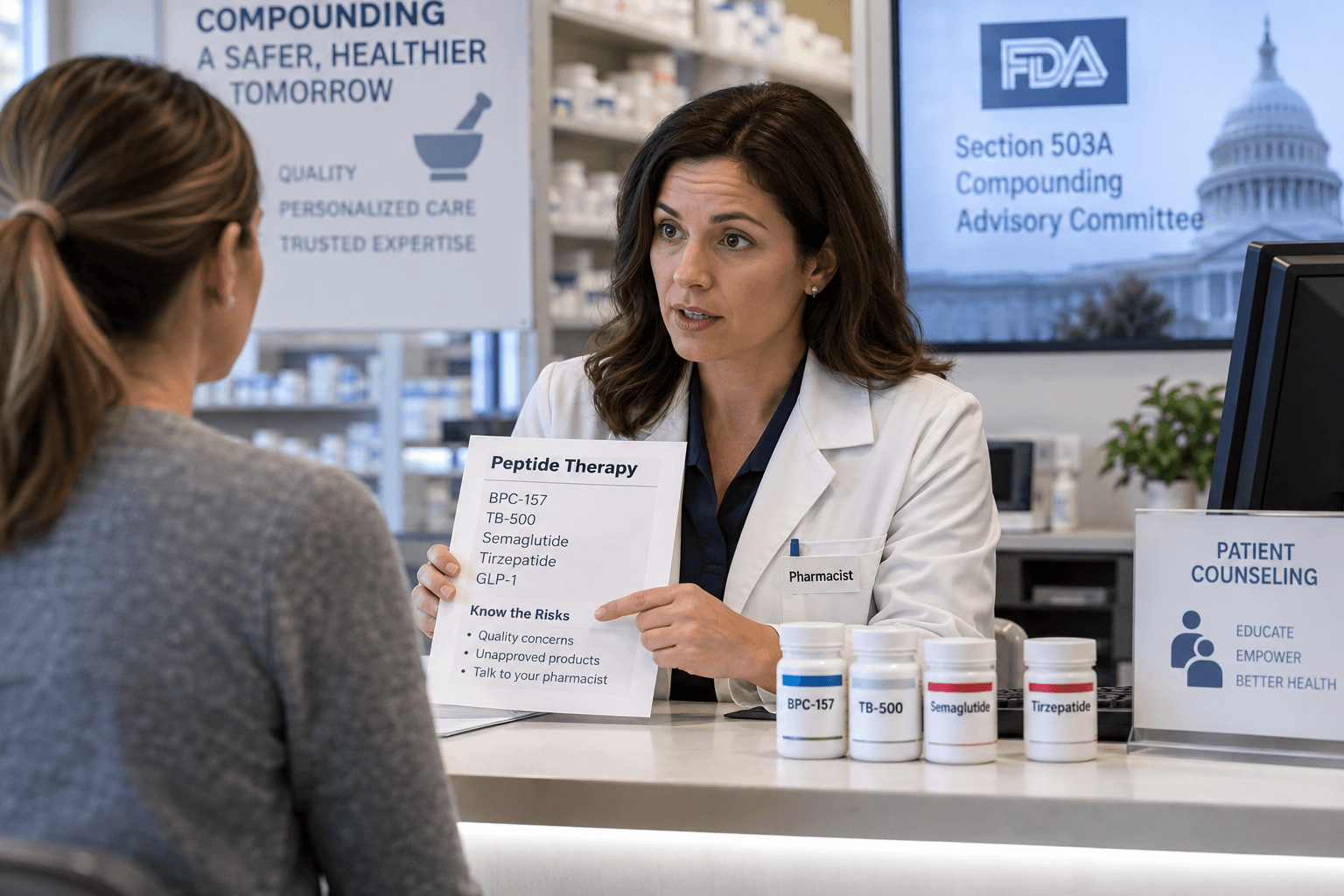
- PCCA's Matt Martin, PharmD, BCSCP, spoke at NCPA 2026 on the peptide landscape.
- FDA advisory panel voted to recommend six unapproved peptides for the Section 503A bulks list.
- Advisory votes do not authorize compounding; the substances remain technically unlawful to compound until final action.
- BPC-157 and TB-500 were recommended despite FDA staff concerns about chemical characterization and human trials.
- More than 80 peptide formulations, including insulin, semaglutide and tirzepatide, are FDA approved.
- Unvetted online peptide products may lack testing for contamination, endotoxins and heavy metals.
- Pharmacists should verify sources, ask who prescribed the product and explain risks to patients.
Pharmacists are getting more questions about peptides, and a favorable advisory vote does not change the law. That was the core message from Matt Martin, PharmD, BCSCP, vice president of clinical services at PCCA, during his NCPA 2026 session, “How to Navigate the Evolving Peptide Landscape.”
Interest is climbing among patients and prescribers alike. Patients bring questions to the pharmacy counter after encountering peptides on social media, podcasts and other online sources. Many of those products are sold as “research use only” vials, and pharmacists are increasingly the ones explaining what that label means.
“Patients are really looking for other opportunities to address their health challenges as well as improve the quality of their health span,” Martin told Drug Topics. “As they're looking for information, certainly from traditional sources [like] physicians, practitioners, [and] pharmacists, they're also seeking a lot of information through social media platforms, podcasts, other online sources, and finding information about these peptides, and then bringing those questions back to the pharmacy counter.”
Advisory votes are not legal authorization
The Pharmacy Compounding Advisory Committee recently voted to recommend six unapproved peptides for inclusion on the Section 503A bulks list. Martin stressed that those votes do not grant legal authority to compound.
Under federal standards, state-licensed 503A compounding pharmacies can prepare customized medications only in limited cases. The drug must have an official USP monograph, be a component of an FDA-approved product, or appear on the final bulks list.
Can pharmacies compound peptides before FDA rules are final?
The panel recommended substances such as BPC-157 and TB-500. FDA scientific staff objected, citing incomplete chemical characterization and a lack of human clinical trials. Until the agency completes formal notice-and-comment rulemaking or places these compounds on an interim Category 1 guidance list, compounding them remains technically unlawful.
That gap is why educational sessions matter, Martin said. Practitioners need to understand the legal boundaries that govern their practice before a patient asks about a product they cannot lawfully prepare.
Separating approved therapies from gray market products
Peptides are short chains of amino acids that act as cellular signaling messengers. More than 80 peptide formulations are fully FDA approved for clinical use. They include long-standing treatments such as insulin and newer GLP-1 receptor agonists like semaglutide (sold as Ozempic) and tirzepatide.
Patients often confuse those well-studied therapies with unapproved compounds promoted online for anti-aging, weight loss or muscle recovery. Many of those unapproved products come from overseas distributors. Some carry labels saying they are intended solely for research, a designation that helps them avoid federal oversight.
How can pharmacists tell approved peptides from gray market products?
Pharmacists can clear up that confusion. They can verify drug sources, evaluate clinical evidence and confirm whether a product is FDA approved.
The quality concerns are just as serious. Martin pointed out that unvetted products sold online are not evaluated for microbial contamination, endotoxins or heavy metal impurities. Medical experts and FDA scientists have cautioned that unapproved peptides may carry risks of severe allergic reactions, immunogenicity and unstudied tumor-promoting effects. A product packaged in a vial that resembles a legitimate injectable drug does not necessarily meet safe manufacturing standards.
Martin said pharmacists must slow down these conversations. Ask where the product was obtained and who prescribed it, he advised, and explain the risks in plain terms.
For pharmacists, Martin recommends staying current on peptide pharmacology and federal rulemaking. He also urged practitioners to align their guidance with established medical literature and to join professional groups such as NCPA, APhA or APC to receive timely policy updates.
Supporters argue that bringing peptides into regulated 503A pharmacies would add safety guardrails against an unchecked gray market. Until formal changes occur, however, practitioners must follow the current law. Maintaining supply chain integrity and keeping an open dialogue with patients and prescribers, Martin said, is how pharmacists can remain trusted clinical guides in this environment.
FAQ
- Does a favorable advisory committee vote make peptides legal to compound?
- No. Martin stressed that the committee's votes do not grant legal authority to compound. Until formal rulemaking or interim Category 1 listing, compounding them remains technically unlawful.
- Are all peptides unapproved?
- No. More than 80 peptide formulations are fully FDA approved for clinical use, including insulin, semaglutide and tirzepatide.
- What should pharmacists ask patients about a peptide product?
- Ask where the product was obtained and who prescribed it, and explain the risks in plain terms.
Read next
HHS Moves Ahead With Plan to Let Pharmacies Compound Popular Peptides
The Trump administration has sent an "interim access policy" for peptides to the White House for review, a step that would let specialty pharmacies compound certain widely used peptides. The peptides, including BPC-157, have gained popularity among followers of Health Secretary Robert F. Kennedy Jr. and wellness influencers, but they have not gone through the FDA's standard approval process, and most of the available data comes from animal studies. An FDA advisory panel recommended lifting restrictions on six of seven peptides in July, a recommendation that ran counter to the conclusions of the agency's own scientists. The policy's exact terms have not been published, and formal rulemaking could take years.

Users Report Harm From Unapproved Peptides as Federal Panel Moves to Loosen Limits
Users of unapproved peptides such as BPC-157 are reporting fatigue, migraines, and other side effects, even as an FDA advisory panel with industry-linked members has voted to ease restrictions on six experimental peptides. The vote went against FDA scientists who found too little evidence that the drugs work. The FDA has not issued a final decision, and clinical data on the drugs remain thin. Health Secretary Robert F. Kennedy Jr. has pushed to lower barriers to peptide use, and many companies could soon drop required warnings that their products are for research only.
Gray-Market Peptides Are Everywhere. Here's What You Should Know.
Injectable peptides have moved from quiet laboratory research into wellness clinics, influencer videos, and biohacker forums. Many are sold through gray-market supply chains with little human safety data. Health Secretary Kennedy has pushed to restore access to peptides the FDA had restricted, and an FDA committee he reshaped has recommended letting six of them back into legal production through compounding pharmacies. Critics, including FDA scientists, warn that the products are often untested and inconsistently made. This guide walks through what peptides are, why the products are so popular, the risks researchers have flagged, and how the regulatory fight developed.

Peptide ETFs Multiply as Wall Street Chases the Wellness Trend
REX Shares recently launched the REX Peptide ETF (PEPT), a fund holding companies that develop and manufacture peptide products, including GLP-1 drugs. Eli Lilly and Novo Nordisk are among its holdings. AdvisorShares has filed for a competing fund, the Peptide and Human Enhancement ETF. Other firms are also building wellness-themed funds, but investor money has not yet kept pace with the buzz. Some funds have seen outflows, and analysts say the sector's appeal may depend on timing and the broader market.
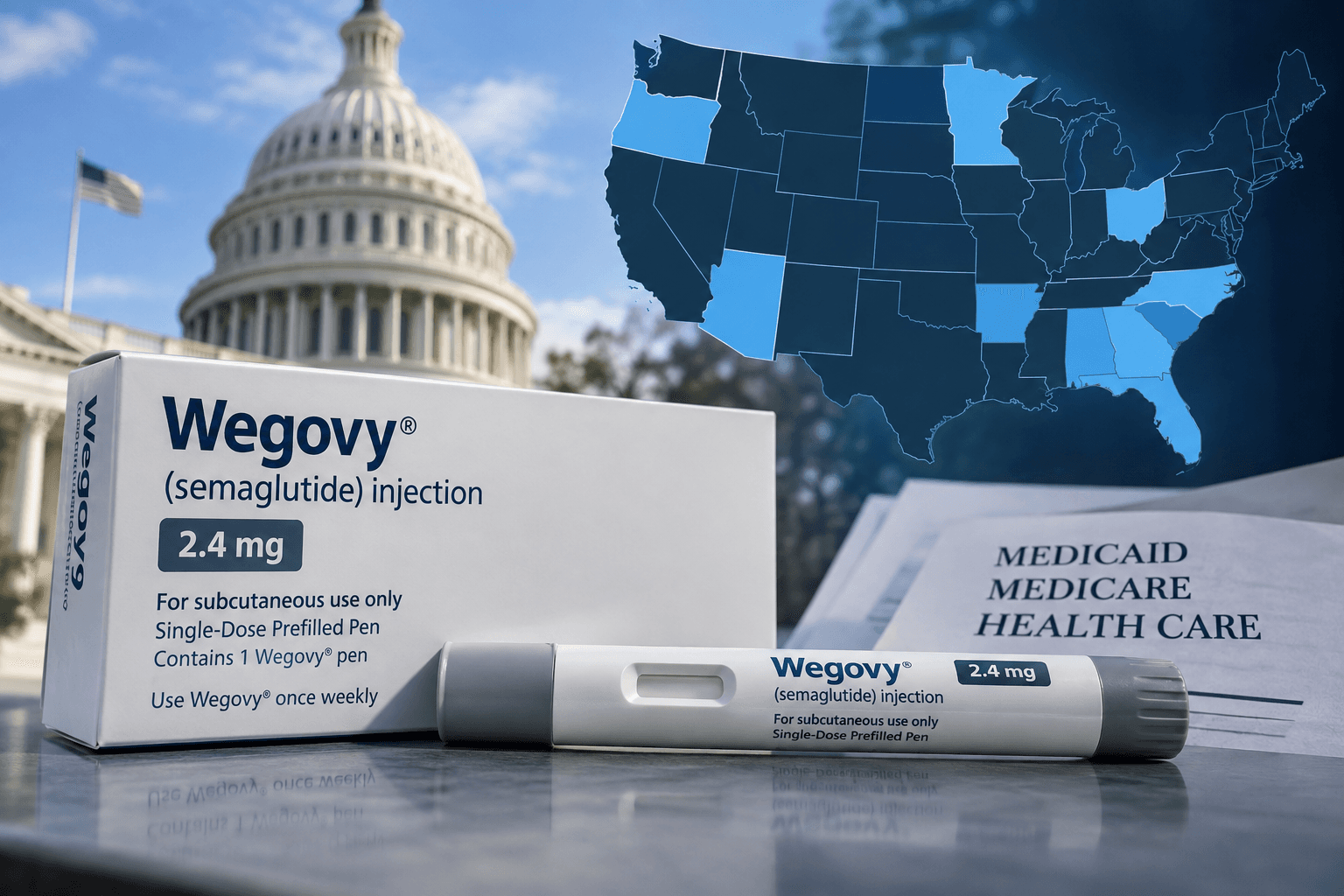
States Take Lead in Covering Weight Loss Drugs as Federal Government Holds Back
South Carolina and 13 other states are covering GLP-1s, a class of weight loss drugs, for Medicaid beneficiaries, despite the federal government's decision not to finalize a rule that would have allowed millions to access the treatment.