RFK Jr. Eases Access to Unproven Peptides Over FDA Staff Objections
The Trump administration on Wednesday moved to loosen access to unproven peptide drugs favored by Health Secretary Robert F. Kennedy Jr. The new policy, posted by the Department of Health and Human Services, directs the FDA not to act against specialty pharmacies that sell six wellness peptides, including BPC-157 and TB-500. Six people familiar with the decision said FDA scientific staffers had little input and opposed the changes. Critics warn the move could undermine the agency's long-standing effort to keep unproven products off the U.S. market, while supporters call it a step toward patient choice.
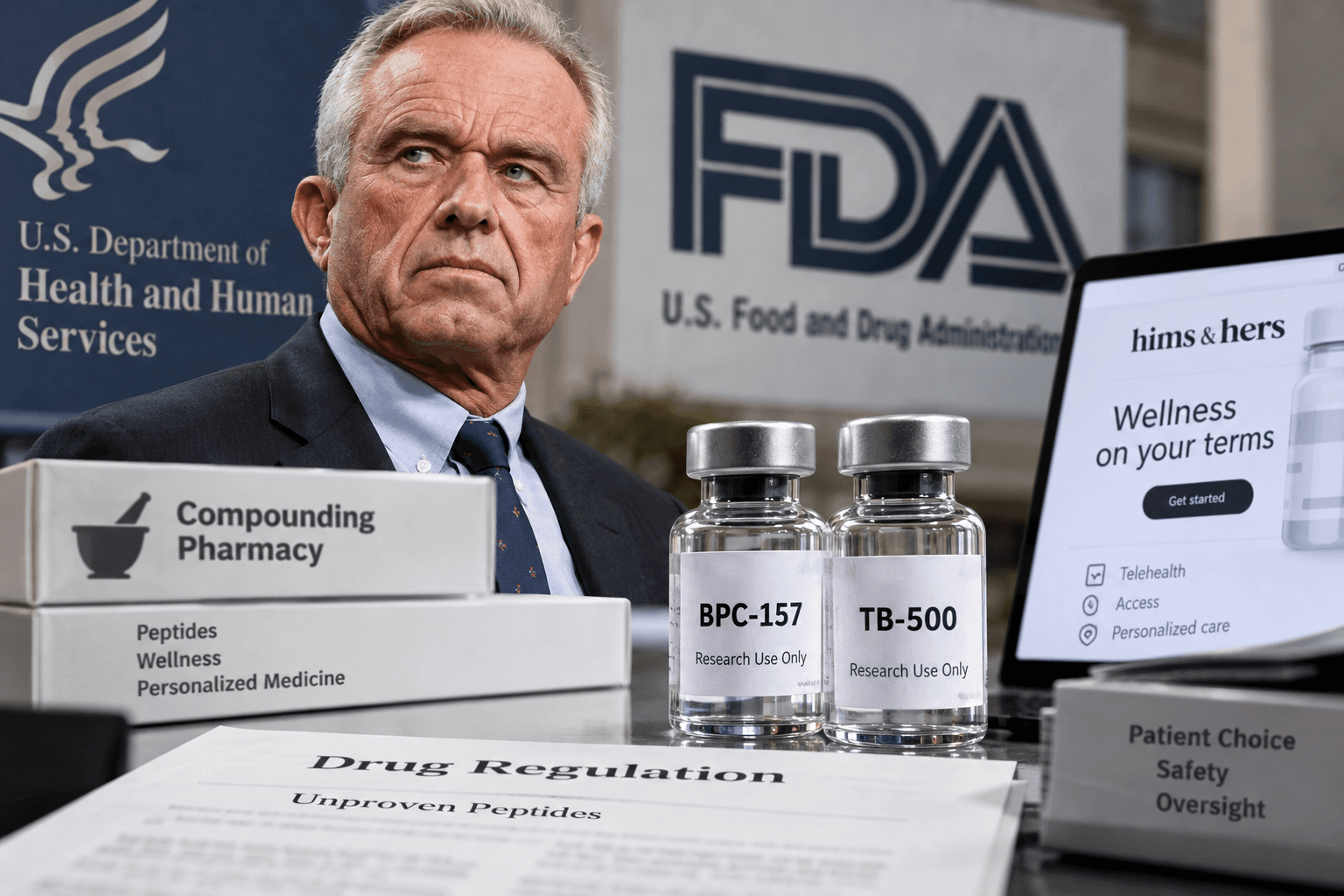
- HHS posted a policy Wednesday easing access to six unproven wellness peptides.
- The policy directs the FDA not to act against specialty pharmacies selling BPC-157, TB-500 and KPV, among others.
- Six people familiar with the decision said FDA scientific staffers opposed the changes.
- HHS dropped an earlier plan for an FDA regulation after FDA officials raised safety concerns.
- FDA staffers helped draft safeguards, including FDA-registered ingredient sources and side-effect reporting.
- Former FDA official Peter Lurie says the FDA lacks authority to enforce the pharmacy requirements.
- Analysts estimate the peptide market could exceed $2 billion.
- Hims & Hers plans to offer wellness peptides under the new policy.
The Trump administration on Wednesday moved to ease access to unproven peptide drugs favored by Health Secretary Robert F. Kennedy Jr. FDA scientific staffers had little input on the decision and opposed the changes, according to six people familiar with its development.
Which peptides does the new HHS policy cover?
The new policy, posted online by the Department of Health and Human Services (HHS), covers a handful of injectable peptides promoted within the wellness industry for uses such as building muscle, healing injuries and boosting energy. It directs the FDA not to take action against specialty pharmacies that sell six of them, including BPC-157, TB-500 and KPV.
Under FDA rules, those chemicals would otherwise be considered illegal drugs. They have not gone through the agency's review process for safety and effectiveness.
According to the document, Kennedy determined the change "advances patient choice and freedom" while protecting Americans from peptides sold online that are often made from unscreened ingredients. Kennedy has called himself a "big fan" of peptides and has previously described using BPC-157 to treat a muscle injury.
Lee Rosebush of the American Academy of Peptide Medicine said in an online post that HHS had taken "a huge step for patient and provider medical freedom."
The business has drawn major attention. Telehealth provider Hims & Hers recently announced plans to offer wellness peptides once the government changed its policy. Wall Street analysts estimate the market could be worth more than $2 billion.
Not FDA approved, but promoted for serious conditions
Some peptides occur naturally in the body, where they trigger hormones needed for growth, metabolism and healing. Drugmakers have turned several into approved medications, including semaglutide (Ozempic, Wegovy) and tirzepatide (Mounjaro, Zepbound) for diabetes and weight loss. Both are GLP-1 drugs.
Are unproven peptides like BPC-157 FDA approved?
The chemicals covered by the new policy have not been approved as safe and effective by the FDA. Still, they are promoted for conditions including ulcerative colitis, wound healing, obesity, osteoporosis, opioid withdrawal, insomnia and narcolepsy, cerebral ischemia, migraine and trigeminal neuralgia.
Peter Lurie, a former FDA official who now leads the nonprofit Center for Science in the Public Interest, noted that the FDA has approved rigorously tested drugs for all of those conditions. As people "are diverted from those drugs toward this stuff, there will be more unnecessary pain and suffering," he said.
Lurie also questioned the timing, days before the midterm election. "This is a wink and nod to the MAHA faithful in the hope that they'll show up at the polls," he said, referring to Kennedy's "Make America Healthy Again" movement.
An HHS spokesperson said the agency is "confronting the risks of black-market peptides" by giving Americans "a more controlled alternative through licensed U.S. compounders." The decision fits a pattern of Kennedy reshaping health policy in the MAHA mold. Some of the movement's biggest figures sell peptide injections and supplements.
A retreat from the original plan
Why did HHS change its peptide compounding policy?
The policy published Wednesday is a step back from HHS's original approach, according to two of the people who discussed its development. HHS officials initially wanted the FDA to draft a regulation that would add BPC-157 and other peptides to a list of substances deemed safe for compounding pharmacies, which make customized medications.
FDA officials warned that agency scientists had major safety concerns and would not support a rule deeming the substances safe. HHS shifted to an approach that directs the FDA not to enforce its rules against pharmacies that compound them.
FDA staffers ultimately provided technical help in drafting the plan, including safeguards meant to improve safety. Pharmacies must use peptide ingredients from FDA-registered factories, collect information on side effects and verify the purity of the peptides they use. Lurie pointed out that under federal law, the FDA does not have the authority to enforce those pharmacy requirements.
Decisions on peptides and compounding pharmacies have almost always come from the FDA, which has an office dedicated to protecting consumers from unsafe or poor-quality compounded drugs. The agency's focus on compounding safety sharpened after a deadly 2012 outbreak of fungal meningitis was linked to contaminated injections from a Massachusetts compounding pharmacy. Former FDA officials said it is extremely rare for HHS to lead on compounding policy, though federal law gives HHS authority over drug regulation, which is then delegated to the FDA.
The FDA has warned about the risks of unproven peptides for years. In 2023, it added more than a dozen peptides, including BPC-157 and TB-500, to its list of substances that should not be compounded because of risks of allergic reactions, kidney damage and tumor growth. Many Americans using peptides today skip the doctor and pharmacy altogether, ordering vials online from chemical manufacturers based in China. Sellers often label products "for research use only" to sidestep U.S. rules.
At a July meeting, FDA staffers reiterated that more than half a dozen peptides brought forward for reconsideration remained unproven for safety and effectiveness. A panel of outside experts nonetheless voted to drop restrictions on the six peptides named in Wednesday's documents. The panel, selected by Kennedy's HHS, included several doctors, pharmacists and consultants who work in the peptide field.
FAQ
- Which peptides does the new HHS policy cover?
- It covers six injectable peptides sold by specialty pharmacies, including BPC-157, TB-500 and KPV.
- Are the peptides covered by the policy FDA approved?
- No. The chemicals covered by the policy have not been approved by the FDA as safe and effective.
- Did FDA staff support the change?
- No. FDA scientific staffers had little input on the decision and opposed the changes, according to six people familiar with its development.
Read next
HHS Moves Ahead With Plan to Let Pharmacies Compound Popular Peptides
The Trump administration has sent an "interim access policy" for peptides to the White House for review, a step that would let specialty pharmacies compound certain widely used peptides. The peptides, including BPC-157, have gained popularity among followers of Health Secretary Robert F. Kennedy Jr. and wellness influencers, but they have not gone through the FDA's standard approval process, and most of the available data comes from animal studies. An FDA advisory panel recommended lifting restrictions on six of seven peptides in July, a recommendation that ran counter to the conclusions of the agency's own scientists. The policy's exact terms have not been published, and formal rulemaking could take years.

Users Report Harm From Unapproved Peptides as Federal Panel Moves to Loosen Limits
Users of unapproved peptides such as BPC-157 are reporting fatigue, migraines, and other side effects, even as an FDA advisory panel with industry-linked members has voted to ease restrictions on six experimental peptides. The vote went against FDA scientists who found too little evidence that the drugs work. The FDA has not issued a final decision, and clinical data on the drugs remain thin. Health Secretary Robert F. Kennedy Jr. has pushed to lower barriers to peptide use, and many companies could soon drop required warnings that their products are for research only.
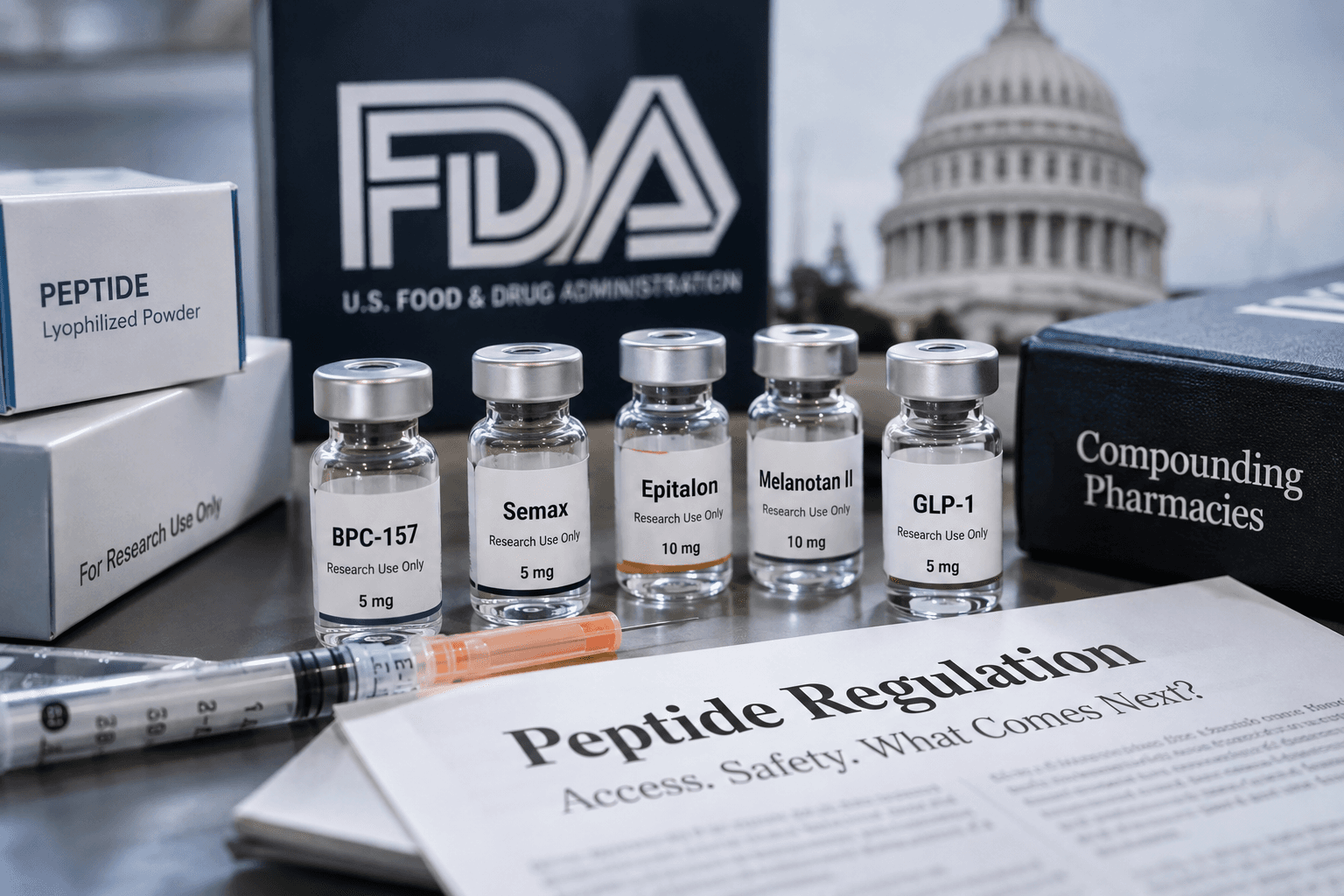
Gray-Market Peptides Are Everywhere. Here's What You Should Know.
Injectable peptides have moved from quiet laboratory research into wellness clinics, influencer videos, and biohacker forums. Many are sold through gray-market supply chains with little human safety data. Health Secretary Kennedy has pushed to restore access to peptides the FDA had restricted, and an FDA committee he reshaped has recommended letting six of them back into legal production through compounding pharmacies. Critics, including FDA scientists, warn that the products are often untested and inconsistently made. This guide walks through what peptides are, why the products are so popular, the risks researchers have flagged, and how the regulatory fight developed.
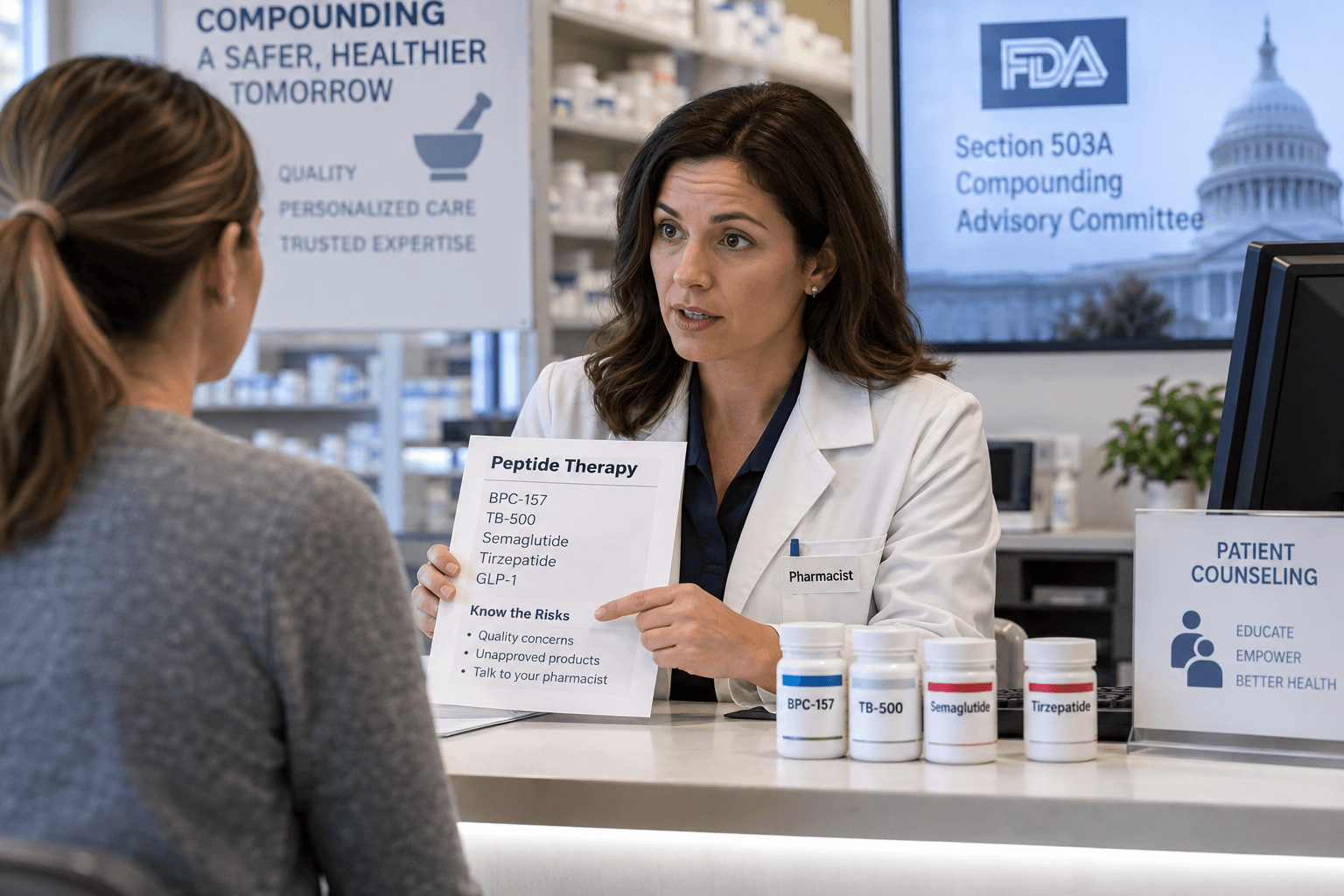
Pharmacists Must Guide Peptide Patients as FDA Weighs Compounding Rules
Pharmacists face growing patient questions about peptides, even as an FDA advisory panel recommended six unapproved peptides for inclusion on the Section 503A bulks list. Matt Martin, PharmD, BCSCP, vice president of clinical services at PCCA, told attendees at NCPA 2026 that advisory votes do not authorize compounding. Until the FDA completes formal rulemaking or places these substances on an interim Category 1 list, compounding them remains technically unlawful. Martin said pharmacists must also warn patients about the quality risks of “research use only” products sold online.

Peptide ETFs Multiply as Wall Street Chases the Wellness Trend
REX Shares recently launched the REX Peptide ETF (PEPT), a fund holding companies that develop and manufacture peptide products, including GLP-1 drugs. Eli Lilly and Novo Nordisk are among its holdings. AdvisorShares has filed for a competing fund, the Peptide and Human Enhancement ETF. Other firms are also building wellness-themed funds, but investor money has not yet kept pace with the buzz. Some funds have seen outflows, and analysts say the sector's appeal may depend on timing and the broader market.