Retatrutide Eases Knee Osteoarthritis Pain in Patients With Obesity, Trial Finds
An investigational obesity drug, retatrutide, significantly reduced pain and improved physical function in adults with obesity and knee osteoarthritis, according to the phase 3 TRIUMPH-4 trial. Results were presented at the American College of Rheumatology annual meeting and published simultaneously in the New England Journal of Medicine. The drug targets three hormone receptors and produced substantial weight loss, but a higher rate of side effects than placebo, and the researchers called for further studies on how it works and whether it can modify the disease itself.
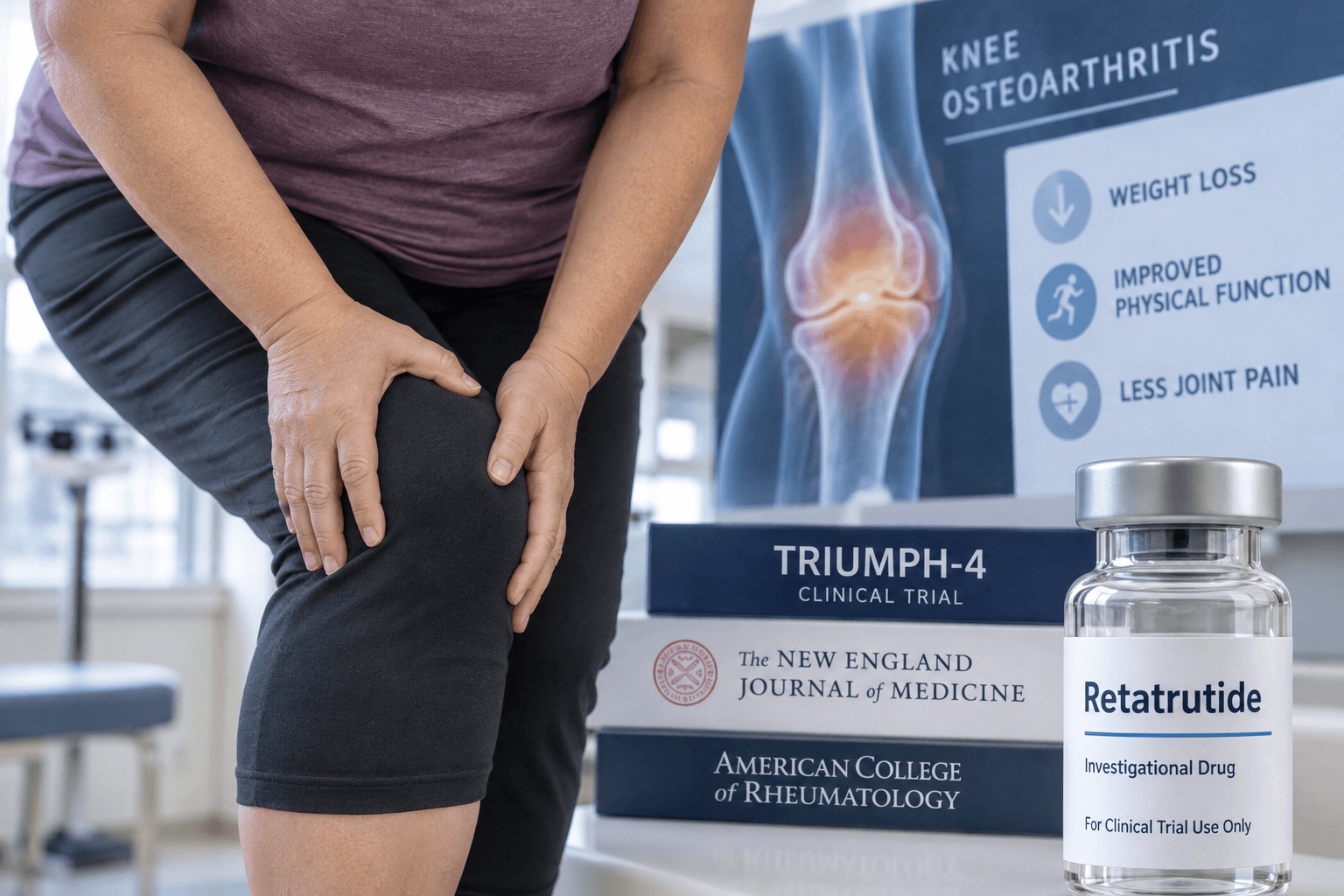
- TRIUMPH-4 tested retatrutide in 445 adults with obesity and knee osteoarthritis over 68 weeks.
- WOMAC pain scores fell by about 4.4 points with retatrutide, compared with 2.43 points with placebo.
- Participants on retatrutide lost more than one-quarter of their body weight.
- Both placebo and drug groups received lifestyle counseling, which likely contributed to placebo-group improvements.
- Serious adverse events affected about 10% of retatrutide users, versus 2% on placebo.
- Gastrointestinal effects were most common, and skin sensitivity was reported by 12% on the drug.
- Researchers called for further studies on mechanisms and on whether the drug can modify OA.
The investigational obesity drug retatrutide substantially reduced knee pain and improved physical function in adults with obesity and knee osteoarthritis (OA), according to the TRIUMPH-4 trial. Thomas Conaghan, MBBS, PhD, of the University of Leeds in England, presented the findings at the American College of Rheumatology annual meeting. The results were published simultaneously in the New England Journal of Medicine (NEJM), along with a recap of the earlier TRIUMPH-1 study.
Retatrutide, a peptide drug, acts on three targets: the glucagon-like peptide-1 (GLP-1) receptor, the glucagon receptor and the glucose-dependent insulinotropic polypeptide (GIP) receptor. Earlier trials have linked this combined action to greater weight loss than single-action GLP-1 drugs such as semaglutide (Ozempic, Wegovy) and tirzepatide (Zepbound, Mounjaro). In TRIUMPH-4, patients who received retatrutide lost more than one-quarter of their body weight after 68 weeks.
Excess body weight is a well-recognized contributor to OA pain and disability, which is why weight-loss drugs are increasingly considered as a potential treatment for the condition. The American College of Rheumatology recently issued new OA management guidelines that place even greater emphasis on weight loss than previous versions did. The trial results may also draw more attention to what some researchers call “metabolic osteoarthritis,” which is considered clinically and etiologically distinct from OA presumed to stem from injury.
The study randomized 445 patients with obesity, defined as a body mass index above 27, and knee OA from the United States, Canada, Mexico, Australia and Spain. Participants were assigned in equal numbers to placebo or to retatrutide at 9 mg or 12 mg, given weekly by subcutaneous injection. Baseline BMI averaged 40.4, and body weight averaged 113 kg (249 lbs). About 63% of participants were women. Importantly, all participants were also urged to follow a lifestyle program that included individualized dietary counseling and a goal of at least 150 minutes of physical activity per week. The investigators noted that this program likely contributed to the weight loss and pain reduction seen in the placebo group.
Does retatrutide reduce knee osteoarthritis pain?
Pain was the study’s co-primary outcome, measured with the Western Ontario McMaster Universities Osteoarthritis Index (WOMAC). Scores averaged 5.95 at baseline. By week 68, pain scores had fallen by 4.48 points with the 9-mg dose and 4.41 points with the 12-mg dose. Placebo participants saw a decline of 2.43 points. Conaghan emphasized that 64% of participants had Kellgren-Lawrence grade 3 OA, which reflects substantial joint damage, making the degree of pain relief notable. Physical function, also measured by WOMAC, improved by 4.14 points with 9 mg and 4.20 points with 12 mg, compared with a 2.06-point improvement with placebo.
How much weight do patients lose on retatrutide?
Weight loss was the second primary outcome. Both retatrutide groups had average losses approaching 7% by week 8, compared with about 2% in the placebo arm. Losses continued through week 68 without an obvious plateau. Some patients withdrew from the trial because they considered their weight loss excessive.
Blood lipid levels also improved with retatrutide, including triglycerides and non-HDL cholesterol, while HDL cholesterol was essentially unchanged. High-sensitivity C-reactive protein, a marker of systemic inflammation, fell by half in the active treatment groups, compared with a 25% reduction in the placebo group.
What are the side effects of retatrutide?
The safety profile raises questions that will need further study. About 13% of participants in the 9-mg group and 18% in the 12-mg group withdrew because of adverse events, compared with 4% in the placebo group. Serious adverse events occurred in about 10% of both retatrutide groups, versus 2% of placebo recipients. Gastrointestinal events were the most common, consistent with experience with other GLP-1 drugs. Fatigue, dizziness, headache and urinary tract infections also occurred at rates two to four times higher than with placebo. Increased skin sensitivity affected 12% of patients, particularly at the higher dose, compared with none in the placebo group. Adverse events appeared most common among participants with lower BMI values, below 35.
The NEJM authors offered only a brief explanation of the mechanism. They wrote that “weight reduction leads to decreased loading on the knee, and the level of load reduction appears to be a multiple of the actual weight lost.” They also suggested that reduced adipose tissue may lower systemic inflammatory mediators, though they stopped short of confirming how retatrutide affects OA pain. The authors called for “further studies” on the underlying mechanisms, as well as on whether the drug can modify the disease itself. A key question, they noted, is whether retatrutide helps patients with OA who are metabolically normal without causing unhealthy weight loss.
FAQ
- Did retatrutide reduce knee pain more than placebo?
- Yes. Pain scores fell by 4.48 points with the 9-mg dose and 4.41 points with the 12-mg dose, compared with a 2.43-point decline with placebo.
- How much weight did retatrutide patients lose?
- Both retatrutide groups had average losses approaching 7% by week 8, compared with about 2% with placebo. Patients on retatrutide lost more than one-quarter of their body weight after 68 weeks.
- Did participants stop retatrutide because of side effects?
- About 13% of participants in the 9-mg group and 18% in the 12-mg group withdrew because of adverse events, compared with 4% in the placebo group.
Read next
Retatrutide Eases Sleep Apnea in Two Phase III Trials
Retatrutide, an experimental triple agonist that targets GIP, GLP-1 and glucagon receptors, improved obstructive sleep apnea in adults with obesity or overweight, according to two parallel randomized trials. The results were presented at the Congress of the European Sleep Research Society and published in the New England Journal of Medicine. Researchers found effects similar to those seen with tirzepatide, the first drug approved to treat sleep apnea, though the trials did not directly compare the two medications.
Eli Lilly's Obesity Drug Shows Promise, But Heart Benefits Remain Unclear
Eli Lilly's new obesity drug, retatrutide, has been shown to be highly effective in weight loss, with participants losing 22.6% of their weight after 80 weeks. However, the drug's impact on cardiovascular risk remains unclear due to a lack of statistically significant results in a recent Phase 3 study.
Desperate for Weight Loss, People Turn to Unapproved Retatrutide
Retatrutide, a promising weight-loss drug not yet approved by the FDA, is being sought after by people dissatisfied with current medications, with some turning to the gray market to purchase it, despite warnings from doctors about the risks to their health.
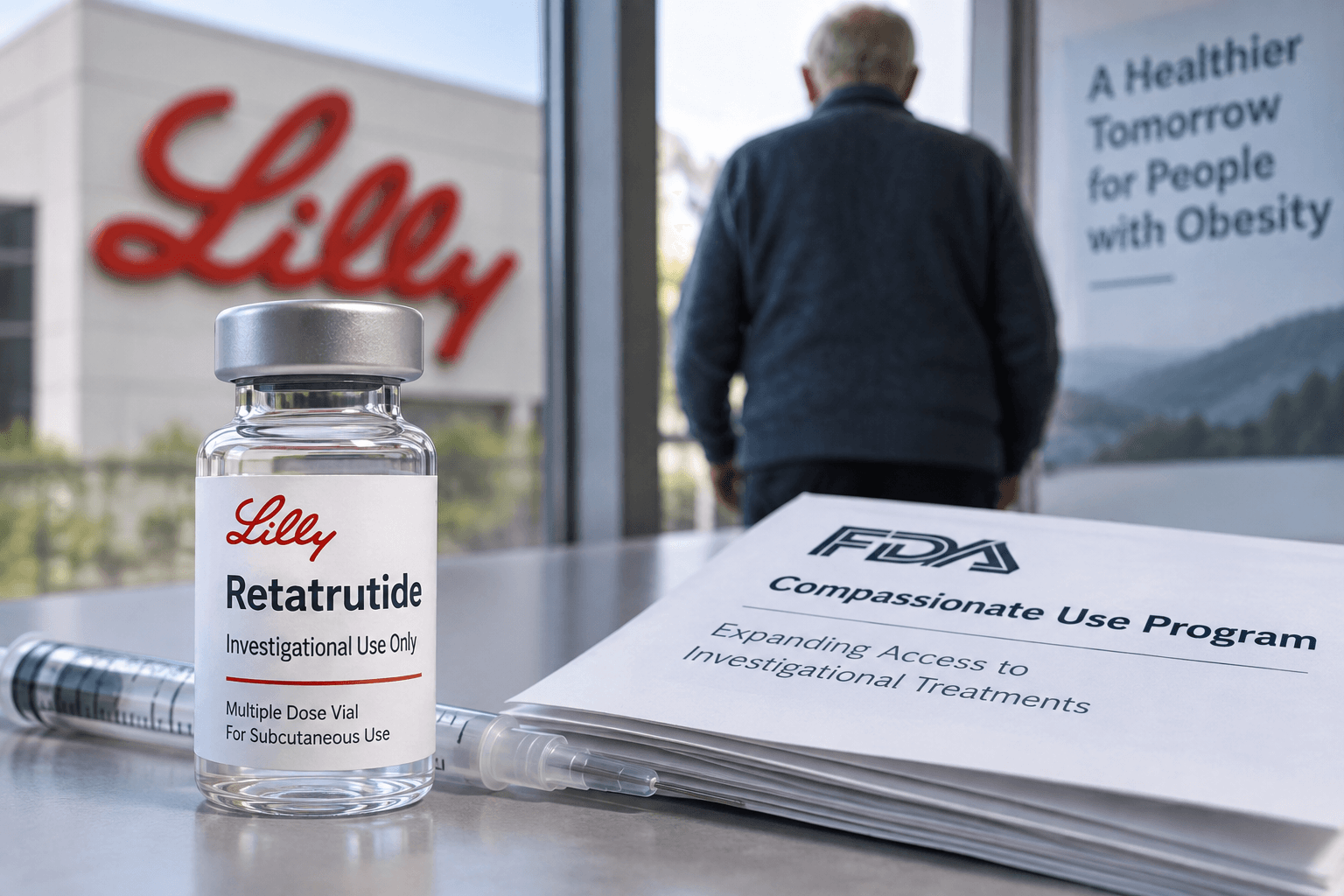
Eli Lilly Grants Access to Experimental Obesity Drug to 79-Year-Old Patient
Eli Lilly has given a 79-year-old patient access to its experimental obesity drug, retatrutide, through the FDA's compassionate use program. The move has raised eyebrows, with sources suggesting the patient may be well-connected. Retatrutide has shown promising results, with weight loss comparable to bariatric surgery.
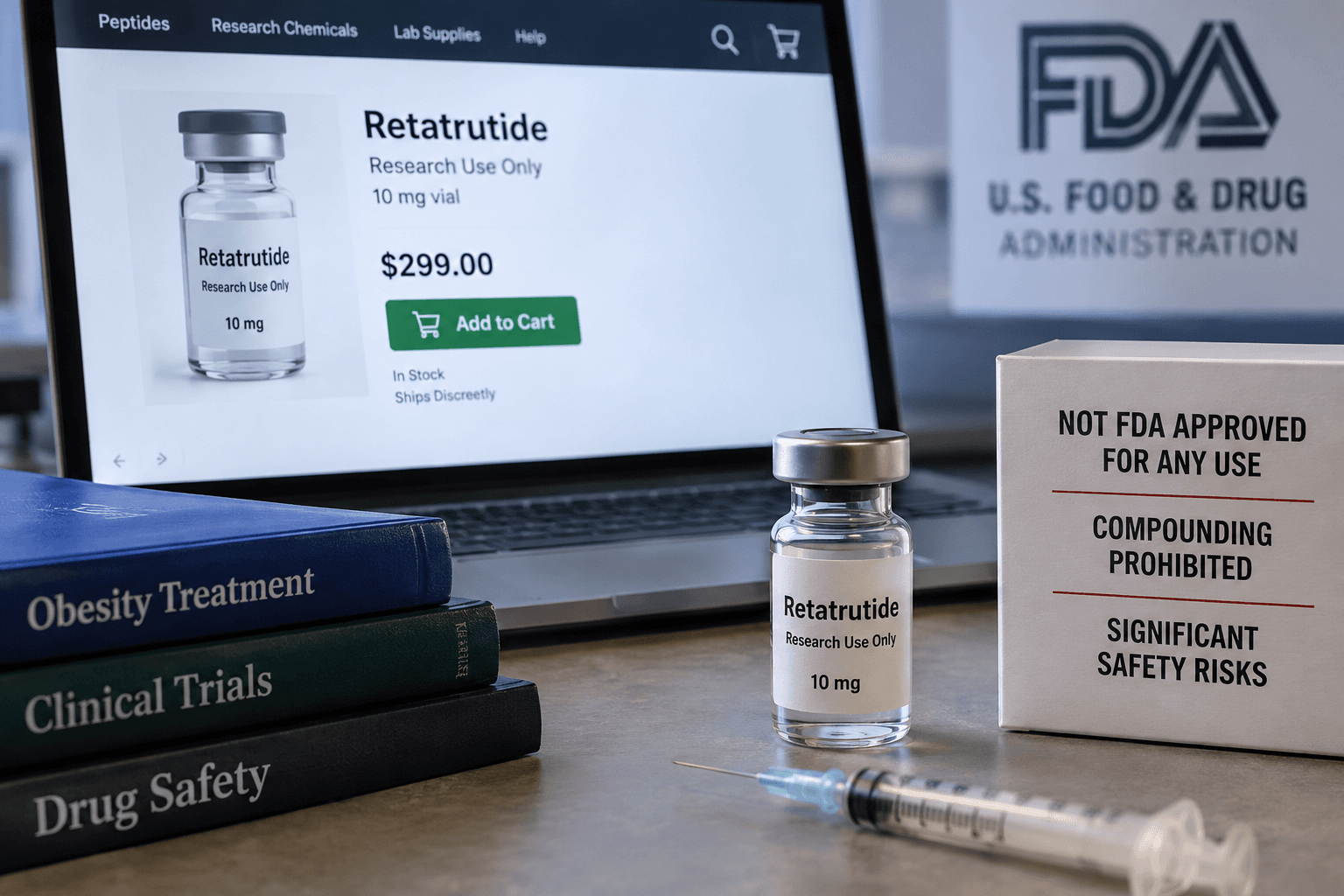
Retatrutide Is One Click Away, but That Does Not Make It Safe
Retatrutide, an investigational weight-loss and diabetes drug, is being sold online as a “research” product even though it has no FDA approval for any use. Federal regulators say federal law does not permit it to be compounded or sold, and clinicians warn that gray-market vials may contain the wrong dose, impurities, or no retatrutide at all. Promising trial data on the approved-for-study molecule do not establish that online products are safe or effective.