Semaglutide Tied to Lower Bone Fracture Risk in Diabetes Patients
A new study finds that people taking semaglutide for diabetes have a lower rate of bone fractures compared to those taking other anti-obesity medications. Researchers analyzed data from over 159,000 patients and found that semaglutide treatment was associated with a greater reduction in body mass index and fewer fractures.
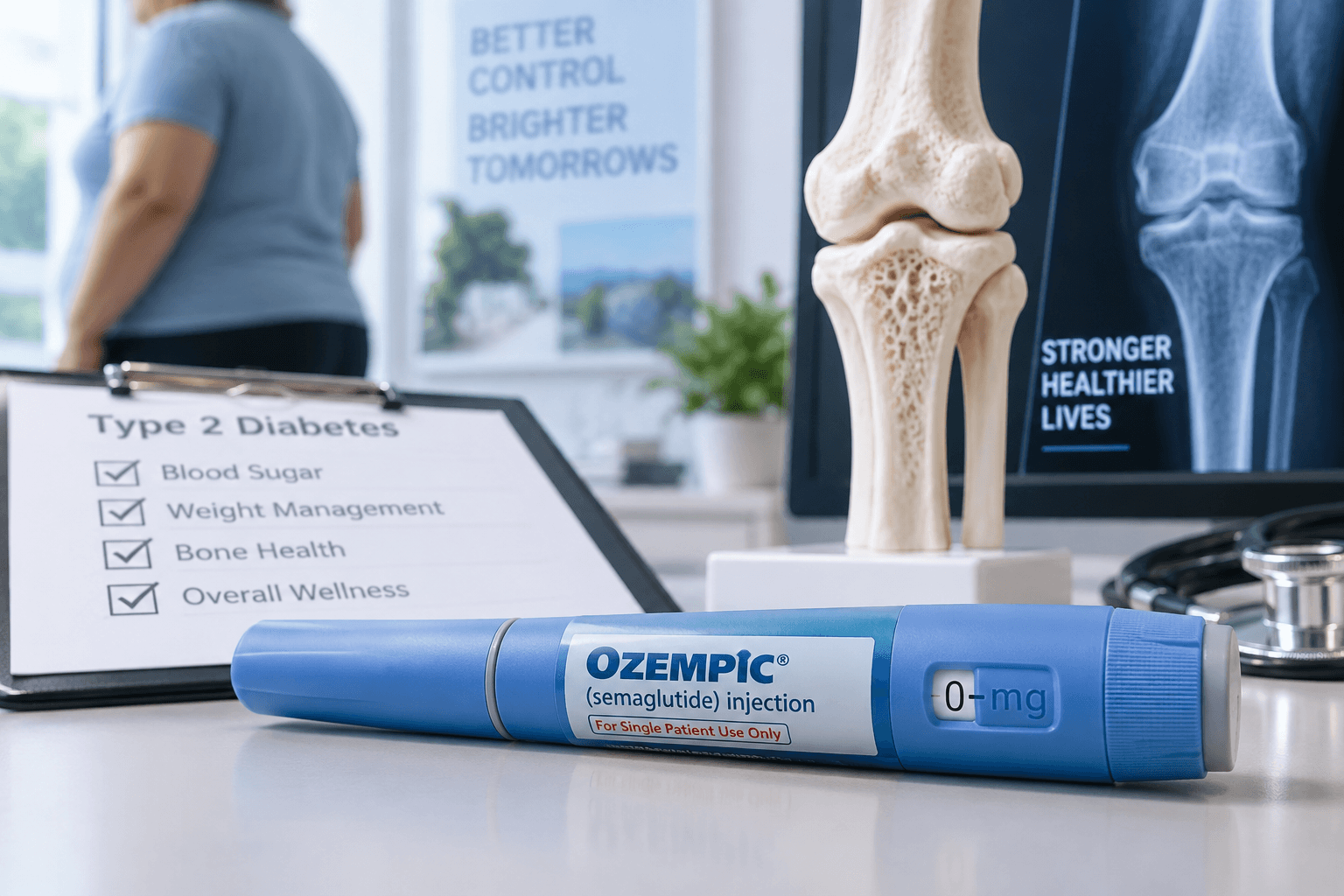
- Semaglutide treatment was associated with a greater reduction in body mass index (BMI) compared to the control group
- The semaglutide group had fewer fractures (794) compared to the control group (1045)
- Researchers analyzed data from over 159,000 patients
- The study highlights the potential bone-protective effects of semaglutide
- Authors recommend prospective studies to confirm the findings
What are the bone-protective effects of Semaglutide?
People taking semaglutide for diabetes had a lower rate of bone fractures compared to those taking other anti-obesity medications, according to research presented at ENDO 2026. Sun Kim, MD, MS, explains the significance of the findings, which highlight the potential bone-protective effects of semaglutide.
Semaglutide is part of a group of medicines known as glucagon-like peptide-1 receptor agonists, also known as GLP-1, which treat type 2 diabetes and obesity. Previous studies had shown that rapid weight loss using GLP-1s can lead to thinner bones and fractures, while more moderate and slower weight loss may preserve bone mass.
How does Semaglutide compare to other anti-obesity medications in terms of bone health?
Scientists at Stanford University knew semaglutide helped people lose more weight than previous generations of anti-obesity medications, but they lacked evidence that compared semaglutide’s effect on bone health to other anti-obesity medications. Jairo Noreña, MD, former endocrinology fellow at Stanford University Medical Center in Palo Alto, California, and his colleagues evaluated changes in body mass index (BMI) and fracture incidence in people with type 2 diabetes taking semaglutide, dulaglutide or alternative oral weight-loss therapies phentermine/topiramate and bupropion/naltrexone.
“Bone fractures are painful, expensive and can seriously affect quality of life — especially as people get older,” Noreña said. “We hope this study encourages monitoring of bone health in weight-loss programs.” The team conducted a retrospective cohort analysis using the Atropos Health Eos electronic health record dataset representing 161 million patients seen in U.S. community hospitals and academic medical centers from January 2016 to December 2023.
Participants were adults aged 18 years and older who were diagnosed with type 2 diabetes, with no history of prior fractures or use of osteoporosis medications. The intervention group received semaglutide (n = 26,324), while the control group received dulaglutide, phentermine/topiramate, or bupropion/naltrexone, without prior history of semaglutide use (n = 33,555). The data indicated semaglutide treatment was associated with greater reduction in BMI compared to the control group. The semaglutide group also had fewer fractures (794) compared to the control group (1045).
“This work is an important early step toward understanding the impact of semaglutide-induced weight loss on bone health in patients with type 2 diabetes,” Noreña said. While these results highlight the potential bone-protective effects of semaglutide, the authors recommend that prospective studies be done to confirm the findings.
FAQ
- What type of medication is Semaglutide?
- Semaglutide is a glucagon-like peptide-1 receptor agonist (GLP-1)
- What is the potential benefit of Semaglutide for bone health?
- Semaglutide may have bone-protective effects, reducing the risk of fractures in diabetes patients
Read next

Two Deaths Linked to Counterfeit Retatrutide; Novo Nordisk to Drop Saxenda
Two recent deaths tied to counterfeit versions of retatrutide, an investigational weight-loss medication, have been reported to the Food and Drug Administration. The reports come as lawsuits against GLP-1 drugs continue, and as Novo Nordisk announced plans to discontinue its weight-loss injectable Saxenda in early 2027 because of declining sales. The World Health Organization also issued its first obesity guidelines for children and adolescents, and researchers released new findings on diabetes, dementia risk in women with PMOS, and a range of other conditions.

GLP-1 Drugs Do Not Change Injection Needs for Diabetic Macular Edema, Study Finds
GLP-1 receptor agonists did not significantly change how often patients with diabetic macular edema needed anti-VEGF injections, according to a large retrospective cohort study presented at the American Academy of Ophthalmology meeting in New Orleans. Over 24 months of follow-up, treatment frequency showed no sustained or progressive change after patients started a GLP-1 drug, compared with matched patients who did not. Visual acuity and retinal thickness also held steady. Researchers said the results are reassuring amid ongoing uncertainty about the drugs' eye safety, though they cautioned that more research is needed.

GLP-1 Medications Show Promise in Treating Obesity and Improving Fertility
Research on GLP-1 medications has yielded promising results in treating obesity and improving fertility in men with low testosterone. A study found that GLP-1s may improve testosterone levels and sperm quality, while another study showed a 310-fold increase in GLP-1 prescriptions for children with obesity.

Medicare to Offer Cheaper GLP-1 Weight Loss Medications to Seniors
A new pilot program will allow some Medicare recipients to access GLP-1 weight loss medications for $50 a month, potentially helping millions of older adults who struggle with obesity. The program, set to launch on July 1, will cover three drugs and be available to those with Medicare Part D who meet certain conditions.

Medicare's GLP-1 Discount Program Leaves Many Patients Behind
A new Medicare pilot program offers discounted GLP-1 medications for weight loss, but millions of patients are excluded due to pre-existing medical conditions, leaving them with unaffordable treatment options.