NA-931 Cuts Weight Without Major Muscle Loss in Mid-Stage Trial
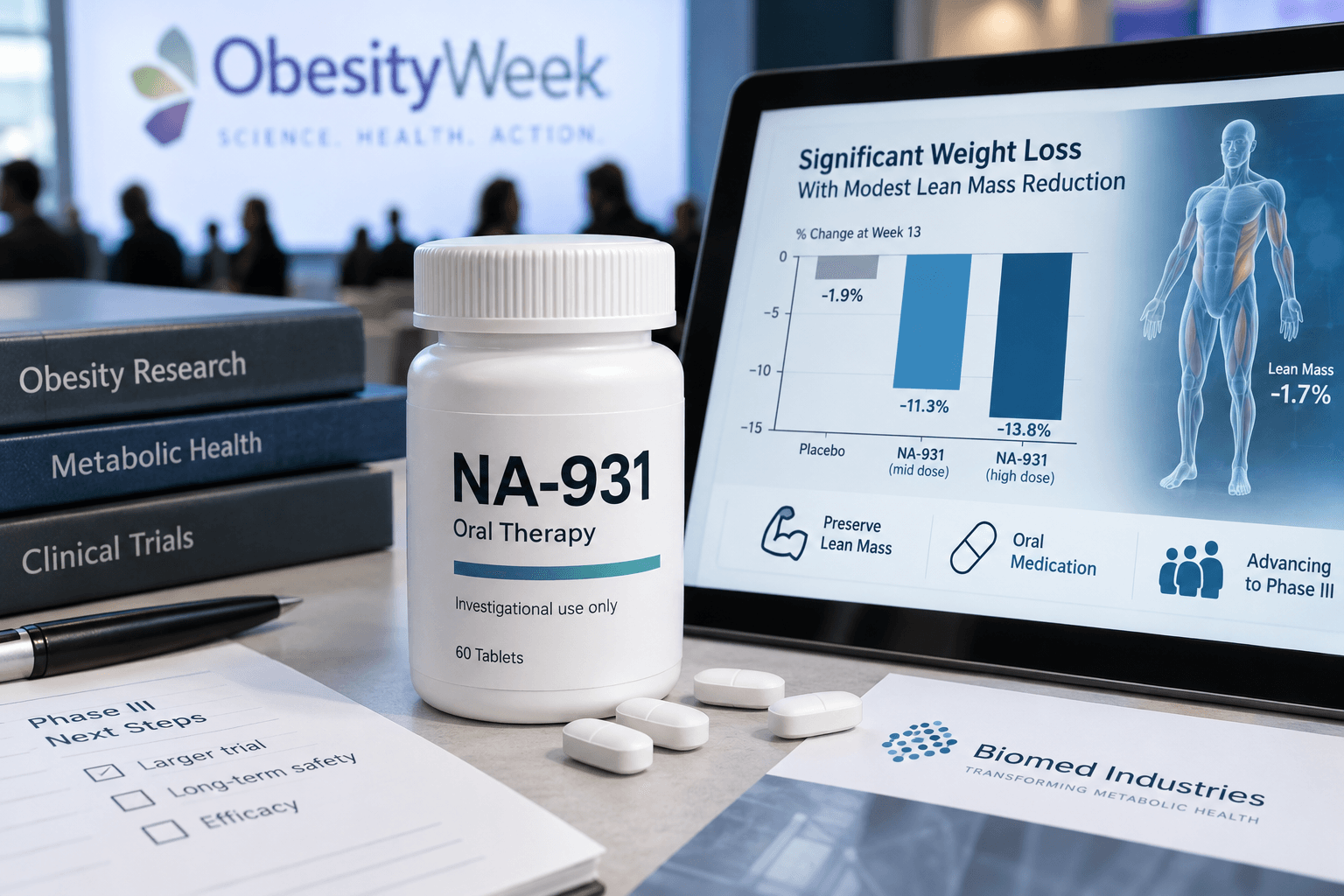
An experimental oral medicine called NA-931 led to substantial weight loss with only modest reductions in lean mass in a randomized phase II trial. Researchers from developer Biomed Industries presented the topline results at the ObesityWeek annual meeting. The highest doses reduced body weight by 13.8% and 11.3% at week 13, compared with 1.9% on placebo. Lean mass fell by 1.7% over the same period, and nausea rates were only slightly higher than placebo. The company says it is advancing NA-931 into phase III testing. The findings are early and come from a small study of 125 adults.
- NA-931 is an investigational oral drug that targets IGF-1, GLP-1, GIP, and glucagon receptors.
- The 150 mg and 120 mg doses cut mean body weight by 13.8% and 11.3% by week 13, versus 1.9% on placebo.
- Lean mass decreased by 1.7% over 13 weeks, based on DEXA measurements.
- Nausea in the 150 mg group was 12.5% versus 10.3% on placebo, and all cases were mild.
- No participants in the 150 mg arm discontinued treatment.
- The phase II trial enrolled 125 adults and was presented at ObesityWeek.
- Biomed Industries plans to advance NA-931 into phase III clinical testing.
An experimental pill designed to act on four hormone receptors at once helped participants lose a meaningful amount of weight in a mid-stage trial, while losing only a small share of lean body mass. The results were presented at the ObesityWeek annual meeting in National Harbor, Maryland, and the developer, Biomed Industries, says it is now moving the drug into phase III testing.
The medication, called NA-931, is a small molecule that targets insulin-like growth factor-1 (IGF-1), GLP-1, GIP, and glucagon. Lloyd L. Tran, PhD, of Biomed Industries in San Jose, California, described it as a first-in-class oral quadruple receptor agonist. Tran said the compound readily crosses the blood-brain barrier, so only a low dose is needed for efficacy, which may also help explain its tolerability profile.
How much weight did people lose on NA-931?
If you're wondering how much weight people actually lost, the answer depends on the dose. By week 13, the two highest doses, 150 mg and 120 mg, reduced mean body weight by 13.8% and 11.3%. Participants on placebo lost 1.9%. The two lowest doses, 60 mg and 90 mg, produced reductions of 5.5% and 8.7%. Both top-dose comparisons with placebo were statistically significant.
Does NA-931 cause major muscle loss?
Muscle is the part of the story that drew the most attention. Researchers used dual-energy x-ray absorptiometry (DEXA) to estimate lean soft tissue, which includes skeletal muscle, organs, and water. Lean mass decreased by 1.7% over 13 weeks in participants taking NA-931. The team noted that these measurements do not directly show changes in muscle function.
For context, the researchers pointed to longer trials of other medications. Semaglutide (Wegovy and Ozempic), a GLP-1 agonist, was tracked for 68 weeks and reported a lean mass reduction of 13.2%. Tirzepatide (Zepbound), a dual GLP-1/GIP agonist, was tracked for 72 weeks and reported 10.9%. A 2025 meta-analysis of 22 randomized trials of semaglutide and tirzepatide, including 2,258 patients, found that lean mass losses made up roughly 25% of total weight lost. Tran argued that the field needs a more sustainable approach to obesity management, one that pairs meaningful weight loss with preserved muscle strength. That matters most for older adults, he said, since muscle mass naturally declines by roughly 3% to 8% per decade after age 30 and accelerates after age 60.
What are the side effects of NA-931?
Side effects are another common question, especially for anyone who has tried a GLP-1-based medication. In the 150 mg NA-931 group, gastrointestinal events were only slightly more frequent than with placebo. Nausea was reported by 12.5% of participants versus 10.3% on placebo, and all cases were mild. Vomiting and diarrhea were each reported by 8.3%, compared with 6.9% on placebo. No participants in the 150 mg arm stopped treatment. For comparison, pivotal trials of semaglutide and tirzepatide reported nausea in 44.2% and 24.6% to 33.3% of participants, respectively, compared with 17.4% and 9.5% on placebo.
The study was a multicenter, double-blind trial with 125 adults who had obesity or overweight along with weight-related health conditions. Participants received once-daily oral NA-931 at 60 mg, 90 mg, 120 mg, or 150 mg, or placebo. Mean ages ranged from 41.9 to 46.7 years across groups, and most participants were female and white. Patients in the 150 mg group also saw a modest drop in HbA1c, a marker of blood sugar, of 0.2%.
Keep in mind that this is an early look at a small study. The numbers are promising, but phase III trials will show whether the weight loss, muscle findings, and tolerability hold up across a larger and more diverse group of people.
FAQ
- How much weight did participants lose on NA-931?
- By week 13, the 150 mg and 120 mg doses reduced mean body weight by 13.8% and 11.3%, compared with 1.9% on placebo.
- Did NA-931 cause significant muscle loss?
- Lean mass decreased by 1.7% over 13 weeks in participants taking NA-931, but the researchers noted that DEXA measurements do not directly show changes in muscle function.
- Is NA-931 moving into later-stage testing?
- Yes. The developer, Biomed Industries, says it is now moving the drug into phase III testing.
Read next
Tirzepatide Cuts BMI Sharply in Adolescents With Obesity, Phase III Trial Finds
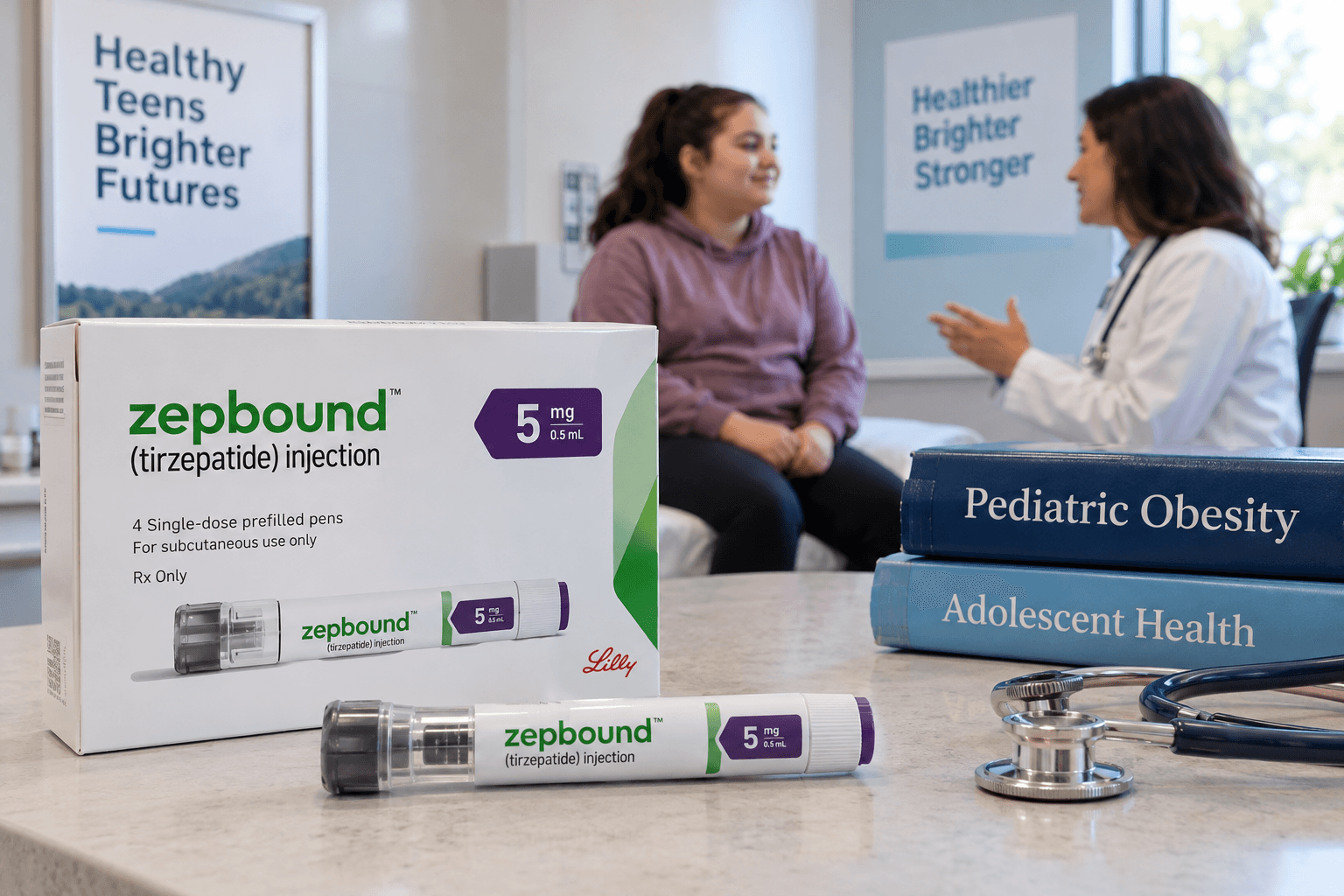
Tirzepatide (Zepbound) produced substantial reductions in body mass index among adolescents with obesity in the phase III SURMOUNT-ADOLESCENTS trial. At week 72, participants on the once-weekly GLP-1/GIP drug alongside a healthy lifestyle program saw an 18.5% mean BMI reduction, while those on placebo saw a 0.5% increase. The trial met its primary endpoint, and all 10 key secondary outcomes also favored tirzepatide. Results were presented at the ObesityWeek annual meeting and published in JAMA. The researchers cautioned against escalating doses to the maximum tolerated level in routine care.

Wegovy Cuts BMI in Children With Obesity as Young as 6, Trial Finds
Wegovy (semaglutide) significantly reduced body mass index in children ages 6 to 11 with obesity, according to results from the phase III STEP Young trial. Presented at the ObesityWeek annual meeting and published in the New England Journal of Medicine, the study found that treated children lost weight while placebo patients gained it. Researchers also reported slower height gain and frequent gastrointestinal side effects. Drugmaker Novo Nordisk has not said whether it will submit the data to the FDA.

CagriSema Shows Weight Loss Across Menopause Stages, Including Women on Hormone Therapy
New data from a post-hoc analysis of Novo Nordisk's REDEFINE 1 trial suggest that the investigational combination CagriSema produced clinically meaningful weight loss in women at every menopause stage studied, including those using hormone therapy. Presented at The Menopause Society's 2026 Annual Meeting, the analysis of 1,902 women found mean reductions of 23.1% to 26.7% over 68 weeks, along with improvements in blood pressure, fasting glucose, and triglycerides. The findings are investigational and come from a post-hoc analysis, so they do not establish how the drug will perform in practice. An FDA decision is anticipated in late 2026, and pharmacists are expected to play a key role in counseling patients.
Retatrutide Eases Knee Osteoarthritis Pain in Patients With Obesity, Trial Finds
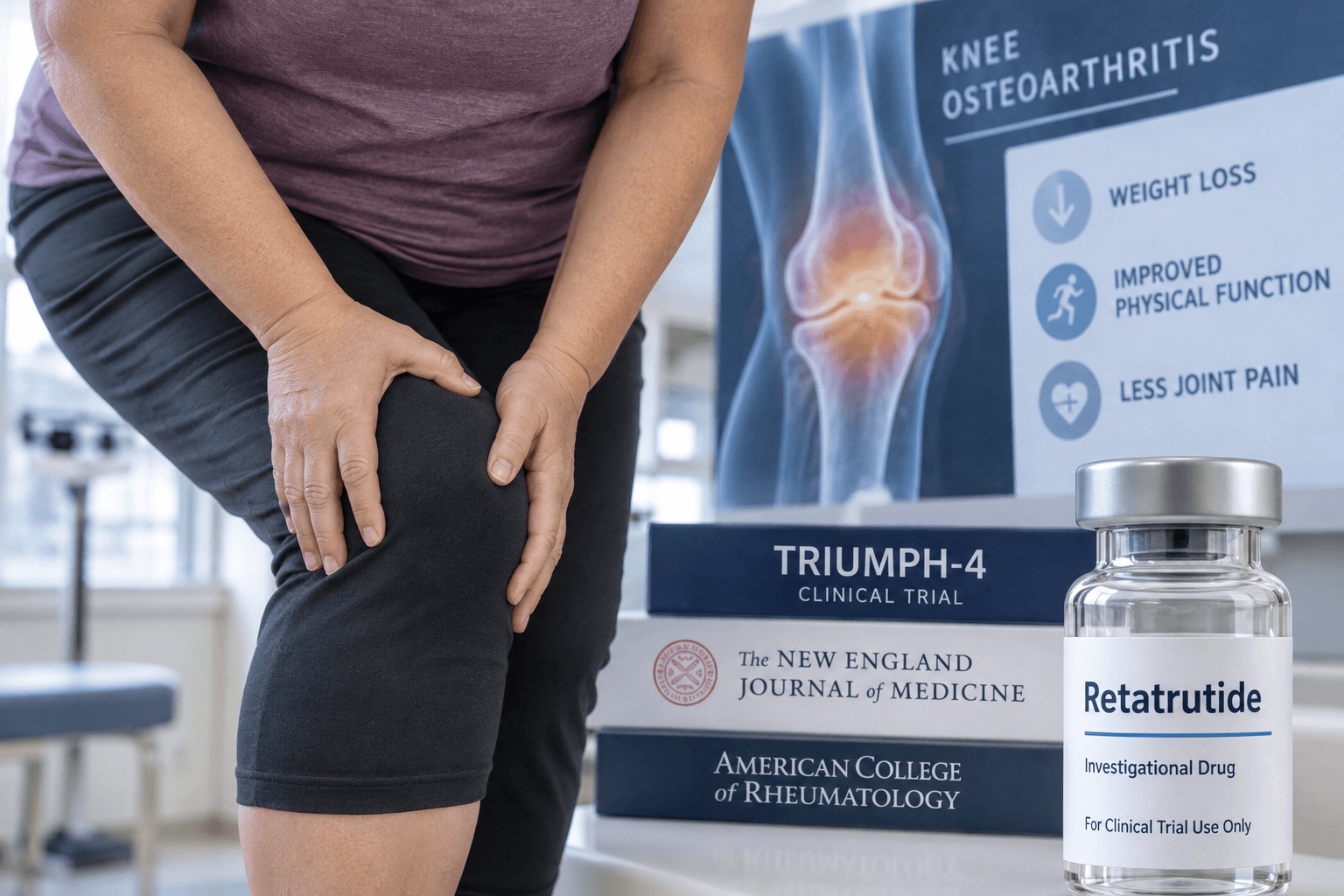
An investigational obesity drug, retatrutide, significantly reduced pain and improved physical function in adults with obesity and knee osteoarthritis, according to the phase 3 TRIUMPH-4 trial. Results were presented at the American College of Rheumatology annual meeting and published simultaneously in the New England Journal of Medicine. The drug targets three hormone receptors and produced substantial weight loss, but a higher rate of side effects than placebo, and the researchers called for further studies on how it works and whether it can modify the disease itself.
Eli Lilly's Obesity Drug Shows Promise, But Heart Benefits Remain Unclear
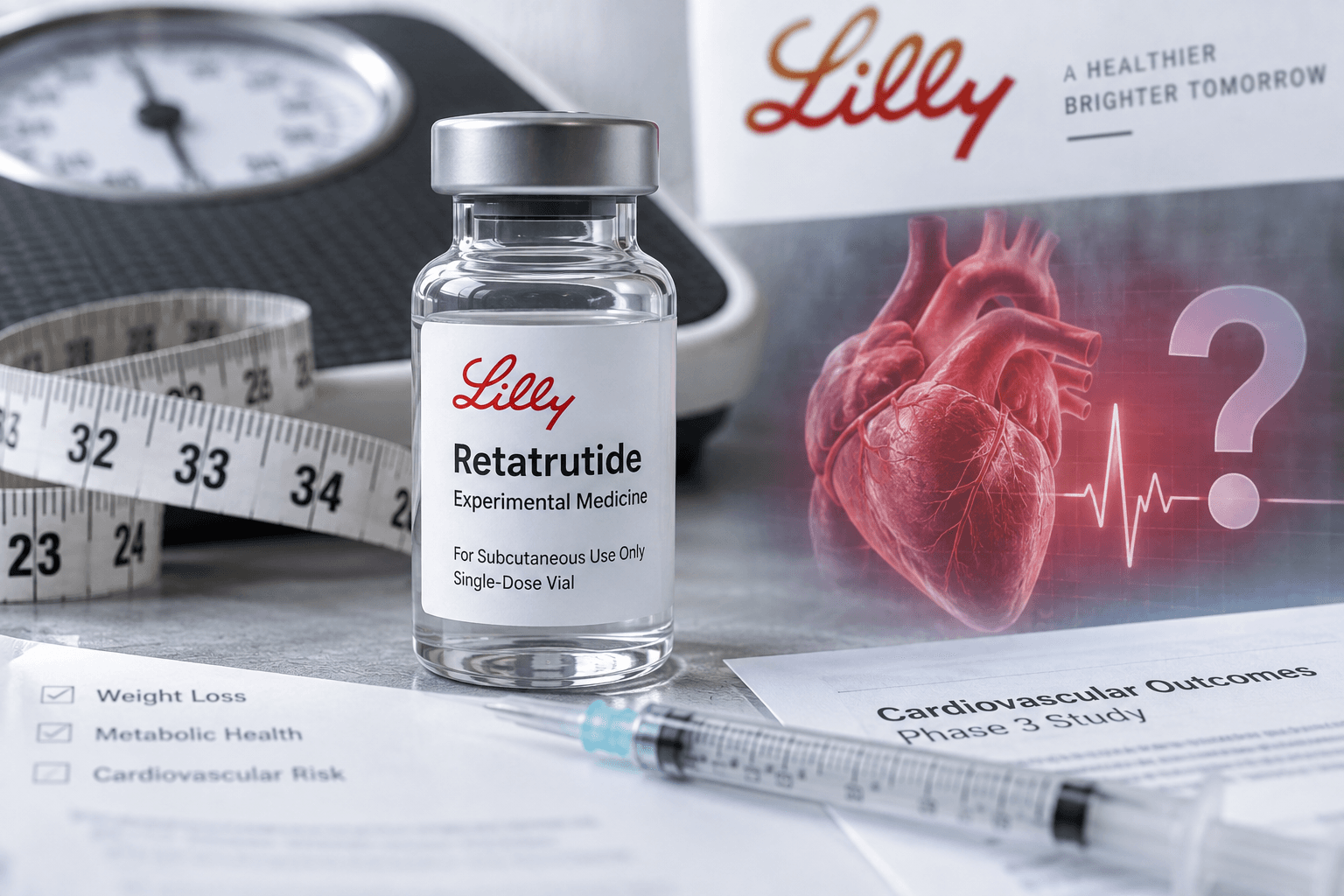
Eli Lilly's new obesity drug, retatrutide, has been shown to be highly effective in weight loss, with participants losing 22.6% of their weight after 80 weeks. However, the drug's impact on cardiovascular risk remains unclear due to a lack of statistically significant results in a recent Phase 3 study.