What the New Federal Peptide Framework Means for Pharmacists and Patients
The U.S. Department of Health and Human Services has issued an interim framework that lets state-licensed pharmacies compound several specific peptides while formal rulemaking continues. The FDA's Pharmacy Compounding Advisory Committee is also scheduled to review five more peptides by the end of February. Industry leaders say the policy is shifting how pharmacists and prescribers think about these therapies, but they stress that enforcement discretion is not FDA approval and that clinical safety data remains limited. For pharmacists, the message is clear: rely on professional judgment, stay current, and evaluate each patient carefully.
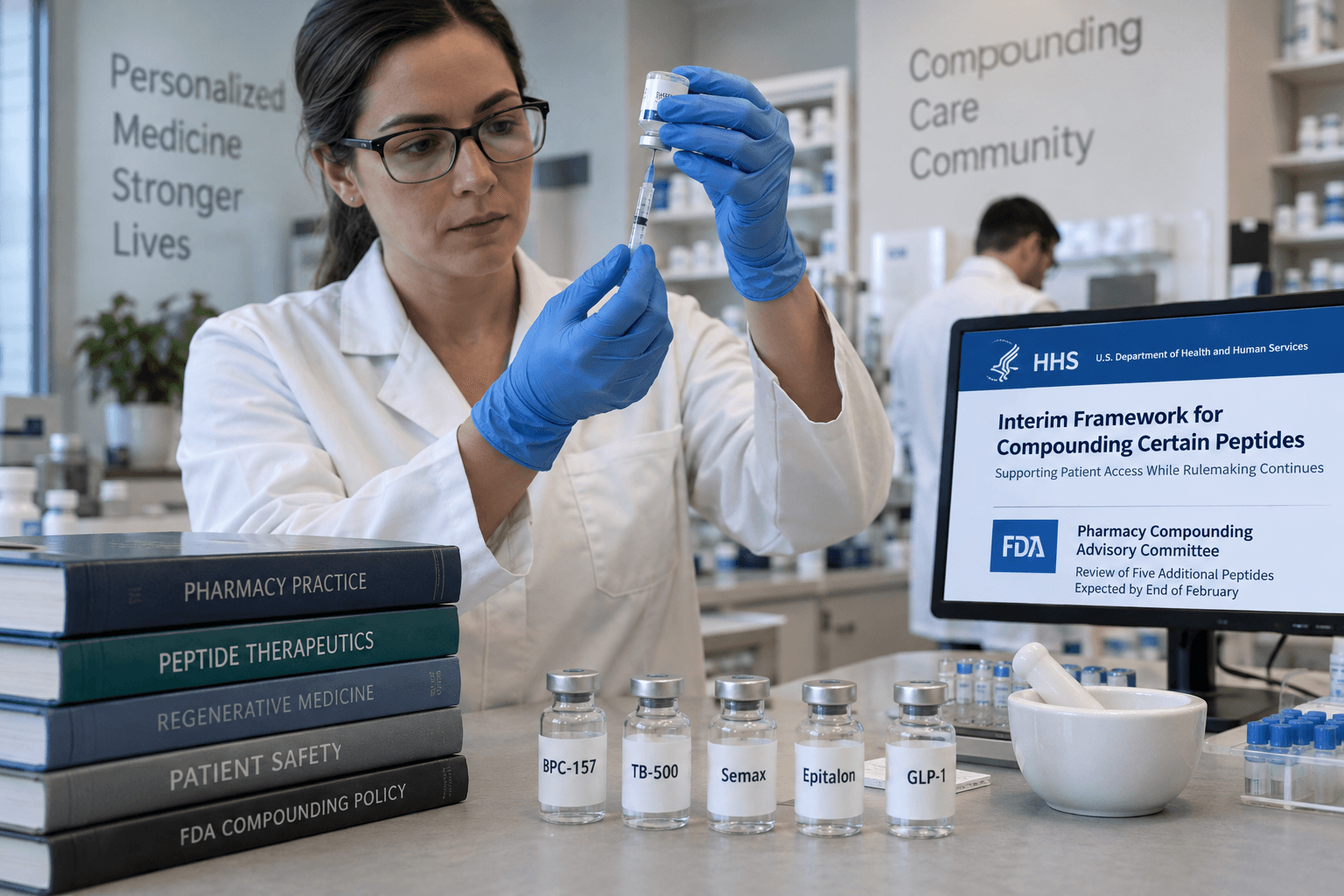
- HHS issued an interim framework giving enforcement discretion to state-licensed pharmacies compounding specific peptides.
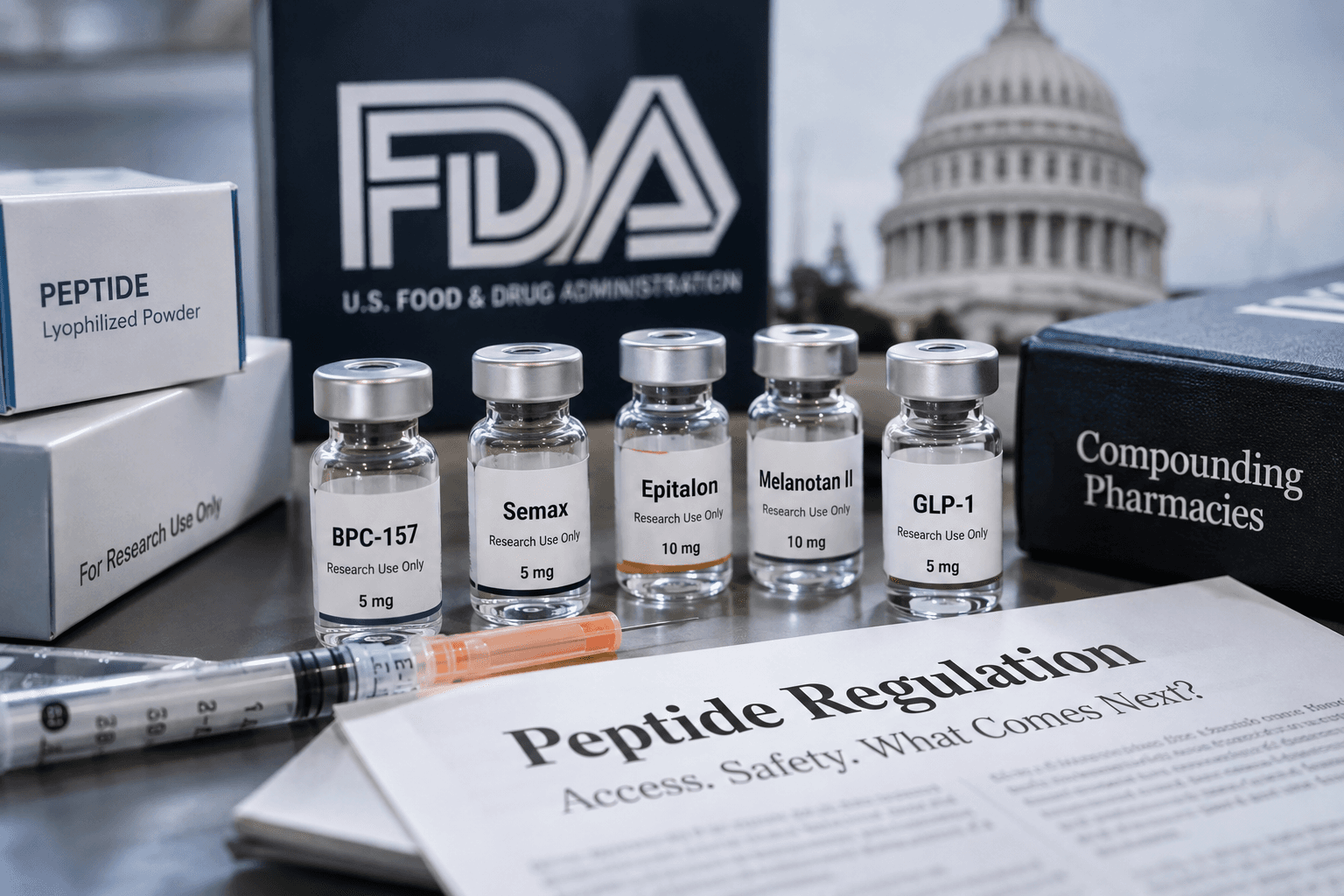
- Covered substances include BPC-157, epitalon, KPV, MOTS-c, Semax, and TB-500.
- The FDA's Pharmacy Compounding Advisory Committee is scheduled to evaluate five additional peptides by the end of February.
- Enforcement discretion does not equal FDA approval or clinical safety validation.
- Legal challenges and state-level rule differences still create uncertainty for compounders and prescribers.
- Many unapproved wellness peptides have limited human trial data and may carry risks such as injection site reactions and immune responses.
- Experts say peptides should not replace sleep, nutrition, or metabolic monitoring.
- Pharmacists are expected to rely heavily on clinical judgment while the evidence develops.
The new federal peptide framework is an interim HHS policy under which regulators will exercise enforcement discretion for state-licensed pharmacies compounding specific bulk peptide substances, including BPC-157, epitalon, KPV, MOTS-c, Semax, and TB-500. It is not FDA approval or a safety validation, and formal rulemaking is still in progress.
Peptides are moving from the edges of wellness into everyday conversations among pharmacists and prescribers, and federal policy is helping drive that shift. The U.S. Department of Health and Human Services has taken action on specific peptide formulations, and the FDA's Pharmacy Compounding Advisory Committee is set to evaluate five additional peptides by the end of February. If you work in pharmacy or follow the compounding world, here is what these changes do, and what they don't.
What the new federal framework covers
What does the new federal peptide framework cover?
The policy is an interim framework signed by HHS leadership. Under it, federal regulators will exercise enforcement discretion for state-licensed pharmacies that compound specific bulk drug substances. The list includes BPC-157, epitalon, KPV, MOTS-c, Semax, and TB-500. The framework is issued under section 503A of the Federal Food, Drug, and Cosmetic Act, and formal rulemaking is still in progress.
Agency officials describe the goal as expanding patient access while curbing black-market activity. To get there, the framework leans on patient-specific prescriptions and quality testing requirements. Still, legal challenges and differences in state-level rules continue to create uncertainty for compounders and prescribers.
The PCAC review is the next big moment to watch. Matt Martin, PharmD, BCSCP, vice president of clinical services at PCCA, noted that positive advisory votes could expand federal compounding policy beyond the initial group of formulations. For pharmacists, that means the list of options could keep changing in the months ahead.
Why enforcement discretion is not the same as approval
Does the framework mean FDA has approved these peptides?
This is the part that is easy to miss. Regulatory notices state plainly that interim compounding discretion does not constitute FDA approval or clinical safety validation. Clinicians are left to evaluate safety signals carefully and largely on their own.
Consumer interest is a big part of the picture. Market analysis shows that more than 40% of consumers say they are willing to pursue advanced wellness solutions, partly because of how visible glucagon-like peptide-1 (GLP-1) receptor agonists such as Ozempic have become. Clinical experts caution that experimental peptides should not be treated as shortcuts around core health habits like sleep, nutrition, and metabolic monitoring.
What should pharmacists tell patients who ask if peptides are safe?
It also helps to compare the categories. Unlike FDA-approved peptide drugs such as insulin, semaglutide, or tirzepatide, many unapproved wellness peptides have limited human trial data. They can present risks including injection site reactions, immune responses, and unknown drug interactions. If a patient asks whether a peptide is “safe,” the honest answer is that the evidence is still developing.
The pharmacist's role in the middle of it all
Pharmacists are increasingly the people who sort through these questions. Sara Hover, RPh, FAARM, senior director of clinical services at PCCA, stressed during the NCPA Annual Convention that limited clinical trial data requires pharmacists to rely heavily on professional clinical judgment.
In practice, that means looking at the mechanism of each drug and the individual patient's safety profile. Pharmacists help prescribers determine the right therapy and dosage for patients who have already exhausted conventional treatments. Balancing strict regulatory compliance with patient care also takes dedicated training and operational efficiency, which is not a small task for busy practices.
Martin sees peptides settling into a specific role. “I think more of these are going to be tools, and I think that’s the way most new medications are going to be considered anyways,” he said. In other words, peptides are likely to function as specialized clinical tools rather than universal standards of care, and they will need careful oversight to fit safely into future care models.
Hover put it bluntly as well. “Evidence is still developing. We still need to put more legs underneath the tables, but I think things are starting to grow,” she said. “Pharmacists really need to not only stay current but really we need to stay on the cutting edge so that we can help those patients, as many as possible.”
FAQ
- Does the framework mean FDA has approved these peptides?
- No. Regulatory notices state that interim compounding discretion does not constitute FDA approval or clinical safety validation.
- Which peptides are covered by the interim framework?
- The list includes BPC-157, epitalon, KPV, MOTS-c, Semax, and TB-500.
- When will the FDA's advisory committee evaluate more peptides?
- The FDA's Pharmacy Compounding Advisory Committee is set to evaluate five additional peptides by the end of February.
Read next
Pharmacists Must Guide Peptide Patients as FDA Weighs Compounding Rules
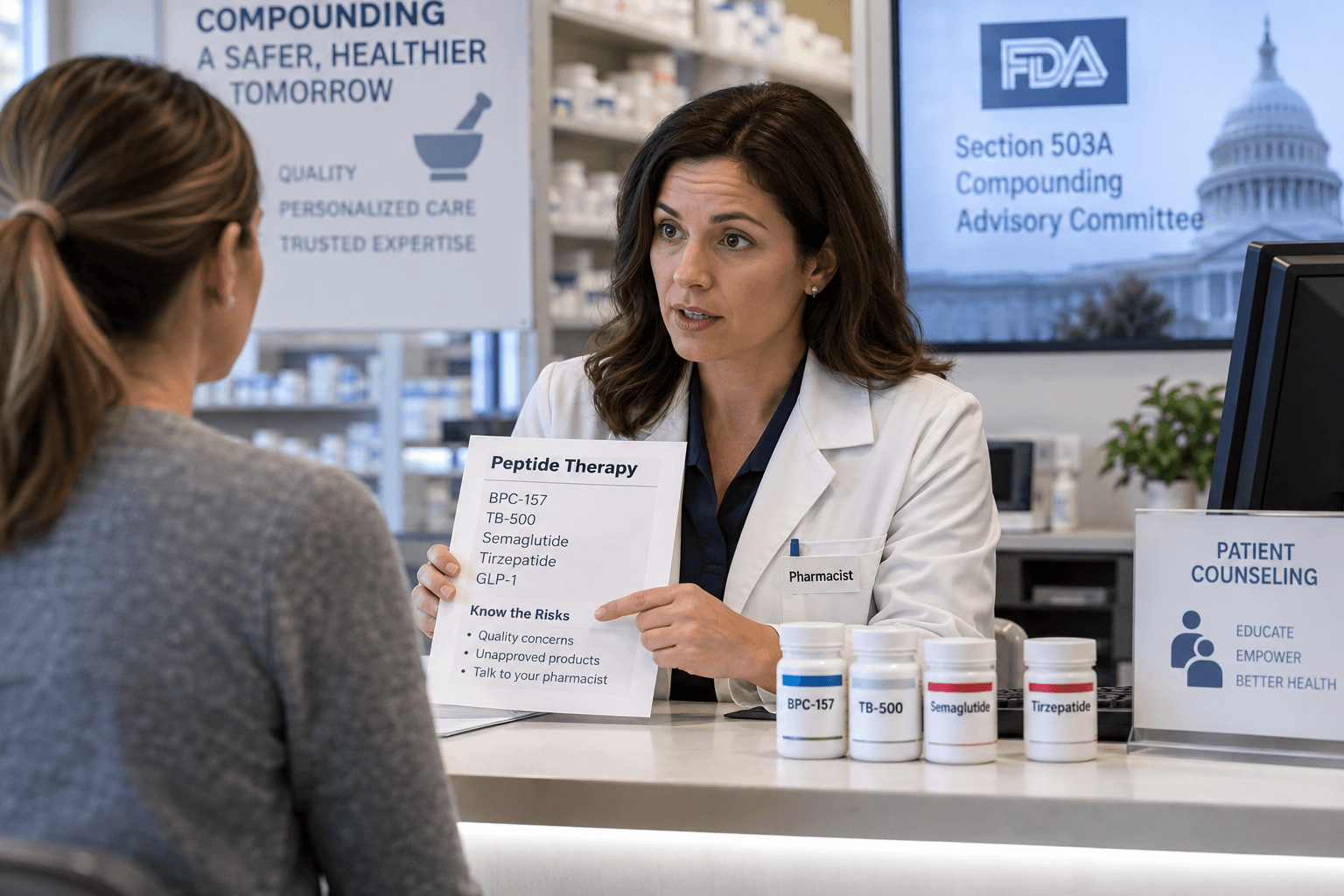
Pharmacists face growing patient questions about peptides, even as an FDA advisory panel recommended six unapproved peptides for inclusion on the Section 503A bulks list. Matt Martin, PharmD, BCSCP, vice president of clinical services at PCCA, told attendees at NCPA 2026 that advisory votes do not authorize compounding. Until the FDA completes formal rulemaking or places these substances on an interim Category 1 list, compounding them remains technically unlawful. Martin said pharmacists must also warn patients about the quality risks of “research use only” products sold online.
Draft HHS Peptide Policy Puts Pharmacists Between Access and Caution
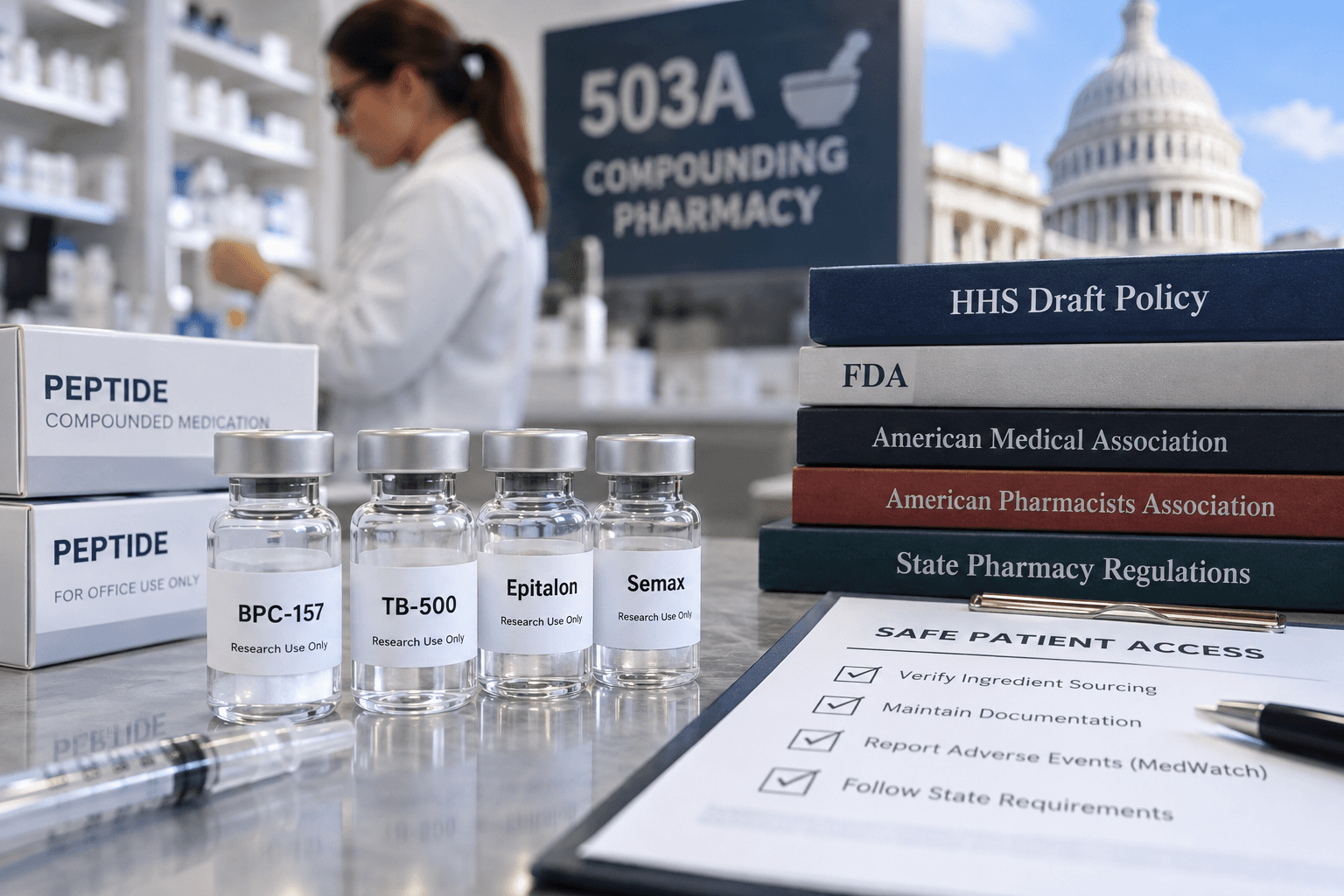
As the comment period closes on a Department of Health and Human Services draft policy, pharmacy leaders are being urged to wait for the final version from the FDA before changing operations. The draft would let state-licensed 503A pharmacies compound six unapproved peptides, including BPC-157 and TB-500, without federal enforcement action. Supporters say the shift could bring patients into regulated channels and away from gray-market sellers. FDA reviewers, the American Medical Association, and the American Pharmacists Association have raised safety and evidence concerns. Pharmacists weighing entry into peptide compounding should verify ingredient sourcing, documentation, adverse event reporting, and state rules while the policy remains in draft form.
HHS Moves Ahead With Plan to Let Pharmacies Compound Popular Peptides
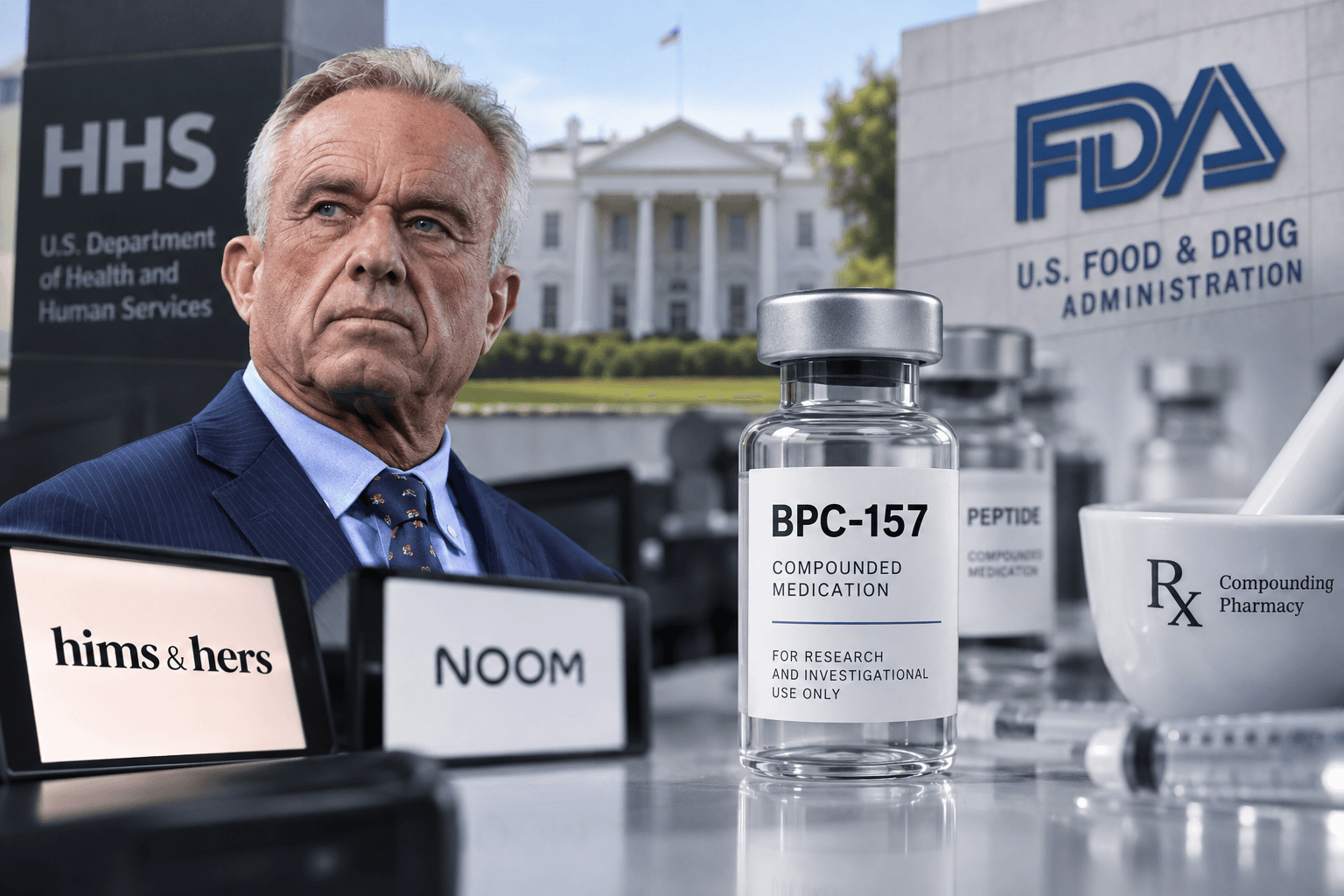
The Trump administration has sent an "interim access policy" for peptides to the White House for review, a step that would let specialty pharmacies compound certain widely used peptides. The peptides, including BPC-157, have gained popularity among followers of Health Secretary Robert F. Kennedy Jr. and wellness influencers, but they have not gone through the FDA's standard approval process, and most of the available data comes from animal studies. An FDA advisory panel recommended lifting restrictions on six of seven peptides in July, a recommendation that ran counter to the conclusions of the agency's own scientists. The policy's exact terms have not been published, and formal rulemaking could take years.
Gray-Market Peptides Are Everywhere. Here's What You Should Know.
Injectable peptides have moved from quiet laboratory research into wellness clinics, influencer videos, and biohacker forums. Many are sold through gray-market supply chains with little human safety data. Health Secretary Kennedy has pushed to restore access to peptides the FDA had restricted, and an FDA committee he reshaped has recommended letting six of them back into legal production through compounding pharmacies. Critics, including FDA scientists, warn that the products are often untested and inconsistently made. This guide walks through what peptides are, why the products are so popular, the risks researchers have flagged, and how the regulatory fight developed.

Users Report Harm From Unapproved Peptides as Federal Panel Moves to Loosen Limits
Users of unapproved peptides such as BPC-157 are reporting fatigue, migraines, and other side effects, even as an FDA advisory panel with industry-linked members has voted to ease restrictions on six experimental peptides. The vote went against FDA scientists who found too little evidence that the drugs work. The FDA has not issued a final decision, and clinical data on the drugs remain thin. Health Secretary Robert F. Kennedy Jr. has pushed to lower barriers to peptide use, and many companies could soon drop required warnings that their products are for research only.