Two Case Reports Link Abrupt Tirzepatide Discontinuation to Mania and Psychosis
Two men were hospitalized with acute psychiatric symptoms after abruptly stopping tirzepatide, the active ingredient in Mounjaro and Zepbound, according to case studies published in The Primary Care Companion for Central Nervous System Disorders. One patient showed signs of psychosis, including hallucinations and a rare delusion that he was dead, while the other was diagnosed with a manic episode. The authors do not claim the drug withdrawal caused the symptoms. They say the timing is worth attention and that prescribers should consider recent changes in GLP-1 medication when evaluating patients with new mood or psychotic symptoms.
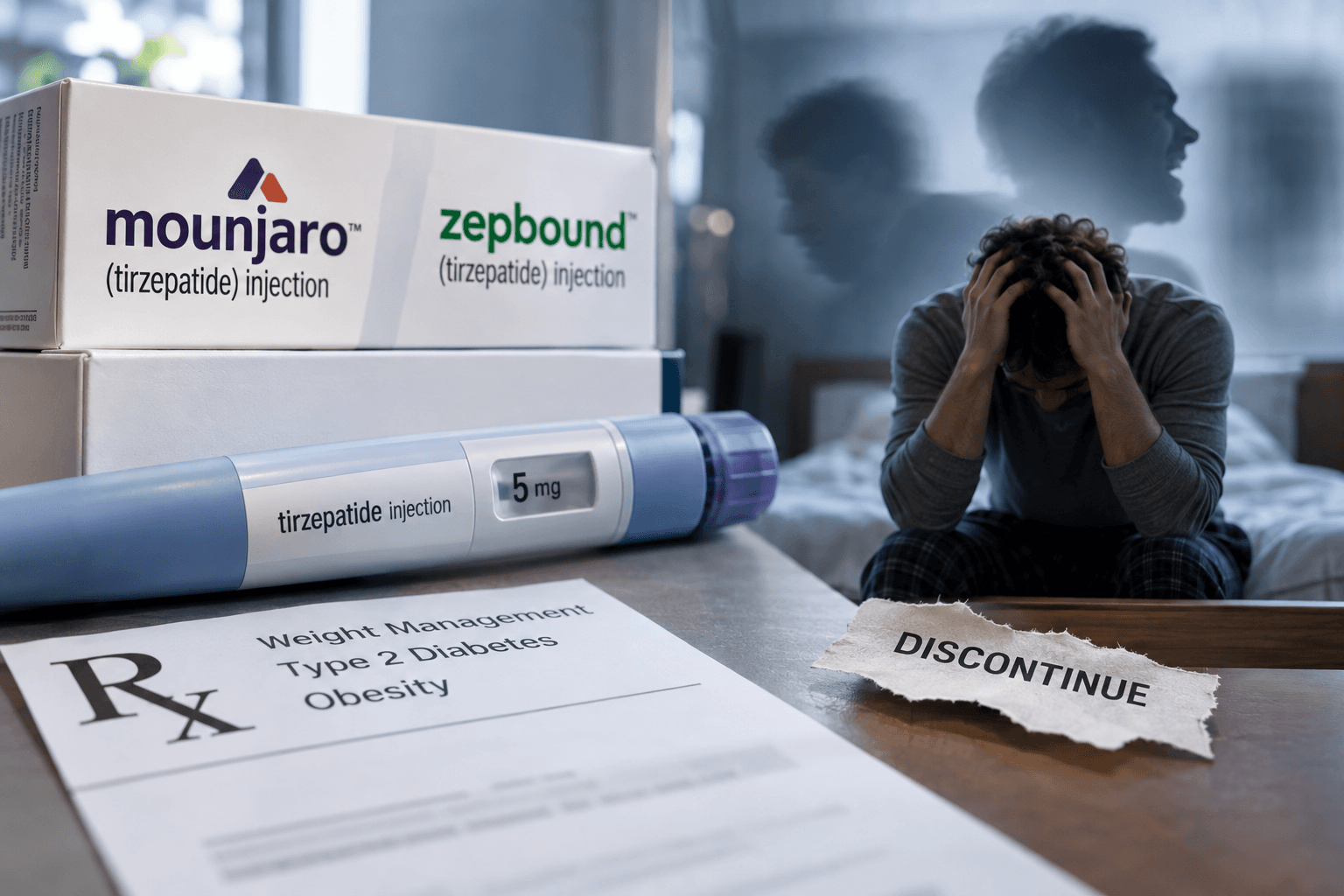
- Two men were hospitalized with acute psychiatric symptoms after abruptly stopping tirzepatide (Mounjaro or Zepbound).
- One patient, 61, showed hallucinations, paranoia, depression, and Cotard delusion after stopping the drug due to nausea.
- The second patient, 52, was diagnosed with a manic episode after losing 100 pounds and stopping tirzepatide.
- Both cases also involved possible contributing factors, including prior psychiatric history, increased cannabis use, and low vitamin B12.
- The authors say the findings do not prove that stopping GLP-1 drugs causes psychosis or mania.
- A European database previously recorded 481 psychiatric events linked to semaglutide, liraglutide, and tirzepatide.
- Researchers say prescribers should consider recent GLP-1 medication changes when evaluating new psychiatric symptoms.
Stopping a GLP-1 medication abruptly may affect more than the body. Two case studies published in The Primary Care Companion for Central Nervous System Disorders describe men who were hospitalized with acute psychiatric symptoms after discontinuing tirzepatide, sold under the brand names Mounjaro and Zepbound. The authors do not establish that stopping the drug caused the symptoms. They do argue that the timing is significant enough to warrant clinical awareness.
What symptoms did the patients in the case reports have?
The first patient was a 61-year-old man who arrived at the hospital in October 2025 with worsening confusion and erratic behavior that had appeared suddenly. He reported a low mood, worsening depression, paranoia, and both auditory and visual hallucinations. He also developed Cotard delusion, a rare psychiatric symptom in which a person believes they are dead or that parts of their body are missing or no longer working. In August of that year, he had stopped tirzepatide because of nausea.
The second patient was a 52-year-old man who presented to the same hospital in the same month, this time with erratic behavior and mood swings. Clinicians diagnosed a manic episode based on symptoms that included hyperverbal and disorganized speech, grandiosity, impulsivity, and irritability. He said he had stopped tirzepatide abruptly the previous month, after losing 100 pounds over six months. In the weeks before his visit, he had also increased his cannabis use, which can be a risk factor for psychosis. His vitamin B12 levels were low, pointing to possible nutritional deficiencies. He was transferred to a psychiatric facility for further care.
Both men had prior psychiatric histories. The first had a diagnosis of depression, and the second had a diagnosis of anxiety. The authors note that this history may have contributed to their symptoms.
What should prescribers do after a patient stops a GLP-1 drug?
The authors are measured in their conclusions. "While likely not the sole factor, it is plausible that discontinuation of a GLP-1 receptor agonist may contribute to acute-onset mood or psychotic symptoms in a select population of at-risk patients (including patients with nutritional deficiencies associated with, or exacerbated by, GLP-1 use, such as the second patient with a low vitamin B12 level)," they write. They add that "acute-onset mood or psychotic symptoms following GLP-1 receptor agonist discontinuation may represent an underrecognized clinical phenomenon." They recommend that prescribers be aware that recent changes to GLP-1 medication could contribute to psychiatric symptoms.
The reports fit into a broader body of questions about the neuropsychiatric effects of these drugs. GLP-1 receptors are present in the brain, and evidence suggests the medications can cross the blood-brain barrier. Researchers still know relatively little about what the drugs do once they reach the brain. A few years ago, a European drug safety database recorded 481 psychiatric events associated with three GLP-1 drugs: semaglutide (sold as Ozempic), liraglutide, and tirzepatide. Those events made up just over 1 percent of all reports for the medications. Researchers at the time argued that the serious nature of these events justified further study.
The authors of the new case studies point to a gap in the research. "While the neuropsychiatric effects of GLP-1 agonist treatment are increasingly recognized… the psychiatric implications of discontinuing these medications remain poorly characterized," they write. Most published work has focused on what happens while patients take the drugs, not on what happens when they stop.
Does stopping tirzepatide cause mania or psychosis?
Two case reports cannot show cause and effect, and neither can they estimate how common these events are. Still, they raise a practical point for clinicians. Patients who stop a GLP-1 medication and then develop sudden changes in mood, behavior, or perception may need a careful evaluation that includes medication history, substance use, and nutritional status. As use of these drugs continues to grow, researchers are likely to identify more rare effects, and the case reports suggest that the transition off treatment deserves as much scrutiny as the treatment itself.
FAQ
- Do the case reports prove that stopping tirzepatide causes mania or psychosis?
- No. The authors do not establish that stopping the drug caused the symptoms, and two case reports cannot show cause and effect.
- What brand names is tirzepatide sold under?
- Tirzepatide is sold under the brand names Mounjaro and Zepbound.
- How common are these psychiatric events after stopping tirzepatide?
- The case reports cannot estimate how common these events are.
Read next

GLP-1 Drug Linked to Dangerous Lithium Spike, While MS Study Finds Fewer Relapses
A case report describes a 50-year-old woman with bipolar disorder whose lithium levels rose to toxic range after she started tirzepatide (Zepbound), a GLP-1 weight loss drug. Her symptoms eased after her lithium dose was lowered. Separately, a large U.S. real-world study presented at MSToronto2026 found that multiple sclerosis patients taking GLP-1 receptor agonists had fewer relapses, optic neuritis episodes and demyelinating events than patients who did not take them. Researchers say the findings are early and call for more investigation into both the interaction risk and the potential benefits.

Tirzepatide Cuts BMI Sharply in Adolescents With Obesity, Phase III Trial Finds
Tirzepatide (Zepbound) produced substantial reductions in body mass index among adolescents with obesity in the phase III SURMOUNT-ADOLESCENTS trial. At week 72, participants on the once-weekly GLP-1/GIP drug alongside a healthy lifestyle program saw an 18.5% mean BMI reduction, while those on placebo saw a 0.5% increase. The trial met its primary endpoint, and all 10 key secondary outcomes also favored tirzepatide. Results were presented at the ObesityWeek annual meeting and published in JAMA. The researchers cautioned against escalating doses to the maximum tolerated level in routine care.
Weight-Loss Drugs Under Scrutiny: Separating Fact from Fiction on Side-Effects
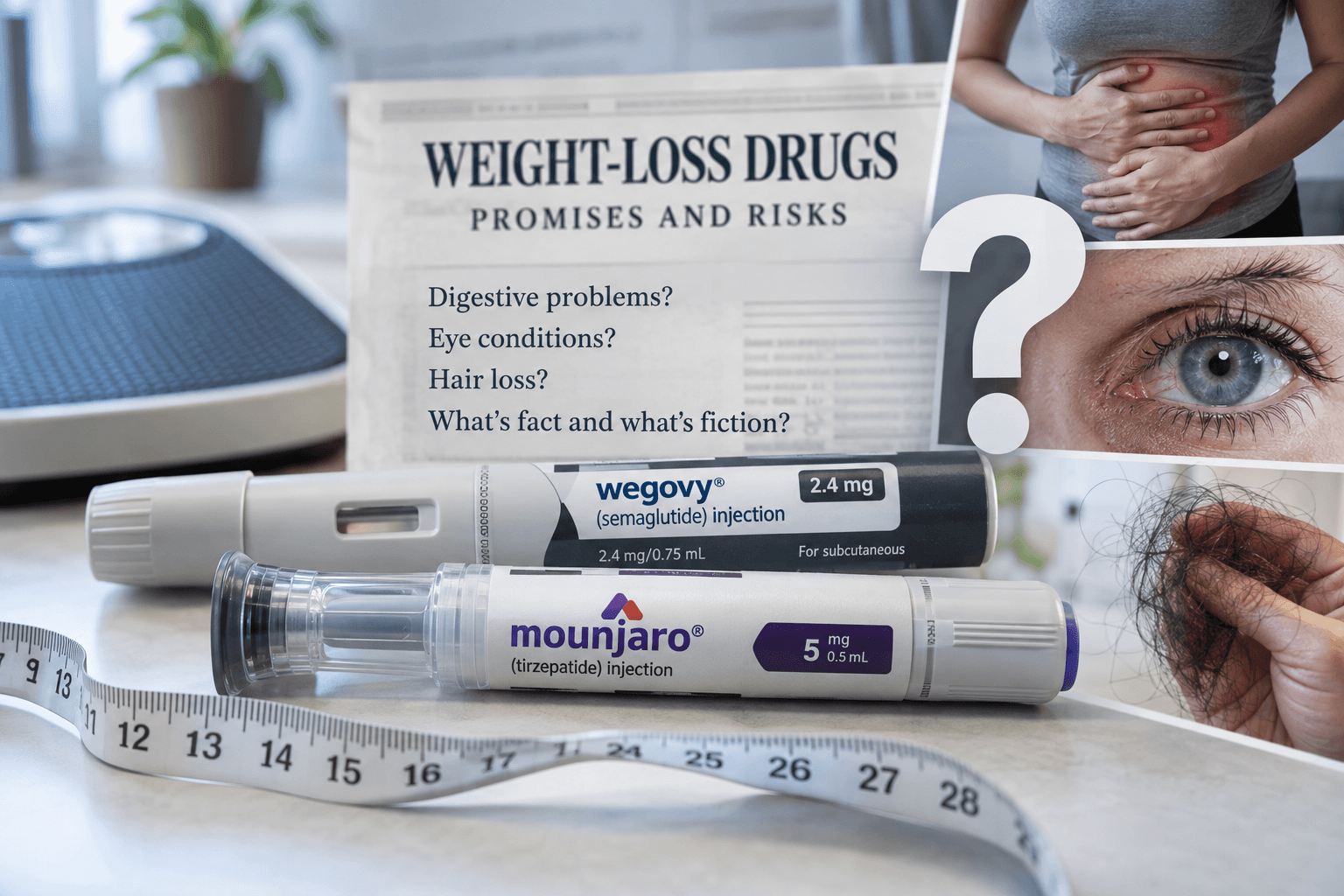
Weight-loss medications like Wegovy and Mounjaro have become increasingly popular, but reports of side-effects such as digestive problems, eye conditions, and hair loss have raised concerns. While some of these side-effects have been studied, others remain unproven, leaving many to wonder what's fact and what's fiction.

Semaglutide and Fewer Asthma Attacks: What the New Data Shows
A large real-world study presented at the ERS Congress in Barcelona found that people with asthma who started semaglutide, sold as Ozempic and Wegovy, had nearly 40% fewer asthma attacks than similar patients on a different diabetes medication. Researchers also reported lower COPD flare-ups and a possible link to fewer psychiatric hospitalizations. The findings are observational, and the researchers say they should not change how GLP-1 drugs are prescribed until clinical trials confirm them.

Two Deaths Linked to Counterfeit Retatrutide; Novo Nordisk to Drop Saxenda
Two recent deaths tied to counterfeit versions of retatrutide, an investigational weight-loss medication, have been reported to the Food and Drug Administration. The reports come as lawsuits against GLP-1 drugs continue, and as Novo Nordisk announced plans to discontinue its weight-loss injectable Saxenda in early 2027 because of declining sales. The World Health Organization also issued its first obesity guidelines for children and adolescents, and researchers released new findings on diabetes, dementia risk in women with PMOS, and a range of other conditions.