Semaglutide and Fewer Asthma Attacks: What the New Data Shows
A large real-world study presented at the ERS Congress in Barcelona found that people with asthma who started semaglutide, sold as Ozempic and Wegovy, had nearly 40% fewer asthma attacks than similar patients on a different diabetes medication. Researchers also reported lower COPD flare-ups and a possible link to fewer psychiatric hospitalizations. The findings are observational, and the researchers say they should not change how GLP-1 drugs are prescribed until clinical trials confirm them.
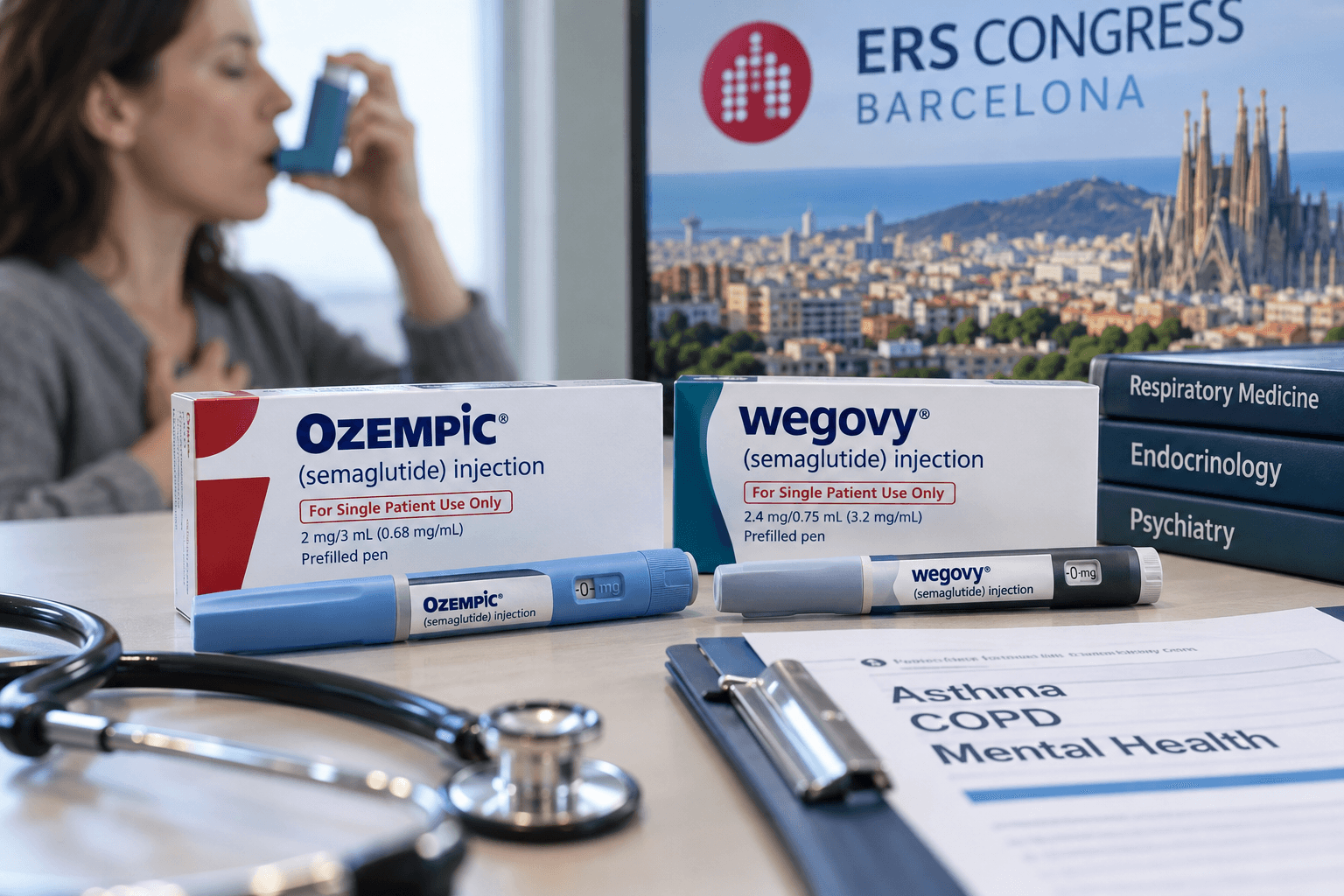
- Semaglutide (Ozempic and Wegovy) was tied to nearly 40% fewer asthma attacks in a large UK real-world study presented at the ERS Congress on September 8, 2026.
- Semaglutide was also associated with about a 20% reduction in COPD flare-ups.
- The study compared GLP-1 initiators with patients started on sulfonylureas, using four parallel cohorts of 20,000 to 22,000 people each.
- A separate US analysis of nondiabetic patients with asthma found lower exacerbation risk among GLP-1 users.
- Semaglutide was linked to a 21% lower risk of psychiatric hospitalization, while liraglutide and dulaglutide were not.
- A Swedish study of 95,490 people with depression or anxiety found lower risk of worsening mental illness with semaglutide and liraglutide.
- All of the studies are observational and do not prove that GLP-1 drugs treat these conditions.
- Researchers say randomized controlled trials are needed before prescribing changes, and patients should not start GLP-1 drugs for lung conditions outside current guidance.
A new study presented at the ERS Congress on September 8, 2026, found that semaglutide was associated with nearly 40% fewer asthma attacks in a large real-world analysis of UK patients. The study is observational, so it cannot prove cause and effect, and researchers say randomized trials are needed before prescribing changes.
If you take semaglutide, sold as Ozempic, for diabetes or weight management, you may have seen headlines suggesting the drug does much more than lower blood sugar or help with weight. A new study presented on September 8, 2026, at the ERS Congress in Barcelona, Spain, adds fuel to that conversation. Researchers found that semaglutide was associated with nearly 40% fewer asthma attacks in a large real-world analysis. Before you get too excited, though, it helps to understand what the study did, what it did not do, and what it means for everyday patients.
What the asthma and COPD data show
The study was led by Chloe Bloom, a clinical associate professor in respiratory epidemiology at the National Heart & Lung Institute, Imperial College London. It was presented by Bohee Lee. The team ran four parallel studies, each covering 20,000 to 22,000 people. They used UK electronic medical records to compare patients who started a GLP-1 receptor agonist with patients who started a sulfonylurea, an older class of diabetes medication.
Does semaglutide reduce asthma attacks?
People with asthma or chronic obstructive pulmonary disease (COPD) who took GLP-1 therapies had fewer acute attacks than similar patients on sulfonylureas. Semaglutide stood out from the rest of the class. Semaglutide use was tied to a nearly 40% reduction in asthma attacks and a 20% reduction in COPD flare-ups. As Bloom put it, “The effect was strongest with semaglutide, especially in people with asthma.”
Alexander Mathioudakis, chair of the ERS Group on Airway Pharmacology and Treatment and a senior lecturer in respiratory medicine at the University of Manchester, noted that the study is one of the largest real-world looks at GLP-1 receptor agonists and airway disease. It is also one of the first to compare individual drugs within the class instead of lumping them together. He said the results support including respiratory outcomes, such as asthma attacks, COPD exacerbations, lung function, and quality of life, in future trials of metabolic therapies.
Those results also line up with earlier work. At the American Academy of Allergy, Asthma & Immunology (AAAAI) Annual Meeting, researchers used the TriNetX network to study nondiabetic patients with asthma who were overweight, obese, or morbidly obese. Across all three weight groups, people who started GLP-1 drugs had a lower risk of asthma exacerbation than nonusers over three years.
Mental health findings and the caveats
Does semaglutide affect mental health?
The ERS Congress also included research on GLP-1 drugs and mental health, particularly bipolar disorder. Investigators reported that semaglutide use was associated with a 21% lower risk of psychiatric hospitalization. Liraglutide and dulaglutide were not linked to the same result, which is another reason experts are wary of treating the whole class as one group.
A national Swedish cohort study published in Lancet Psychiatry followed 95,490 people with depression or anxiety who used antidiabetic medications between 2009 and 2022. Semaglutide and liraglutide were both associated with a lower risk of worsening mental illness, while exenatide and dulaglutide showed no such association. Semaglutide alone was also linked to reduced risk of worsening depression, worsening anxiety, and worsening substance use disorder.
Now for the important part. None of these studies prove that GLP-1 receptor agonists treat asthma, COPD, depression, anxiety, or bipolar disorder. All of them are observational, which means they track what happened to real people but cannot show cause and effect the way a controlled trial can. The authors of both the ERS study and the Swedish paper explicitly call for randomized controlled trials before any change in prescribing.
Bloom was direct about this. Patients, she said, should not start GLP-1 receptor agonists specifically for a lung condition outside current prescribing guidance. The results still need confirmation in clinical trials.
What this means if you are already taking semaglutide
Should you stop semaglutide because of these findings?
If you are already on semaglutide, there is no reason to stop or change your treatment based on these headlines. Keep taking it as your prescriber directed, and bring up any questions about asthma, COPD, or mood at your next appointment. Pharmacists counseling patients on semaglutide may want to keep this emerging research in mind, especially for people who also live with asthma, COPD, depression, anxiety, or bipolar disorder, since these questions are likely to come up.
The bigger takeaway is that the data consistently point to semaglutide specifically, not the GLP-1 class as a whole. These drugs are not interchangeable in the research so far, and that distinction matters. Watch for the clinical trials that are now being called for. They will be the real test of whether these early signals hold up.
FAQ
- Does semaglutide reduce asthma attacks?
- A large real-world analysis presented at the ERS Congress associated semaglutide with nearly 40% fewer asthma attacks. Because the study is observational, it does not prove that the drug treats asthma.
- Should people start semaglutide to treat asthma or COPD?
- No. Bloom said patients should not start GLP-1 receptor agonists specifically for a lung condition outside current prescribing guidance, and the results still need confirmation in clinical trials.
- Should I stop taking semaglutide because of these findings?
- No. The story advises keeping semaglutide as your prescriber directed and bringing questions about asthma, COPD, or mood to your next appointment.
Read next
Semaglutide Tied to Lower Bone Fracture Risk in Diabetes Patients
A new study finds that people taking semaglutide for diabetes have a lower rate of bone fractures compared to those taking other anti-obesity medications. Researchers analyzed data from over 159,000 patients and found that semaglutide treatment was associated with a greater reduction in body mass index and fewer fractures.
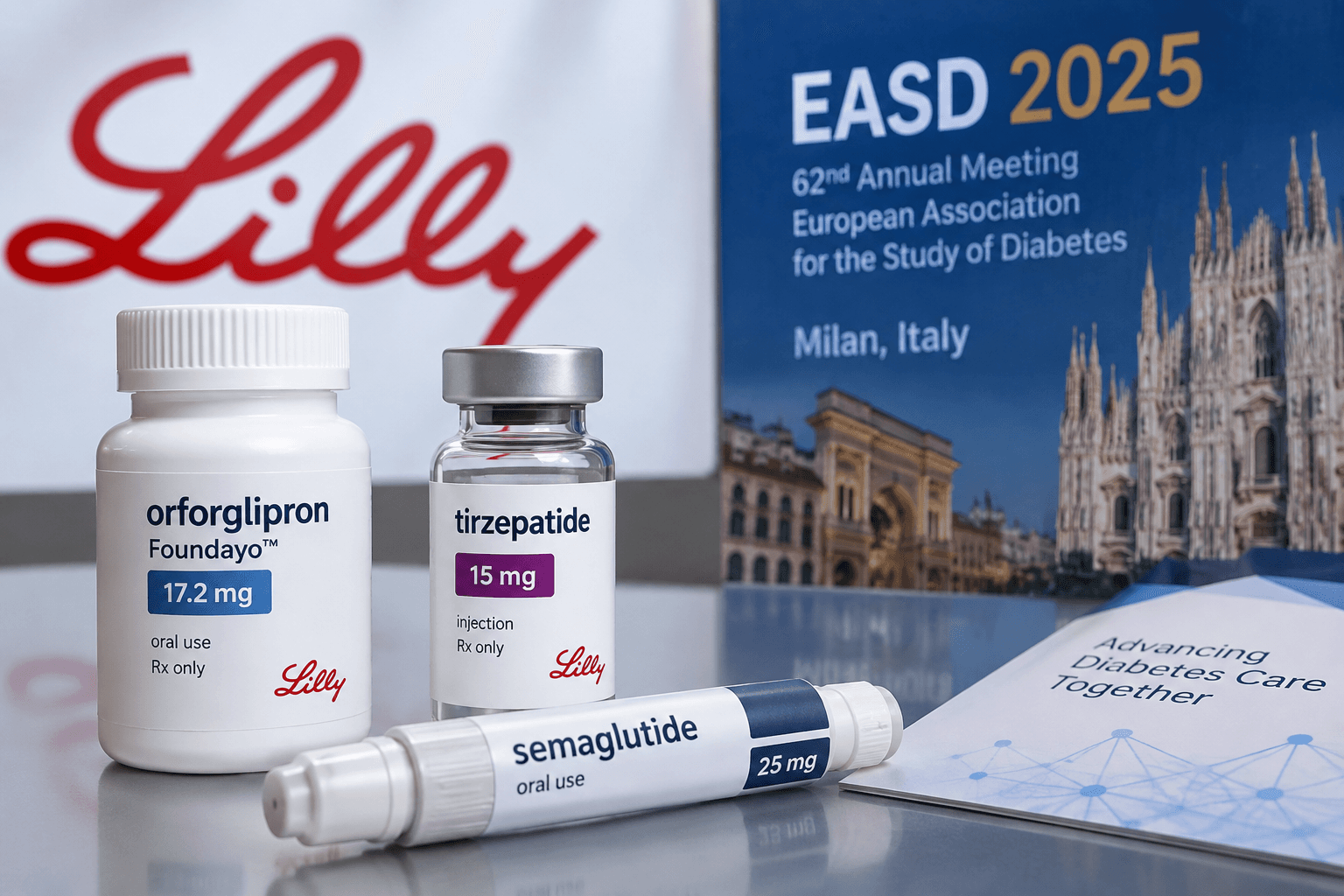
Lilly Data Puts Orforglipron and Tirzepatide Ahead of Semaglutide
Eli Lilly announced two indirect treatment comparisons showing its drugs outperform semaglutide on weight loss and blood sugar control. Neither result comes from a head-to-head trial. Orforglipron (Foundayo) 17.2 mg produced 1.5% greater weight loss and 0.3% greater A1C reduction than oral semaglutide 25 mg at 52 weeks in adults with type 2 diabetes. Tirzepatide 15 mg beat semaglutide 7.2 mg by 4.5% on body weight at 72 weeks, but that gap was not statistically significant under the efficacy estimand. The analyses were presented at the 62nd Annual Meeting of the European Association for the Study of Diabetes in Milan, Italy. The release did not include safety data for the indirect comparisons.
When Weight-Loss Drugs Don't Work: The Struggle for Answers
For some people, the highly touted GLP-1 weight-loss medications, such as Ozempic and Wegovy, don't deliver the promised results. Researchers are working to understand why, as patients face disappointment, shame, and significant financial burdens.

GLP-1 Drugs Do Not Change Injection Needs for Diabetic Macular Edema, Study Finds
GLP-1 receptor agonists did not significantly change how often patients with diabetic macular edema needed anti-VEGF injections, according to a large retrospective cohort study presented at the American Academy of Ophthalmology meeting in New Orleans. Over 24 months of follow-up, treatment frequency showed no sustained or progressive change after patients started a GLP-1 drug, compared with matched patients who did not. Visual acuity and retinal thickness also held steady. Researchers said the results are reassuring amid ongoing uncertainty about the drugs' eye safety, though they cautioned that more research is needed.

GLP-1 Drug Linked to Dangerous Lithium Spike, While MS Study Finds Fewer Relapses
A case report describes a 50-year-old woman with bipolar disorder whose lithium levels rose to toxic range after she started tirzepatide (Zepbound), a GLP-1 weight loss drug. Her symptoms eased after her lithium dose was lowered. Separately, a large U.S. real-world study presented at MSToronto2026 found that multiple sclerosis patients taking GLP-1 receptor agonists had fewer relapses, optic neuritis episodes and demyelinating events than patients who did not take them. Researchers say the findings are early and call for more investigation into both the interaction risk and the potential benefits.