Weight-Loss Incretin Drug Linked to More Regular Periods
A combined GLP-1/GIP receptor agonist was associated with more regular menstrual cycles in a prospective cohort study presented at the American Society for Reproductive Medicine annual meeting. Women taking the combination drug saw their cycle length shorten by an average of 2.5 days, compared with 0.4 days for GLP-1 users and 0.8 days for never-users. The effect was most pronounced among women with polyendocrine metabolic ovarian syndrome, formerly known as polycystic ovary syndrome. Researchers at the Harvard T.H. Chan School of Public Health led the analysis of data from more than 70,000 logged cycles. The team says the findings could help drugmakers explore new ways to support ovulation.
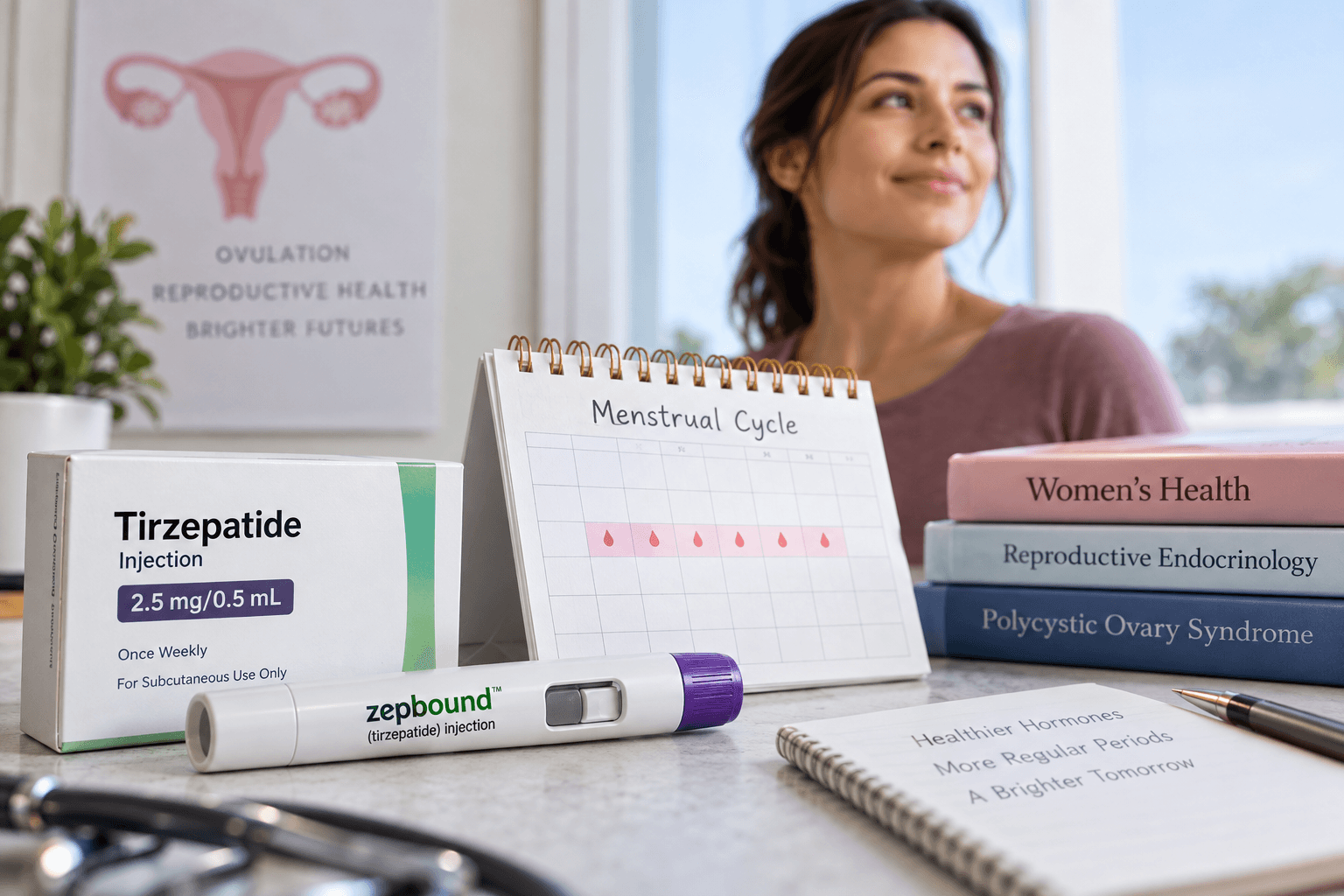
- A combined GLP-1/GIP receptor agonist was linked to improved menstrual regularity in a prospective cohort analysis.
- Cycle length fell 2.5 days for combination users, versus 0.4 days for GLP-1 users and 0.8 days for never-users.
- The biggest effects appeared in women with polyendocrine metabolic ovarian syndrome (PMOS), formerly PCOS.
- The analysis covered 1,945 participants and 70,134 logged cycles from the Apple Women's Health Study.
- Researchers say the findings could point drugmakers toward new ways to support ovulation.
- The only GLP-1/GIP drug approved by the FDA is tirzepatide (Zepbound).
Do GLP-1 and GIP receptor drugs affect menstrual cycles?
A combined GLP-1/GIP receptor agonist was associated with improved menstrual regularity, according to an analysis of a prospective cohort presented at the American Society for Reproductive Medicine (ASRM) annual meeting in Baltimore. Women on the combination incretin drug saw their cycle length drop by 2.5 days. Women on a GLP-1 drug saw a reduction of 0.4 days, and never-users saw 0.8 days.
The research team was led by Shruthi Mahalingaiah, MD, MS, of the Harvard T.H. Chan School of Public Health in Boston. The combination drug also produced a bigger drop in mean individual cycle variability. That measure fell to 6.93 days for combination users, compared with 7.45 days for GLP-1 users and 7.46 days for never-users.
Does the effect differ for women with PMOS?
The biggest changes showed up in women with polyendocrine metabolic ovarian syndrome (PMOS), formerly called polycystic ovary syndrome (PCOS). In that subgroup, mean individual cycle variability was 5.80 days for combination users, 7.34 days for GLP-1 receptor agonist users, and 9.45 days for never-users.
"This more pronounced reduction among PMOS individuals might suggest a separate pathway that might focus on ovulatory health in addition to those metabolic parameters that support ovulation, but further research is necessary," Mahalingaiah said.
Rachel Weinerman, MD, an ob/gyn and reproductive endocrinologist at Case Western Reserve University in Cleveland, was not involved in the study. She told MedPage Today that the PMOS findings stood out to her.
"We know that because PMOS is a metabolic issue, weight loss can actually help patients achieve a more regular cycle," Weinerman said. When a PMOS patient takes a weight-loss medication, it makes sense that they would both lose weight and have more regular periods, she noted.
Weinerman added that irregular periods are not only a concern for women trying to get pregnant. They can also signal underlying health problems. She said the study is a useful reminder that PMOS patients are a distinct group that may respond to medications differently than other patients with similar characteristics.
More than 10 million women in the U.S. use either a GLP-1 or a combined GLP-1/GIP receptor agonist. The two drug classes work through different mechanisms. The only GLP-1/GIP drug approved by the FDA is tirzepatide, sold as Zepbound. Mahalingaiah noted that these therapies may affect ovulatory health through broad systemic and metabolic improvements, or through direct effects on the ovaries.
Some retrospective studies had already suggested a link between these drugs and better menstrual regularity. No prospective study had examined it as a primary endpoint until now. This research set out to determine whether the agents were associated with changes in mean cycle length and cycle variability in tracked menstrual cycles.
How was the menstrual cycle study conducted?
The team used data from the Apple Women's Health Study (AWHS), a longitudinal digital cohort of about 147,000 U.S. women who prospectively log their menstrual cycles. Participants were eligible if they were 18 or older, had an iPhone, and had menstruated at least once. For this analysis, they had to be younger than 50, could not be using hormones or be pregnant or lactating, and had to have a cycle length between 10 and 90 days. They also needed to have logged at least three cycles.
In the end, the researchers analyzed 1,945 participants with 70,134 logged cycles. Most of them, 1,564, had never used the medications. Another 258 had used a GLP-1 drug and 123 had used a combined GLP-1/GIP drug in the past year.
Participants answered surveys about weight-loss medications, demographics, and medical history. They also agreed to share menstrual information recorded in Apple's HealthKit. The authors did not use any sensor-based data.
Medication users were somewhat older, with an age range of 38 to 39 compared with 35 for never-users. They also had higher parity and a larger share of patients with PMOS, infertility, type 2 diabetes, and hypertension. The main reason for a GLP-1 or combined prescription in the past year was weight loss for health, followed by weight loss for appearance and PMOS.
Mahalingaiah said future manuscripts will break the data down by individual agent. She also pointed to a broader gap in the field.
"There is such little innovation in women's health pharmaceuticals that maybe data like this could help people in pharma think about the additional mechanisms that might promote ovulation," Mahalingaiah said.
FAQ
- Which drug was linked to more regular periods?
- In the study, a combined GLP-1/GIP receptor agonist was associated with improved menstrual regularity, with cycle length dropping by 2.5 days among users.
- Did the drug show larger effects in women with PMOS?
- Yes. In the PMOS subgroup, mean individual cycle variability was 5.80 days for combination users, 7.34 days for GLP-1 receptor agonist users, and 9.45 days for never-users.
- Is tirzepatide the only GLP-1/GIP drug approved by the FDA?
- According to the story, the only GLP-1/GIP drug approved by the FDA is tirzepatide, sold as Zepbound.
Read next
GLP-1 Medications Show Promise in Treating Obesity and Improving Fertility
Research on GLP-1 medications has yielded promising results in treating obesity and improving fertility in men with low testosterone. A study found that GLP-1s may improve testosterone levels and sperm quality, while another study showed a 310-fold increase in GLP-1 prescriptions for children with obesity.

GLP-1 Drug Linked to Dangerous Lithium Spike, While MS Study Finds Fewer Relapses
A case report describes a 50-year-old woman with bipolar disorder whose lithium levels rose to toxic range after she started tirzepatide (Zepbound), a GLP-1 weight loss drug. Her symptoms eased after her lithium dose was lowered. Separately, a large U.S. real-world study presented at MSToronto2026 found that multiple sclerosis patients taking GLP-1 receptor agonists had fewer relapses, optic neuritis episodes and demyelinating events than patients who did not take them. Researchers say the findings are early and call for more investigation into both the interaction risk and the potential benefits.

CagriSema Shows Weight Loss Across Menopause Stages, Including Women on Hormone Therapy
New data from a post-hoc analysis of Novo Nordisk's REDEFINE 1 trial suggest that the investigational combination CagriSema produced clinically meaningful weight loss in women at every menopause stage studied, including those using hormone therapy. Presented at The Menopause Society's 2026 Annual Meeting, the analysis of 1,902 women found mean reductions of 23.1% to 26.7% over 68 weeks, along with improvements in blood pressure, fasting glucose, and triglycerides. The findings are investigational and come from a post-hoc analysis, so they do not establish how the drug will perform in practice. An FDA decision is anticipated in late 2026, and pharmacists are expected to play a key role in counseling patients.

Low T in Army Men, GLP-1 Blood Pressure Data and Retatrutide Side Effects Make the News
A new round of health research points to a wide range of hormone and metabolic findings. Roughly a quarter of active-duty U.S. Army men had a morning testosterone level under 300 ng/dL, a common cutoff for low testosterone. A CDC report found nearly half of American women ages 40 to 60 reported menopausal symptoms in 2025, and 15.6% of them took prescription medication for those symptoms. Separate studies linked GLP-1 drugs to blood pressure drops and early anti-aging signals. Novo Nordisk reported weight-loss results in women, and Walmart said it will cover over 250 prescription drugs, including some GLP-1 drugs for diabetes, for employees in 2027. An analysis of Reddit posts also cataloged side effects reported by users of the unapproved weight-loss drug retatrutide.

When Weight-Loss Drugs Don't Work: The Struggle for Answers
For some people, the highly touted GLP-1 weight-loss medications, such as Ozempic and Wegovy, don't deliver the promised results. Researchers are working to understand why, as patients face disappointment, shame, and significant financial burdens.