Peptide & GLP-1 News

Tracking retatrutide, semaglutide, tirzepatide, BPC-157, GHK-Cu and the rest of the peptide market — drug approvals, pricing, research and the companies behind them.

Nearly 1 in 6 Pediatric GLP-1 Patients Diagnosed With Nutritional Deficiency Within a Year

Nearly 1 in 6 Pediatric GLP-1 Patients Diagnosed With Nutritional Deficiency Within a Year

Nearly one in six children and adolescents who started a GLP-1 receptor agonist were diagnosed with a nutritional deficiency or deficiency-related complication within one year, according to a retrospective analysis of insurance claims published in Childhood Obesity. Vitamin D deficiency was the most common diagnosis. The study also found that nutrition counseling was infrequent and often began months after treatment started. The authors cautioned that the findings do not show counseling causes deficiencies and that a study designed to test causation is needed. The analysis covered 2,031 patients aged 10 to 17 years, drawn from claims data from 2017 to 2022.

Pharmacists Must Guide Peptide Patients as FDA Weighs Compounding Rules

Pharmacists Must Guide Peptide Patients as FDA Weighs Compounding Rules

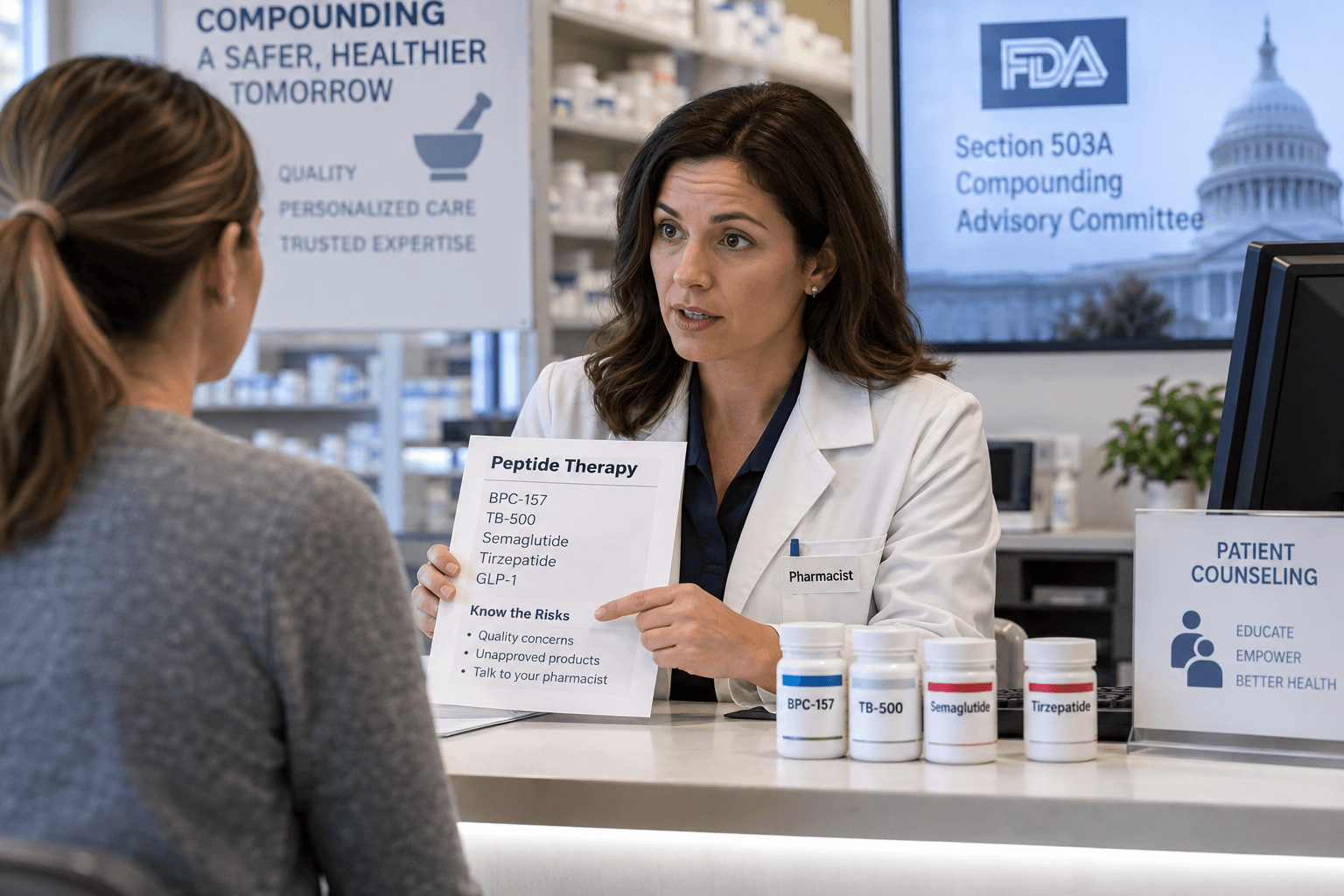
Pharmacists face growing patient questions about peptides, even as an FDA advisory panel recommended six unapproved peptides for inclusion on the Section 503A bulks list. Matt Martin, PharmD, BCSCP, vice president of clinical services at PCCA, told attendees at NCPA 2026 that advisory votes do not authorize compounding. Until the FDA completes formal rulemaking or places these substances on an interim Category 1 list, compounding them remains technically unlawful. Martin said pharmacists must also warn patients about the quality risks of “research use only” products sold online.

CagriSema Shows Weight Loss Across Menopause Stages, Including Women on Hormone Therapy

CagriSema Shows Weight Loss Across Menopause Stages, Including Women on Hormone Therapy

New data from a post-hoc analysis of Novo Nordisk's REDEFINE 1 trial suggest that the investigational combination CagriSema produced clinically meaningful weight loss in women at every menopause stage studied, including those using hormone therapy. Presented at The Menopause Society's 2026 Annual Meeting, the analysis of 1,902 women found mean reductions of 23.1% to 26.7% over 68 weeks, along with improvements in blood pressure, fasting glucose, and triglycerides. The findings are investigational and come from a post-hoc analysis, so they do not establish how the drug will perform in practice. An FDA decision is anticipated in late 2026, and pharmacists are expected to play a key role in counseling patients.

GLP-1 Drug Linked to Dangerous Lithium Spike, While MS Study Finds Fewer Relapses

GLP-1 Drug Linked to Dangerous Lithium Spike, While MS Study Finds Fewer Relapses

A case report describes a 50-year-old woman with bipolar disorder whose lithium levels rose to toxic range after she started tirzepatide (Zepbound), a GLP-1 weight loss drug. Her symptoms eased after her lithium dose was lowered. Separately, a large U.S. real-world study presented at MSToronto2026 found that multiple sclerosis patients taking GLP-1 receptor agonists had fewer relapses, optic neuritis episodes and demyelinating events than patients who did not take them. Researchers say the findings are early and call for more investigation into both the interaction risk and the potential benefits.

Gray-Market Peptides Are Everywhere. Here's What You Should Know.

Gray-Market Peptides Are Everywhere. Here's What You Should Know.

Injectable peptides have moved from quiet laboratory research into wellness clinics, influencer videos, and biohacker forums. Many are sold through gray-market supply chains with little human safety data. Health Secretary Kennedy has pushed to restore access to peptides the FDA had restricted, and an FDA committee he reshaped has recommended letting six of them back into legal production through compounding pharmacies. Critics, including FDA scientists, warn that the products are often untested and inconsistently made. This guide walks through what peptides are, why the products are so popular, the risks researchers have flagged, and how the regulatory fight developed.

Peptide ETFs Multiply as Wall Street Chases the Wellness Trend

Peptide ETFs Multiply as Wall Street Chases the Wellness Trend

REX Shares recently launched the REX Peptide ETF (PEPT), a fund holding companies that develop and manufacture peptide products, including GLP-1 drugs. Eli Lilly and Novo Nordisk are among its holdings. AdvisorShares has filed for a competing fund, the Peptide and Human Enhancement ETF. Other firms are also building wellness-themed funds, but investor money has not yet kept pace with the buzz. Some funds have seen outflows, and analysts say the sector's appeal may depend on timing and the broader market.

Retatrutide Eases Sleep Apnea in Two Phase III Trials

Retatrutide Eases Sleep Apnea in Two Phase III Trials

Retatrutide, an experimental triple agonist that targets GIP, GLP-1 and glucagon receptors, improved obstructive sleep apnea in adults with obesity or overweight, according to two parallel randomized trials. The results were presented at the Congress of the European Sleep Research Society and published in the New England Journal of Medicine. Researchers found effects similar to those seen with tirzepatide, the first drug approved to treat sleep apnea, though the trials did not directly compare the two medications.

Low T in Army Men, GLP-1 Blood Pressure Data and Retatrutide Side Effects Make the News

Low T in Army Men, GLP-1 Blood Pressure Data and Retatrutide Side Effects Make the News

A new round of health research points to a wide range of hormone and metabolic findings. Roughly a quarter of active-duty U.S. Army men had a morning testosterone level under 300 ng/dL, a common cutoff for low testosterone. A CDC report found nearly half of American women ages 40 to 60 reported menopausal symptoms in 2025, and 15.6% of them took prescription medication for those symptoms. Separate studies linked GLP-1 drugs to blood pressure drops and early anti-aging signals. Novo Nordisk reported weight-loss results in women, and Walmart said it will cover over 250 prescription drugs, including some GLP-1 drugs for diabetes, for employees in 2027. An analysis of Reddit posts also cataloged side effects reported by users of the unapproved weight-loss drug retatrutide.

HHS Moves Ahead With Plan to Let Pharmacies Compound Popular Peptides

HHS Moves Ahead With Plan to Let Pharmacies Compound Popular Peptides

The Trump administration has sent an "interim access policy" for peptides to the White House for review, a step that would let specialty pharmacies compound certain widely used peptides. The peptides, including BPC-157, have gained popularity among followers of Health Secretary Robert F. Kennedy Jr. and wellness influencers, but they have not gone through the FDA's standard approval process, and most of the available data comes from animal studies. An FDA advisory panel recommended lifting restrictions on six of seven peptides in July, a recommendation that ran counter to the conclusions of the agency's own scientists. The policy's exact terms have not been published, and formal rulemaking could take years.

GLP-1 Drugs Do Not Change Injection Needs for Diabetic Macular Edema, Study Finds

GLP-1 Drugs Do Not Change Injection Needs for Diabetic Macular Edema, Study Finds

GLP-1 receptor agonists did not significantly change how often patients with diabetic macular edema needed anti-VEGF injections, according to a large retrospective cohort study presented at the American Academy of Ophthalmology meeting in New Orleans. Over 24 months of follow-up, treatment frequency showed no sustained or progressive change after patients started a GLP-1 drug, compared with matched patients who did not. Visual acuity and retinal thickness also held steady. Researchers said the results are reassuring amid ongoing uncertainty about the drugs' eye safety, though they cautioned that more research is needed.

Users Report Harm From Unapproved Peptides as Federal Panel Moves to Loosen Limits

Users Report Harm From Unapproved Peptides as Federal Panel Moves to Loosen Limits

Users of unapproved peptides such as BPC-157 are reporting fatigue, migraines, and other side effects, even as an FDA advisory panel with industry-linked members has voted to ease restrictions on six experimental peptides. The vote went against FDA scientists who found too little evidence that the drugs work. The FDA has not issued a final decision, and clinical data on the drugs remain thin. Health Secretary Robert F. Kennedy Jr. has pushed to lower barriers to peptide use, and many companies could soon drop required warnings that their products are for research only.

Two Deaths Linked to Counterfeit Retatrutide; Novo Nordisk to Drop Saxenda

Two Deaths Linked to Counterfeit Retatrutide; Novo Nordisk to Drop Saxenda

Two recent deaths tied to counterfeit versions of retatrutide, an investigational weight-loss medication, have been reported to the Food and Drug Administration. The reports come as lawsuits against GLP-1 drugs continue, and as Novo Nordisk announced plans to discontinue its weight-loss injectable Saxenda in early 2027 because of declining sales. The World Health Organization also issued its first obesity guidelines for children and adolescents, and researchers released new findings on diabetes, dementia risk in women with PMOS, and a range of other conditions.